A jobsite crane isn’t always the answer
by anthony_capkun_2 | 23 June 2026 11:51 am
 [1]
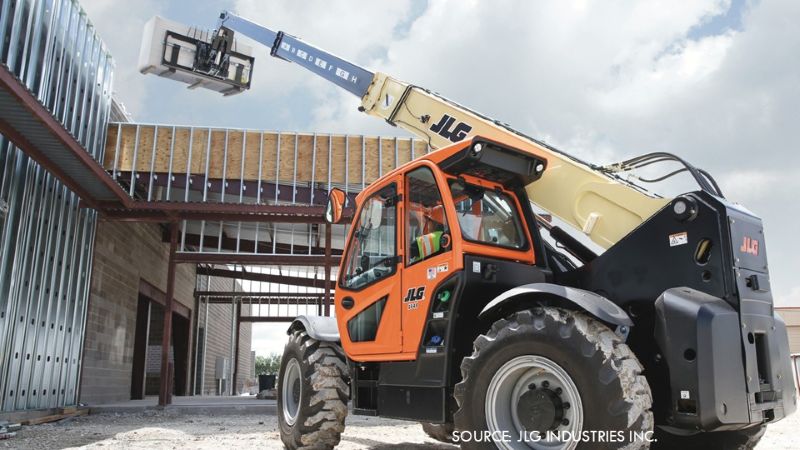
[1]Expanding the versatility of telehandlers on metal construction jobsites is all about the different types of attachments that can be used on the front of the machines.
With fork-, coupler-, and permanent-mounted attachment options, contractors and erectors—as well as steel fabricators—can use telehandlers to perform a range of tasks to aid in the design, fabrication, supply, and erection of metal building systems and structural steel components simply by changing the attachment.
On many metal building jobsites, telehandlers are already a primary tool for unloading deliveries and staging materials. With the right attachments, they can be used for more than just steel placement and lifting applications, such as raising structural steel into place.
The equipment can also support hoisting and precision placement tasks. For example, by switching out attachments, telehandlers can be used for the precision placement of metal wall and roof panel bundles, steel joists, purlins, and trusses, alongside material handling duties, like unloading delivery trucks and moving steel bundles across mud or uneven ground when equipped with a boom-mounted lifting lug attachment (also referred to as hooks or clevises). These types of attachments allow operators to put a chain or strap through them to efficiently handle suspended (a.k.a. hoisted) materials.
Because they are purpose-built to move heavy objects with great maneuverability, using a telehandler for this type of material-handling work is often more cost-effective than bringing in a crane.
Telehandler selection
Before using a telehandler for hoisting or material-handling tasks on a metal construction project, it is important to evaluate the scope of the lift and the conditions of the jobsite.
The most important thing is to answer these two questions:
- What is the work that needs to be completed?
- Where will the work be completed?
To answer these questions, we start by calculating the “maximum pick” that the machine will need to handle, which can be done in three steps:
1. Identify the maximum weight of the steel or material load that needs to be lifted and handled (i.e. how heavy is the heaviest object/material that needs to be picked up?). Make sure the telehandler has enough capacity to support all of the required lifts.
2. Calculate the maximum angle the machine requires to be able to lift and place the load (i.e. what is the furthest up, over, and/or out the telehandler needs to achieve?). It is important to know how much space is available onsite for maneuvering and positioning the load. Depending on the site, trade-offs may need to be made when selecting a telehandler’s size versus its capacity.
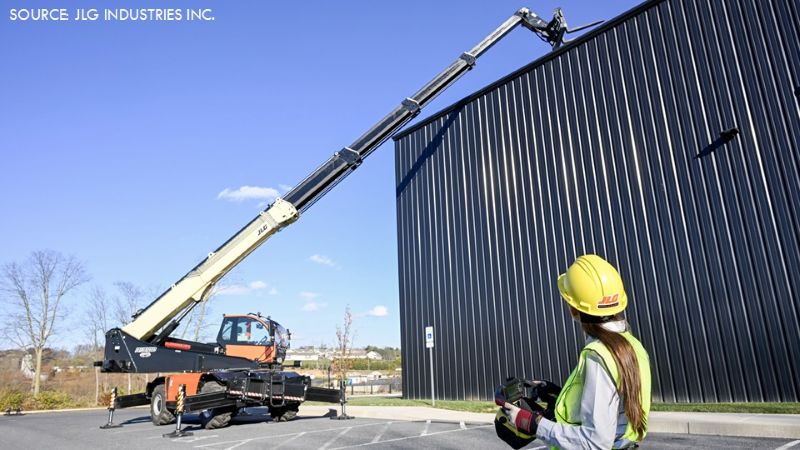
Space restrictions will influence not only the size of the telehandler but also the style. For example, if the machine needs to feed the material from a stationary position—similar to how a crane would perform onsite—a rotating telehandler should be considered.
3. Determine the maximum height that the load needs to be placed (i.e. how high do the structural steel or metal building components need to be lifted?).
Armed with these measurements, operators can then refer to machine load charts—the same type of planning tool used for many structural steel picks—to guide them toward selecting the appropriate telehandler. It is important to note that all telehandler attachments have their own load chart, which should always be referenced before use.
Once a model is chosen, it’s important to consider which attachments are needed to complete the work. Telehandlers are called “tool carriers” for a reason; they can handle a range of hoisting and material-handling applications because of the large variety of attachments with which they can be equipped, from buckets, carriages, and truss booms/lift hooks to specialty attachments like tire handlers.
Understanding the nature of the work to be accomplished and the capabilities of each type of attachment is crucial to safe and efficient use. This means knowing whether a load needs to be picked or placed. Does the job require loose material to be scooped or a load suspended? Does the operator need to grapple loose material or pipes? Answering these questions will help you select the appropriate attachments.
The final step in selecting a telehandler is to know where the machine will be operated, and what the jobsite conditions will be during operation. For example, will the machine be working on undeveloped surfaces like dirt or rocky soil, or on finished surfaces like turf or concrete?
 [2]
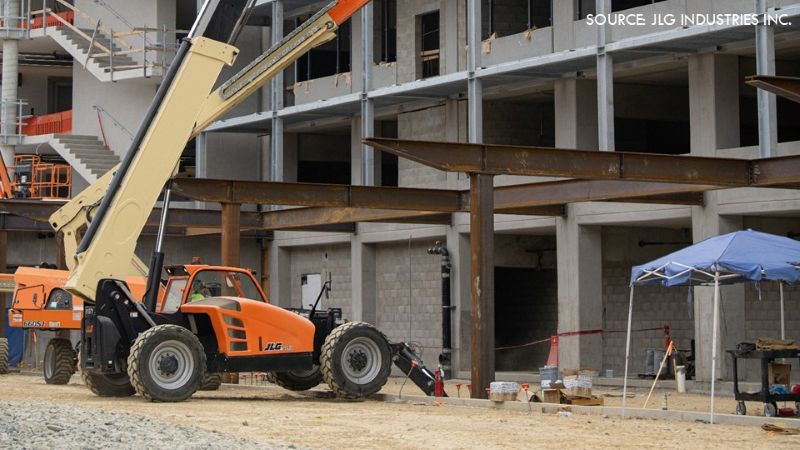
[2]This information helps to determine the tires that are needed on the machine. Foam-filled/solid tires are great for undeveloped terrain, while non-marking or turf tires are needed for developed areas to protect the ground.
Also consider options for the machine that will keep operators safe and productive during long hours in the cab. For instance, will they need an enclosed cab equipped with heat and air-conditioning? Depending on the climate and time of year, this choice is very important. Will they need to work before the sun comes up or after it goes down? If so, getting a model with work lights is necessary. When working in heavily congested areas, beacons should be considered.
Attachments for hoisting and handling
Once the appropriate machine has been selected, the next consideration is choosing the right attachment for the task.
Attachments for handling suspended loads include jibs to give operators extra reach, along with options for hoisting and handling materials that aren’t necessarily heavy, but are big, bulky, and need to be set precisely. Examples of this would be truss boom attachments (as mentioned previously, lifting lugs are good for this type of application).
It is critical to reference the device’s load chart before use, as it provides information about how the machine will operate with the specific tool attached, including details like capacity and range of motion. To get the right machine to do the work, always read and understand the load chart associated with the machine and the attachment.
When to use a telehandler as a hoisting device
For many metal building projects, there are two primary scenarios where telehandlers can serve as an effective alternative to cranes.
First, they are ideal when construction crews need to cost-effectively lift heavy loads and move them around a jobsite. Cranes are costly to rent and require a certified operator, whereas multiple operators can be trained to run a telehandler.
Second, a telehandler may be the right solution when space restrictions on the jobsite could significantly limit a crane’s ability to handle the suspended loads.
Telehandlers are able to place materials at height with the same precision as a crane—possibly better, especially when equipped with remote boom control. The remote allows an operator to work outside the cab for better visibility of the load, opening up opportunities for owners/operators to choose a smaller, less expensive machine to get the work done.
To best determine whether a telehandler can serve as an appropriate substitute for a crane, consult the machine’s load chart. It features an X and Y axis for distance from the front tires and height needed for placement. Using the load chart and a tape measure, a determination can be made to see whether the machine can safely place the load.
Alternatively, project managers and machine operators can go through a dry run of the lift or pick to be performed—with no load on the forks—to test whether the solution could work for the application. Using the indicators on the side of the boom, operators can complete a dry run placement and compare it against the load chart.
Telehandler safety considerations
As with any material-handling activity on a steel construction site, safety planning must remain a top priority.
When operating any machine, it is important to always reference the model’s operation and safety manuals. Before using a machine for handling suspended loads, consult the load chart to understand how to safely and productively hoist and handle loads.
 [3]
[3]Other safety considerations include the people who will be working near the suspended load. For example, when the job requires riggers to control the suspended load and keep it from spinning during placement, it is important for the operator to know where they are working and what they are doing at all times.
In fact, a clear line of sight and full visibility of the entire pick is extremely important, including the hoisted material, people in the area, and nearby infrastructure.
Operators should also work in low gear for better speed and control when moving, turning, and placing the load.
Finally, consider how the terrain—especially slopes and potholes—will impact the productivity and the performance of the machine. Going over bumps with a suspended load feels very different from traveling with the boom lowered!
Expanding the role of telehandlers
For metal building contractors and erectors, efficient material handling can significantly impact project timelines and overall jobsite costs. With the right machine, attachment, and lift planning, telehandlers can provide a flexible and cost-effective alternative to cranes for many construction applications.
By carefully reviewing load charts, selecting the appropriate attachments, and ensuring operators understand the work environment and safety requirements, crews can use telehandlers to safely place structural steel, roof panels, and other materials with precision.
When matched correctly to the task, telehandlers can help construction teams streamline material movement, improve jobsite productivity, and get more value from a single piece of equipment.
John Boehme is senior product manager, telehandlers, at JLG Industries Inc.[4], a designer, manufacturer, and marketer of access equipment. JLG is an Oshkosh Corp. business.
This feature originally appeared in the June 2026 edition of Metal Construction News, which you can find in our Digital Edition Archive.
- [Image]: https://www.metalconstructionnews.com/wp-content/uploads/2026/06/Telehandler-MCNJune2026-02-800.jpg
- [Image]: https://www.metalconstructionnews.com/wp-content/uploads/2026/06/Telehandler-MCNJune2026-01-800.jpg
- [Image]: https://www.metalconstructionnews.com/wp-content/uploads/2026/06/Telehandler-MCNJune2026-03-800.jpg
- JLG Industries Inc.: https://www.jlg.com/
Source URL: https://www.metalconstructionnews.com/articles/a-jobsite-crane-isnt-always-the-answer/