A Revitalized Fire Station
by Marcy Marro | 3 May 2021 12:00 am
A pre-engineered metal building system achieves both design and budget goals
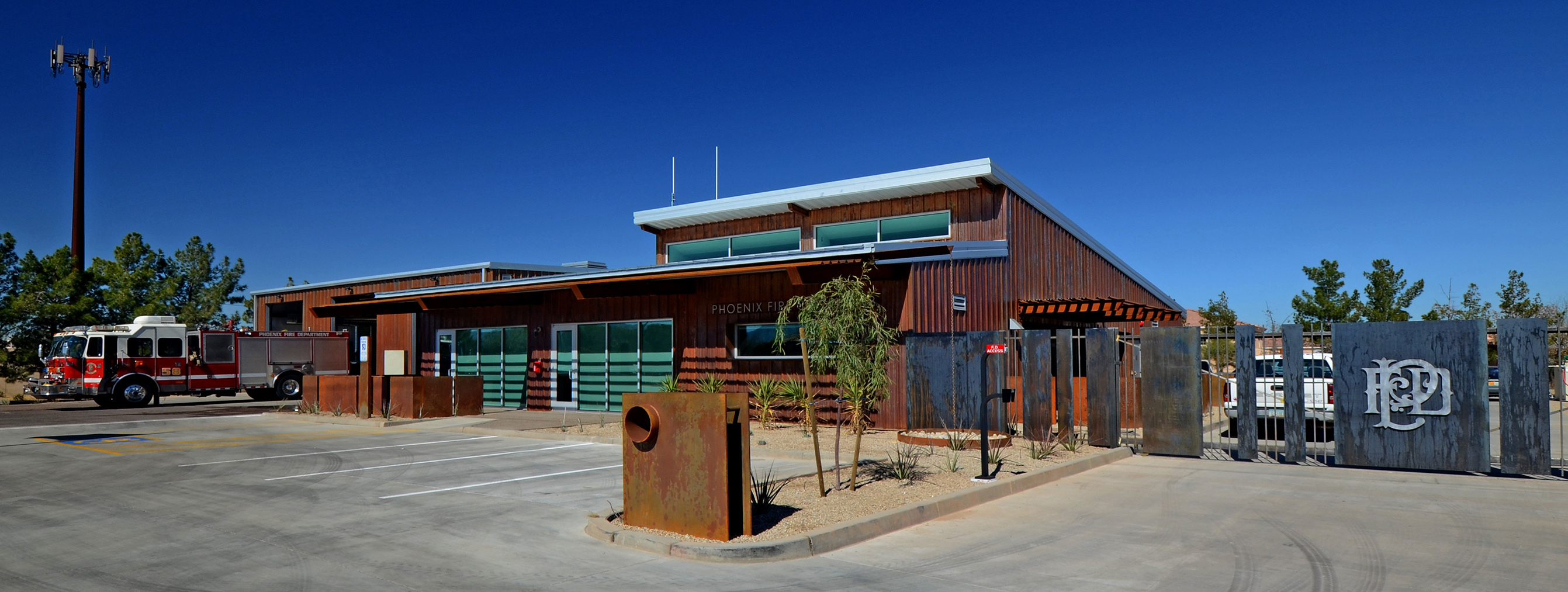
Photo: Lance Enyart, AIA, LEED AP
Using a metal building system, as well as weathering and Galvalume metal panels, were essential to the overall design strategy. Both the architect and the city fire department desired a low-maintenance facility, choosing a metal building system for its cost effectiveness, structural strength and durability, and aesthetic value, while the metal panels require no future painting or refinishing.
“The rich, earth-colored weathering metal wall panels tie the building to the site, while offering contrast to the lighter-colored Galvalume metal roof,” says Lance Enyart, AIA, LEED AP, principal, LEA–Architects. “The deep shadow of the metal PBR panels and mechanically seamed roof system introduces both scale and texture to the project.”
The new metal building system is tied into the original facility, allowing for the existing pre-engineered metal building system structural frame of the apparatus bays to be salvaged and seamlessly incorporated into the design of the new living area. To unify the two structures, the existing structural frame was wrapped with the same weathering metal PBR panels as the new living area.
To integrate the pre-engineered metal building structural system, the team designed custom architectural details including a weathering steel angle shade trellis and gutter system that defines and protects the south-facing entry. Additionally, the simple gable roof form inherent to a traditional metal building is offset to create a south-facing clerestory, bringing in natural daylight to the interior of the fire station. “The south-facing clerestory with calculated overhang over the open-plan dayroom and dining area was an important sustainable design strategy bringing natural daylight into the interior of the space, reducing energy costs and the use of artificial lighting,” adds Enyart.
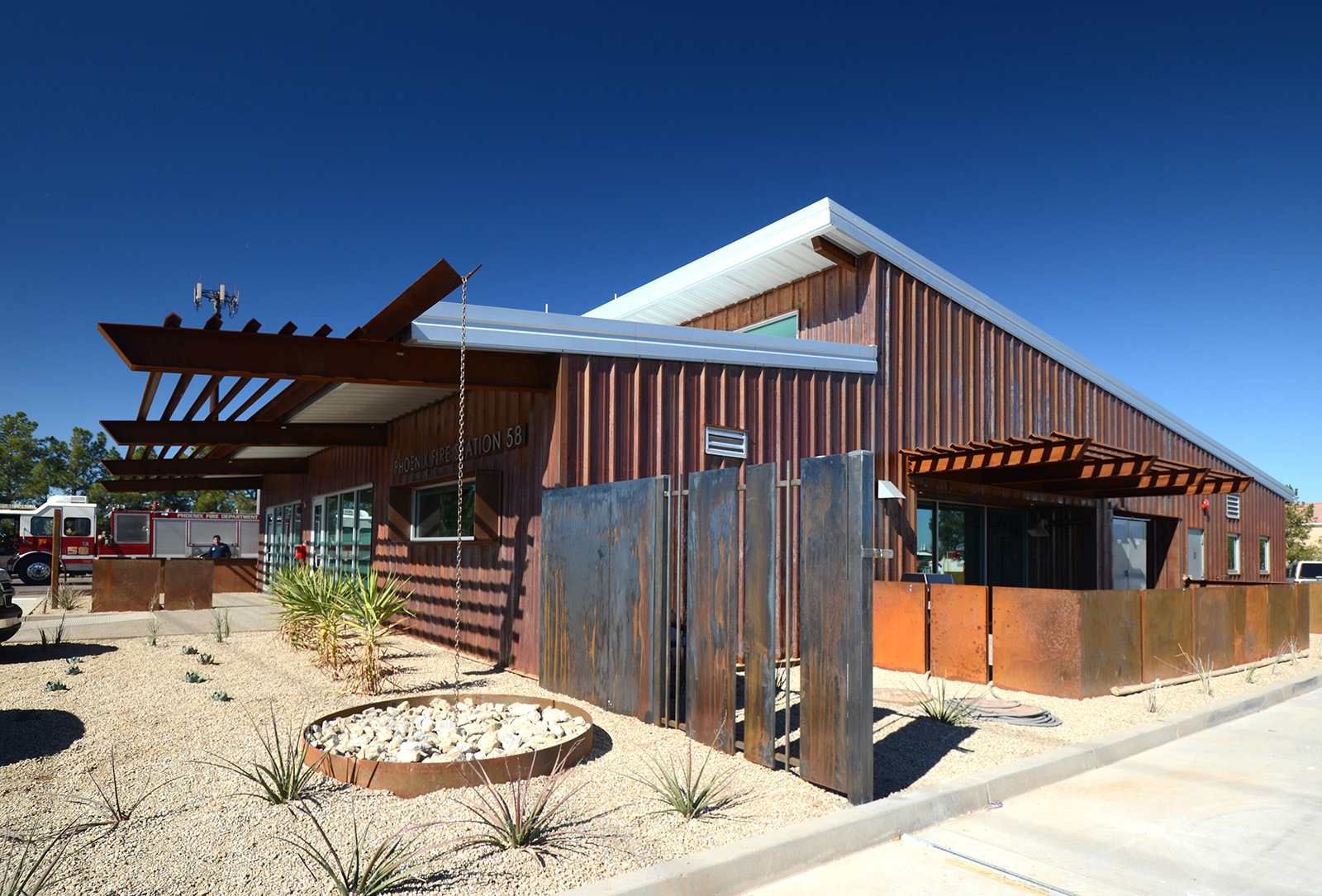
Photo: Lance Enyart, AIA, LEED AP
The project features 8,400 square feet of Houston-based MBCI[1]’s 24-gauge Double-Loc concealed fastener, mechanically seamed metal roof panels in Galvalume for the roof, and 3,994 square feet of 24-gauge cold-rolled weathering steel PBR vertical wall panels from Bunger Steel for the walls. Bunger Steel also supplied 2,548 square feet of 24-gauge PBR metal soffit panels in Galvalume, as well as the 24-gauge cold-rolled weathering steel flat plate panels used for the site fencing, vehicular gate cladding and the mailbox.
“The metal defines the space through the juxtaposition of materials, color and scale,” Enyart explains. “The inherent durability of the metal products provides a low-maintenance solution to the client’s request for a durable building. The high recycled content prevalent in the metal was an important part of the projects overall sustainable strategy.”
The project’s overall sustainable design strategy includes the efficiency of the metal building installation, which also limited the amount of waste material that would otherwise have gone to the landfill. “The north-south building orientation with calculated roof overhangs and plate steel shade hoods reduce the direct solar gain into the building and reduce the mechanical load air conditioning,” explains Enyart. “The thermal mass of the exposed ground concrete floors also assists with the stabilization of interior temperatures while at the same time providing a durable, low-maintenance floor.”
With a small budget of $1.45 million tied to project grant funding, Enyart says the pre-engineered metal building system was an important strategy that allowed the project to meet the budget goals. Additionally, Enyart says indigenous, low water-use desert landscaping was used throughout the project with sculptural planting material against the background of the weathering metal building.
- MBCI: https://www.mbci.com/Homepage.aspx
- lea-architects.com : https://lea-architects.com
- dansonbldg.com : https://dansonbldg.com
- www.bungersteel.com : https://www.bungersteel.com
- www.mbci.com : https://www.mbci.com
Source URL: https://www.metalconstructionnews.com/articles/a-revitalized-fire-station/