Addressing Suspension Trauma
by Mark Robins | 1 March 2021 12:00 am
Understand suspension trauma and what to do about it
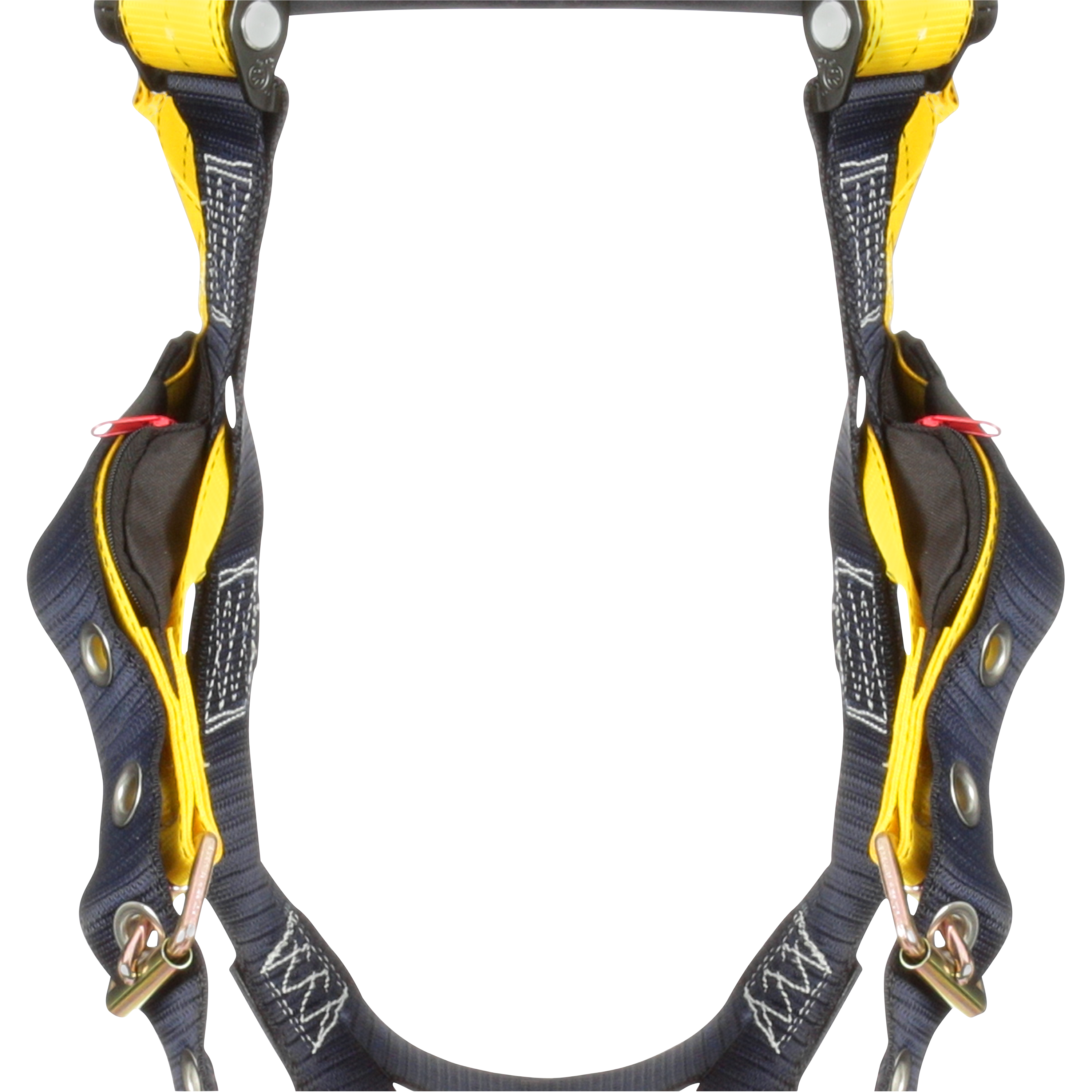
According to an article in the Emergency Medicine Journal, “Suspension trauma (also known as harness-induced pathology or orthostatic shock while suspended) is the development of presyncopal symptoms [near fainting] and loss of consciousness if the human body is held motionless in a vertical position for a period of time.” Suspension trauma is often confused with the term “orthostatic intolerance.” However, simply put, it is essentially a form of orthostatic intolerance, induced by suspension in a harness.
Symptoms of orthostatic intolerance include, but are not limited to, any of the following:
• Light-headedness
• Headache
• Fatigue
• Weakness
• Dyspnea (shortness of breath)
• Tremulousness
• Sweating
• Anxiety
• Palpitations
According to an article in The Journal of the Human Factors and Ergonomics Society, “After a worker’s fall has been successfully arrested by a full-body harness, the suspended worker needs to be rescued promptly. A prolonged suspension can cause the pooling of blood in the legs and the reduction of the return blood flow to the heart. The restrictions of the femoral arteries and veins caused by the harness straps can worsen venous pooling.
Other factors, such as immobilization because of injury, neurological disorders, aging, dehydration, traumatic shock or norepinephrinetransporter deficiency, can further speed the detrimental effects, which may damage vital organs, such as the kidneys.”
Distress Rescue
Due to a general lack of empirical data available regarding actual suspension trauma casualties, there is a lack of clear consensus on just how quickly a person in distress must be rescued. To be sure, the nature of how a given fall arrest event occurs coupled with the individual factors mentioned above contributes to this lack of clarity. Nonetheless, the prevailing consensus is that rescue must be promptly and effectively carried out as soon as possible for the benefit of a suspended victim who has experienced an arrested fall event.
Generally, the greater the height, depth and weight of a person, the lower the tolerance time. A thigh strap angle greater than 50 degrees and an angle of suspension greater than 35 degrees has shorter suspension tolerance times associated. One study estimates having a well-fit harness and establishing a nine-minute rescue plan would ensure that no more than 5% of workers experience suspension trauma. The study also concludes “a self-deployable suspension trauma relief accessory or mechanism that can be integrated into harness design to further harness-user protection would be useful.”
Rescue Considerations
While there are many variables to consider, a person subjected to an arrested fall and suspended in a harness while awaiting rescue is in immediate danger and likely requires medical attention promptly upon rescue. In extreme cases, if rescue is not safely executed within a reasonable timeframe, the outcome can quickly progress to loss of consciousness and eventually, to other permanent disability or even fatality. Employers should have an effective plan for immediate, on-site rescue that takes into consideration:
• Not being limited to self-rescue, as assistance is likely required
• Include contingencies for equipment and personnel availability
• Regular practice for all those required to execute the plan
• Simply calling 911 is not an appropriate, stand-alone rescue plan
• Suspension trauma relief/safety straps are equipped on all employee harnesses
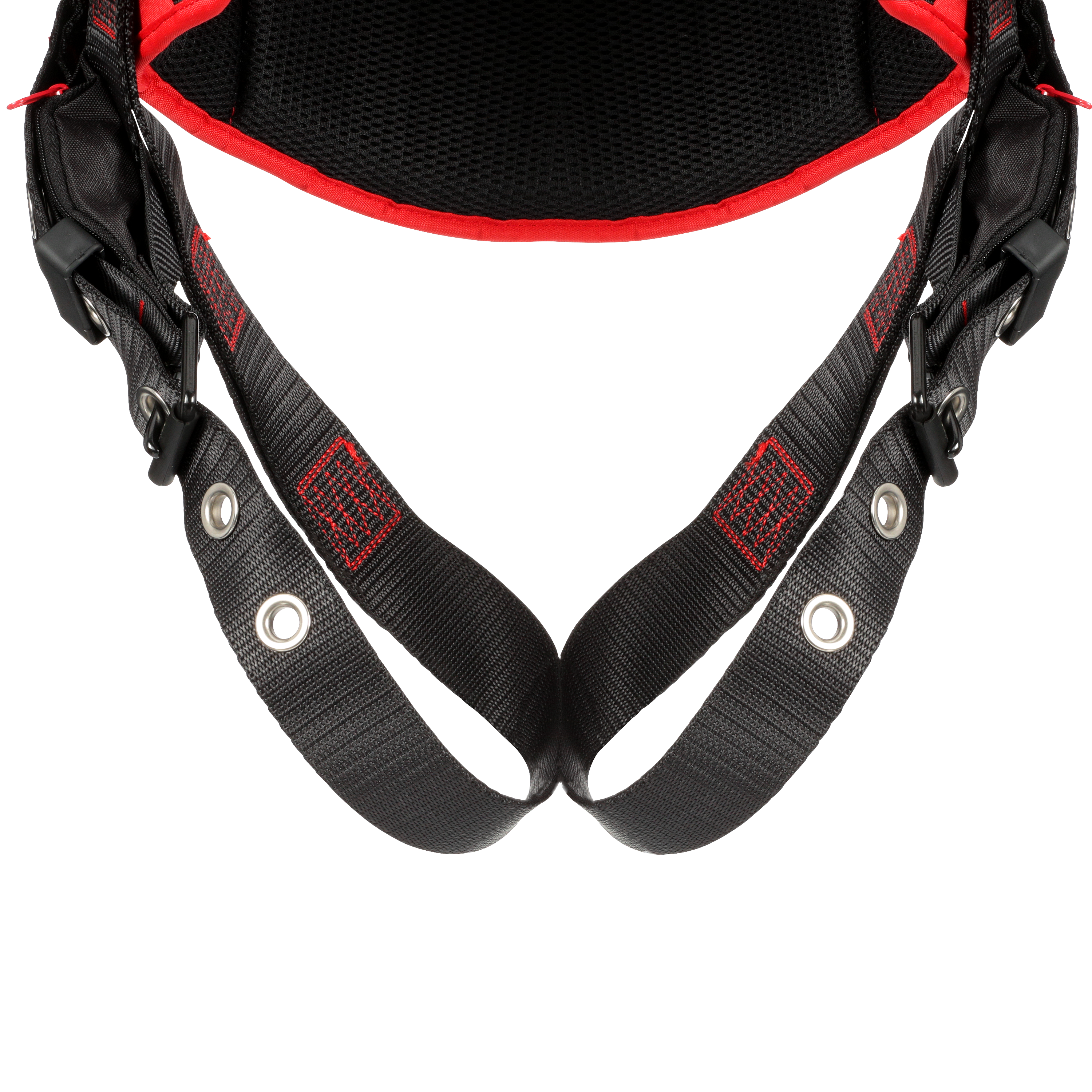
Suspension trauma safety straps are an easy and effective way to help delay, and possibly help prevent the onset of negative symptoms brought on by orthostatic intolerance due to prolonged, static suspension. Many fall protection equipment manufacturers include such accessories in their harness designs or offer it as a potential add-on accessory. Contact a reputable personal protective equipment manufacturer or quality fall protection to inquiry about harnesses that have suspension trauma safety straps as a standard feature or optional, compatible accessory.
Raymond A. Mann, QSSP, is a fall protection senior specialist application engineer at the personal safety division of 3M, St. Paul, Minn. Carly Engels Johnston is a senior web journalist/head global writer-in-residence at the personal safety division of 3M. To learn more, visit www.3m.com[1] or www.3m.com/workersafety.
- www.3m.com: http://www.3m.com
Source URL: https://www.metalconstructionnews.com/articles/addressing-suspension-trauma-1/