Agrarian Inspiration
by Christopher Brinckerhoff | 1 June 2021 12:00 am
Agricultural architecture influences school’s arts and athletics buildings
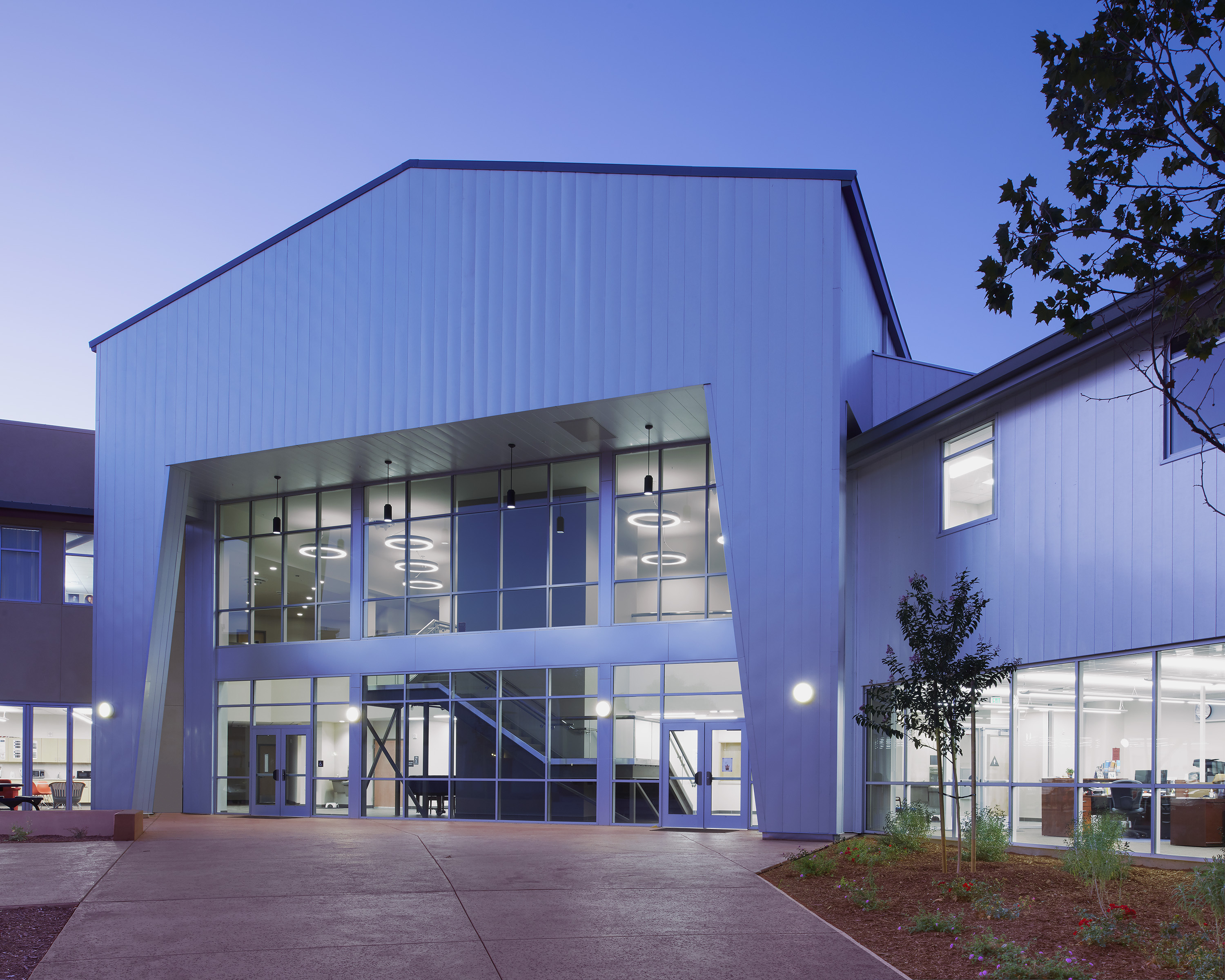
Photo: Kris Knutson Photography
Both buildings were constructed with metal building systems that met project goals for aesthetics, uses and budget. The larger of the two, Gwendolyn Riches Liberal Arts Center, is a two-story, 35,650-square-foot building with classrooms, offices, a student center, 200-seat theater, dressing rooms, visual arts spaces and makers lab. The second building, the Athletic Center, is a 21,000-square-foot facility with a gymnasium, lobby, locker rooms, team rooms, weight room and concessions stand.
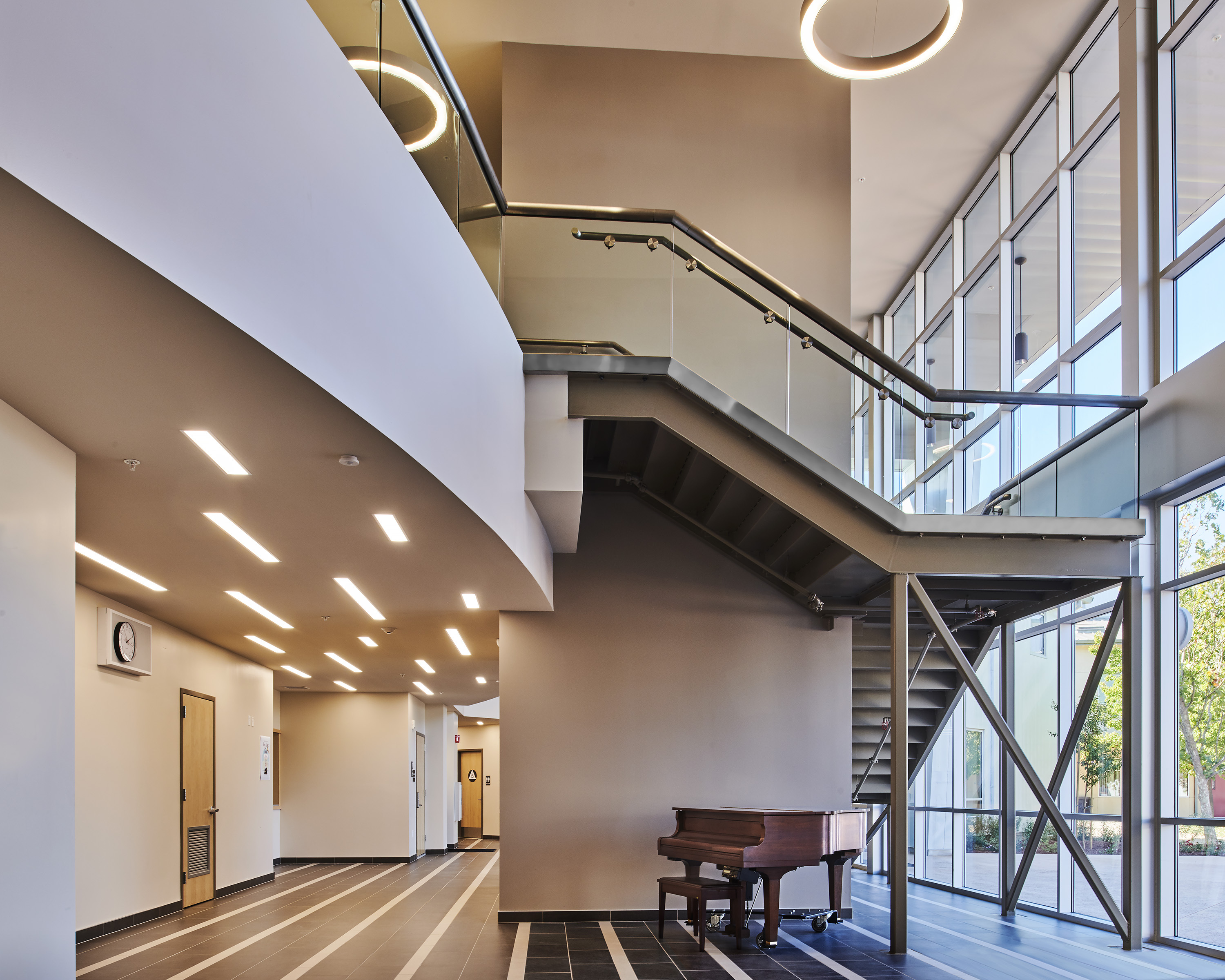
Photo: Kris Knutson Photography
Coordination with Ag Architecture
In terms of the buildings coordinating with other buildings on campus, they have forms, building materials and colors that match.
Both buildings have portions in the front in the boxy shape of a barn. Also, at the front, they both have double-height glass walls with tapered columns at the sides. The barn shape and tapered column shape are also found on a science building next to the arts building. Also echoing the agrarian theme of the architecture, the form of the building for lower grades at the pre-K through grade 12 college prep school resembles stables.
Scott Gaudineer, AIA, president and principal at Flewelling and Moody Architects in Los Angeles, says, “[The school has] been built in segments. If you look at the lower grade levels, they almost look like stables. They’re low-slung, one-story buildings that you could almost imagine horses peeking their heads out of each of the doorways. The vernacular is obviously a school in itself, but it has that sort of low-slung ranch style with extended roof lines that are held up by posts.”
With regard to materials, like the science building, the arts and gymnasium buildings are metal buildings with metal and flat roofs, smooth and corrugated metal wall panels, and stucco walls. For colors, like buildings throughout the campus, light gray and bright red were used.
Gaudineer says, “[Using metal buildings] freed us up to do some of the traditional school facilities such as science labs and classrooms, but using the agrarian architecture to kind of punctuate what was started on the campus at the beginning. So, [metal buildings] played off well.”
More broadly, located south of San Jose among abundant range land, agriculture operations and open spaces, the school’s ag building adjacent aesthetic of the new and existing school buildings fits the local area’s architecture.

Photo: Kris Knutson Photography
Deep Beams, Deep Columns
The metal buildings were essential to create large open spaces in both buildings, for the gymnasium in the Athletic Center and theater in Gwendolyn Riches Liberal Arts Center.
The arts building is L-shaped with the theater in the center. The two wings have classrooms.
Gaudineer says, “[The metal building] allowed us in the fine arts building to create this incredibly unique 250-seat theater complete with catwalks that we could hang off the structure. This is the type of stuff you typically see at much larger school campuses, but we were able to rig everything up and it still reads as a two-story building in the agrarian sense.”
Deep beams and columns were used to create the theater space. Mike Stahlheber, architect at Flewelling and Moody, says, “In some areas we had these really huge, deep columns or deep beams that were done by a 4-foot or 5-foot beam. And then the other ones were really shallow, but we had to get those in a space where we could hide those or conceal those things. That was the challenging part of that building.”

Photo: Kris Knutson Photography
Two-part Gym
The gymnasium building has two main parts, a two-story gym and an attached one-story section with a lobby, locker rooms, team rooms, weight room and concessions stand. Additionally, a covered canopy is at the entrance and a cantilevered sunshade is attached to the front of the building, midway between the double-height glass wall with views to the gym. “We were able to use the connecting lobby space to tie those things together,” says Stahlheber.

Photo: Kris Knutson Photography
Courtyard Orientation
The arts and gymnasium buildings are oriented around a central courtyard. The science building and other buildings are also oriented around the large, circular courtyard.
Stahlheber says, “The idea that [the school] started with was a simple sketch of that public area space being a kind of a circle that radiates out and accesses all the buildings. So, we positioned the buildings not only for sun angles, but then also for how they radiate off that central courtyard.”
The arts building is at the south end of campus and the gymnasium is to the north and west of it, at a slight angle. The theater in the middle of the arts building is at a 45-degree angle to the classroom wings. “If you look out from the second floor [of the arts building], you get a straight shot view of the gym,” explains Stahlheber. “So, those three buildings (arts, science and gymnasium) then encompass and kind of set the diameter for that public space between the three buildings.”
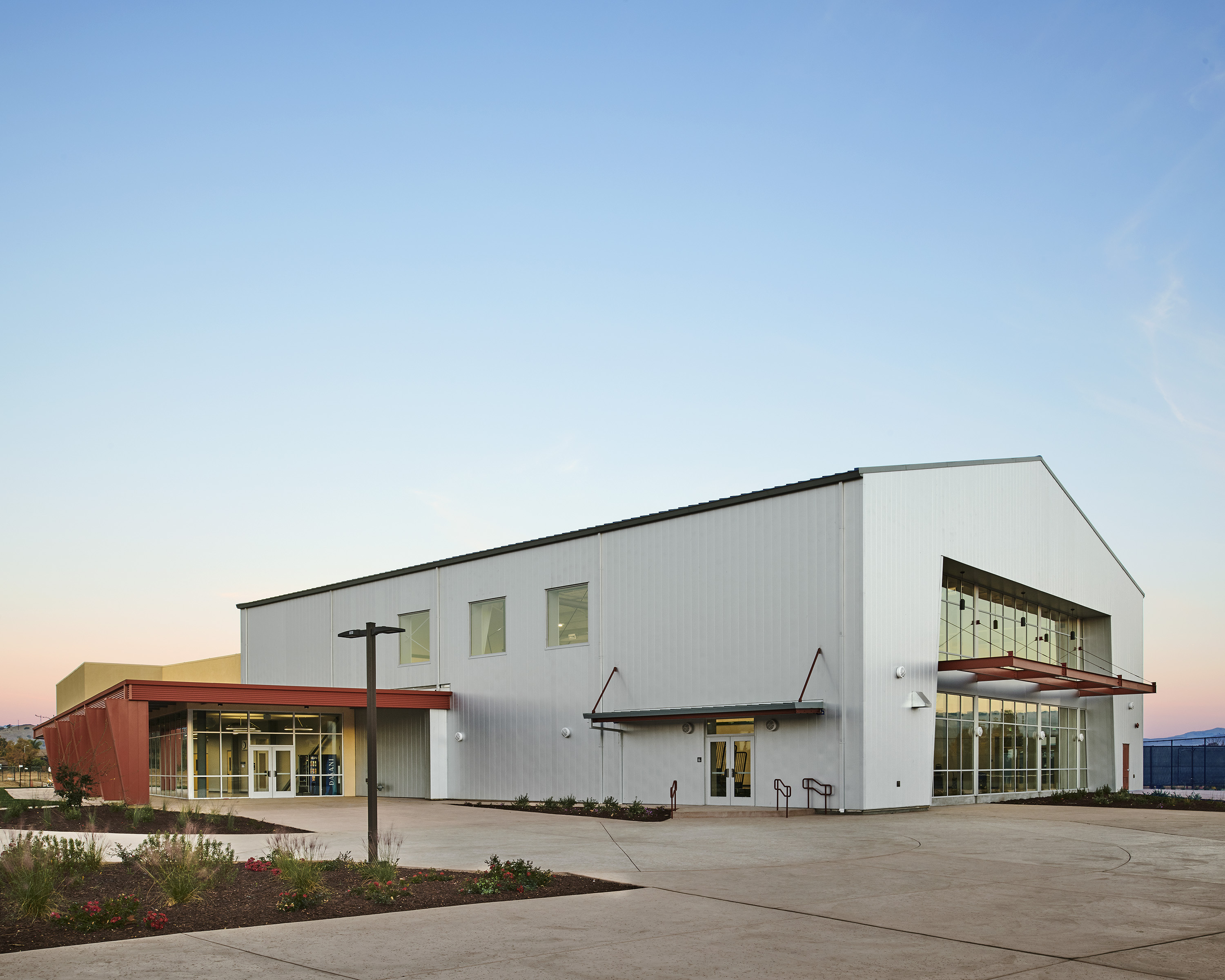
Photo: Kris Knutson Photography
Construction Challenges
Larry Kent, president at Kent Construction in Gilroy, Calif., general contractor for the project, says overall, the project went smoothly. There were some details that required special attention including closure strips on a pan deck. “We’re in California where’s there’s earthquakes, so there’s more seismic stuff that we have to deal with, and there were some details on the pan deck that we just had to fabricate on-site.”
There were numerous elements that required coordination to complete the buildings, Kent adds. “Between I-beams, which are structural steel, fab trusses that had webbing in then, metal decking on top of the second floor so we could pour concrete-filled pan deck, all the different roofing, standing seam and siding with all the trim, you have a bunch of different elements that are going on there that had to come together.”
The pre-fabricated metal building components made it easier, Kent says. “And, obviously there were some angles involved with both buildings, and those are all preset, and that’s what’s nice about having those come out premade. So, the skeleton went together really easily.”
Both buildings were built with metal building systems supplied by Memphis, Tenn.-based Varco Pruden Buildings. Steel Solutions Inc., Hollister, Calif., erected the buildings and installed the metal roof and wall panels.
The metal buildings were specified first and foremost because they met the private school’s budget requirements, Gaudineer says. “First of all, it was an economic choice because you can build faster with manufactured metal building components than you can with straightforward stick build. So that was a big driving force for the school.”
At the roofs, Steel Solutions installed Tacoma, Wash.-based AEP Span’s metal roof panels in Cool ZACtique II. At the walls, Steel Solutions installed AEP Span’s metal wall panels in Zincalume Plus and Cool Red.
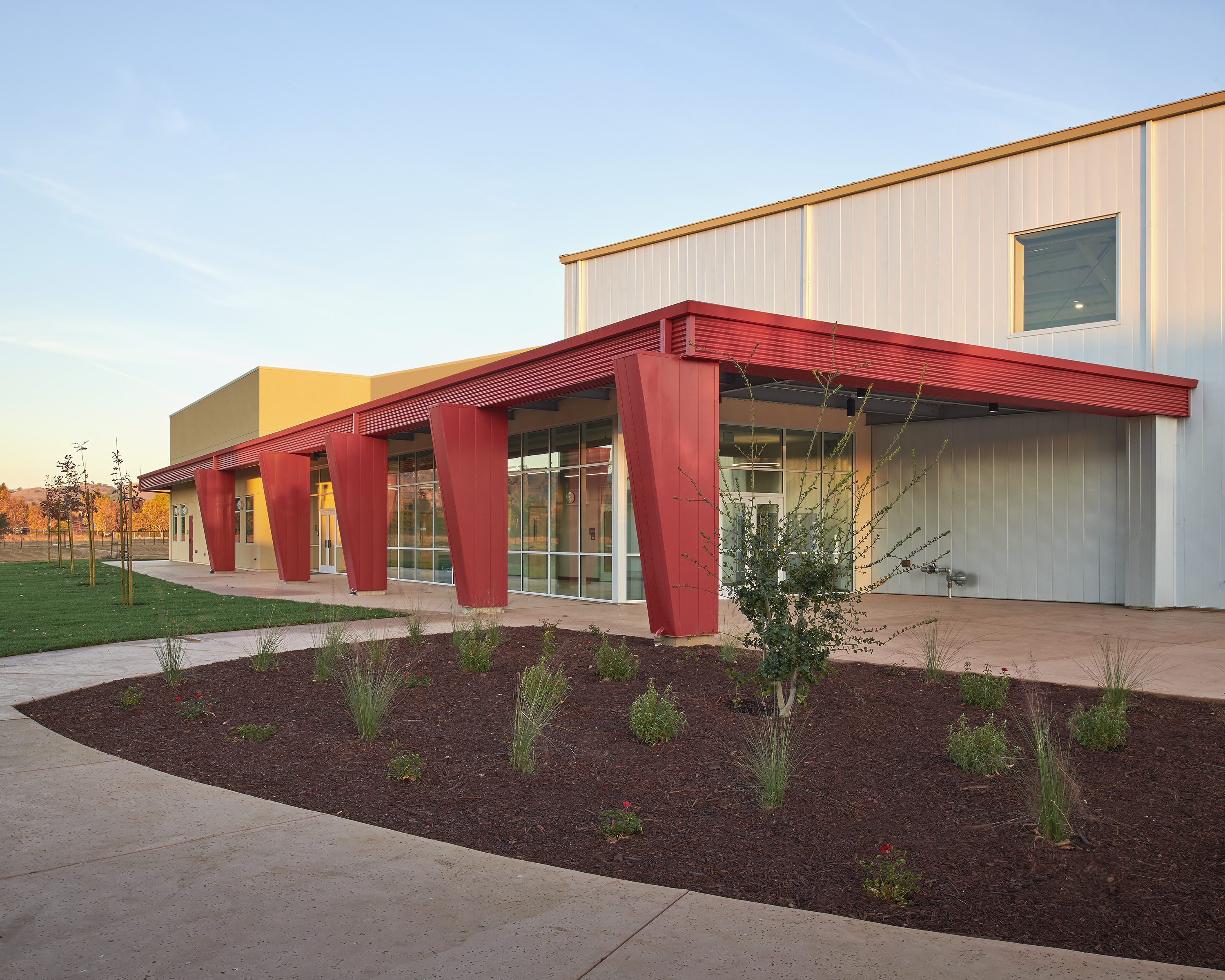
Photo: Kris Knutson Photography
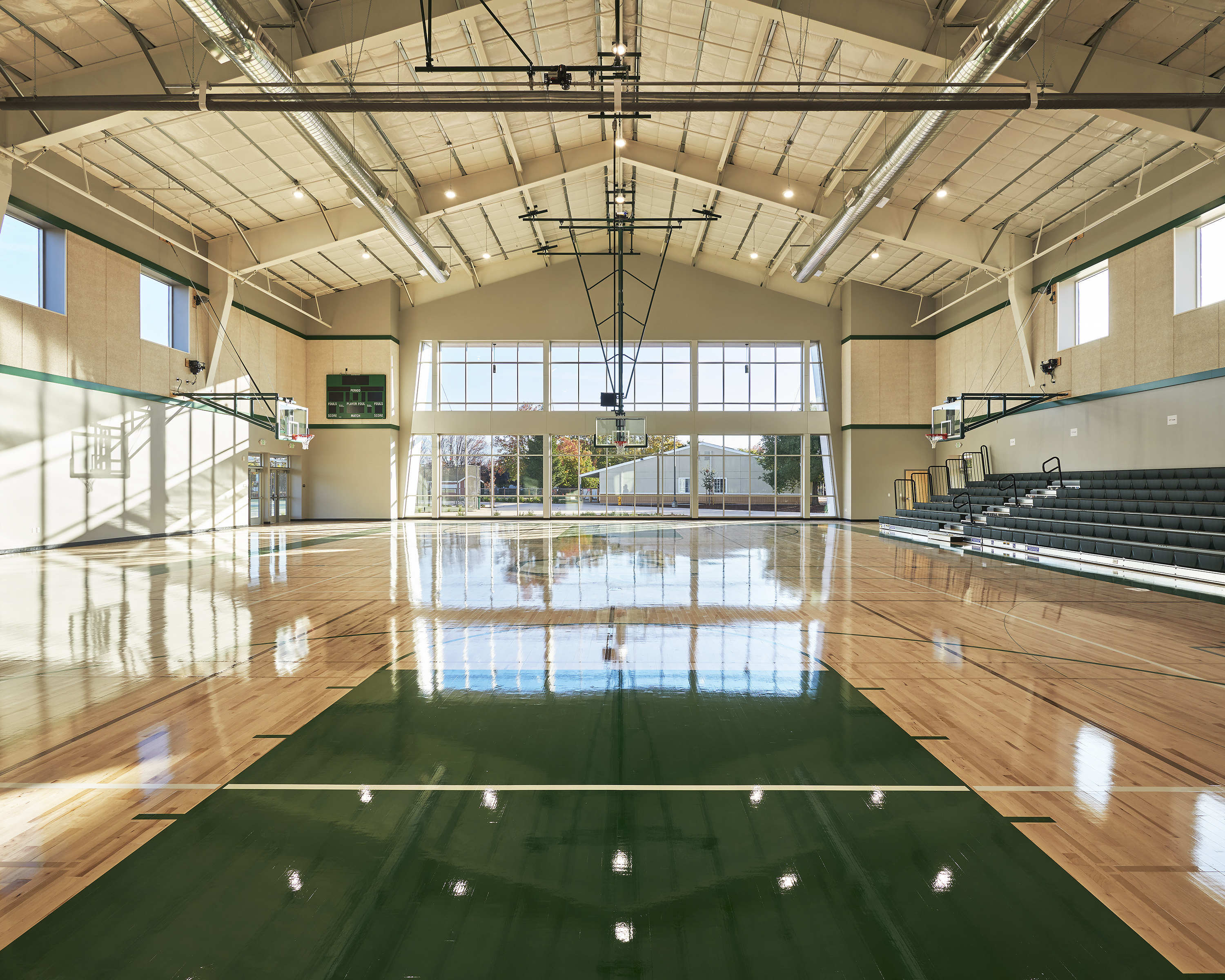
Photo: Kris Knutson Photography
- www.kentconstruction.com : https://www.kentconstruction.com
- www.flewelling-moody.com : https://www.flewelling-moody.com
- steelsi.com : https://steelsi.com
- www.vp.com : https://www.vp.com
- www.aepspan.com : https://www.aepspan.com
Source URL: https://www.metalconstructionnews.com/articles/agrarian-inspiration/