Aluminum EPDs, an Environmental “Nutrition Label” for Builders
by Jonathan McGaha | 4 January 2015 12:00 am

EPDs provide integral data and help qualify for LEED credits
Builders choose specific material types for any number of reasons: cost, functionality, durability, and increasingly, environmental performance. Representing an industry committed to the sustainability of its products and their use, The Aluminum Association, Arlington, Va., recently released a series of Environmental Product Declarations (EPDs) during the 2014 Greenbuild International Conference & Expo in New Orleans. These EPDs provide builders with detailed information on the environmental performance of the main types of aluminum produced in North America today. For end users working with aluminum, this means more and better data, and the ability to qualify for credit under LEED.
So, what’s an EPD? It’s a comprehensive, internationally harmonized report that describes the potential environmental impact of a particular product through its life cycle. Think of it as an environmental nutrition label. It includes information on all aspects of a product’s potential impact, such as energy use, global warming, acidification, eutrophication, etc. Just like a nutrition label, the consideration behind an EPD is information disclosure and transparency. The rationale is that such disclosure will enable consumers to make the most informed choice possible.
The Aluminum Association partnered with PE International Inc., Boston, to develop EPDs for five aluminum product types through one of the largest industry life cycle assessment (LCA) studies ever completed. A total of 25 aluminum companies participated in the effort and supplied data for almost all of their operational facilities. The EPDs were certified by UL Environment, Marietta, Ga., a widely respected program operator and the leading firm in verifying EPDs in North America. The EPDs will allow architects, builders and others to make more educated decisions about choosing aluminum versus competing product types.
 The industry has developed EPDs on:
• Hot-rolled aluminum: Aluminum sheet and plate rolled at a pre-heated temperature and often used to make building roofs, siding, wall plates and other functional or decorative components.
• Cold-rolled aluminum: Aluminum sheet and plate rolled through a secondary “cold rolling” process to make the metal thinner and stronger. Often used to make building roofs, sidings, wall plates, and other functional or decorative components.
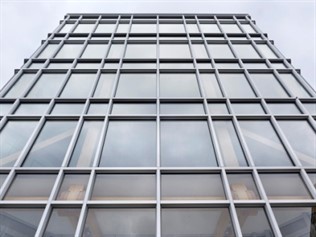
• Extruded aluminum: Aluminum fed through a hydraulic press to make a particular shape. Often used to make doors, windows, façades, curtainwalls, skylights, sunrooms, integrated and non-integrated solar panels and renewable energy devices.
• Primary ingot: Raw material produced directly from bauxite and used to make casted, rolled or extruded aluminum.
• Secondary ingot: Raw material produced from recycled aluminum and used to make casted, rolled or extruded aluminum.
The set of aluminum EPDs not only specifies technical information about the potential environmental impacts of each product form but also includes other critical information on the manufacturing process, industry average recycled content (if any), the applications of the products in major market sectors and product recycling. EPDs are now being used to help earn LEED credit points for green building certification. Under LEED v4, building products are required to conduct a Type III EPD to earn such credits. Both product manufacturers and industry trade associations can conduct EPDs, with the industry EPD counted as half a product and manufacturer’s EPD counted as a full product.
The Aluminum Association is one of the first major material industry associations to engage in such an effort. By developing robust LCA data and producing complementary EPDs, the aluminum industry is demonstrating its commitment to transparency and sustainability. Often, the industry-wide EPD data will meet the requirements of end users, meaning the individual manufacturers will not need to conduct their own study. Ultimately, the Association’s EPD program will help our industry tell its story and it will also help designers and builders make informed choices about using our material.
Jinlong Marshall Wang is senior sustainability specialist at The Aluminum Association, Arlington, Va. To learn more, please visit www.aluminum.org/EPD[1].
- www.aluminum.org/EPD: http://www.aluminum.org/EPD
Source URL: https://www.metalconstructionnews.com/articles/aluminum-epds-an-environmental-nutrition-label-for-builders/