Answers Regarding Fall Protection
by Mark Robins | 1 March 2021 12:00 am
Q&A info on common fall protection issues
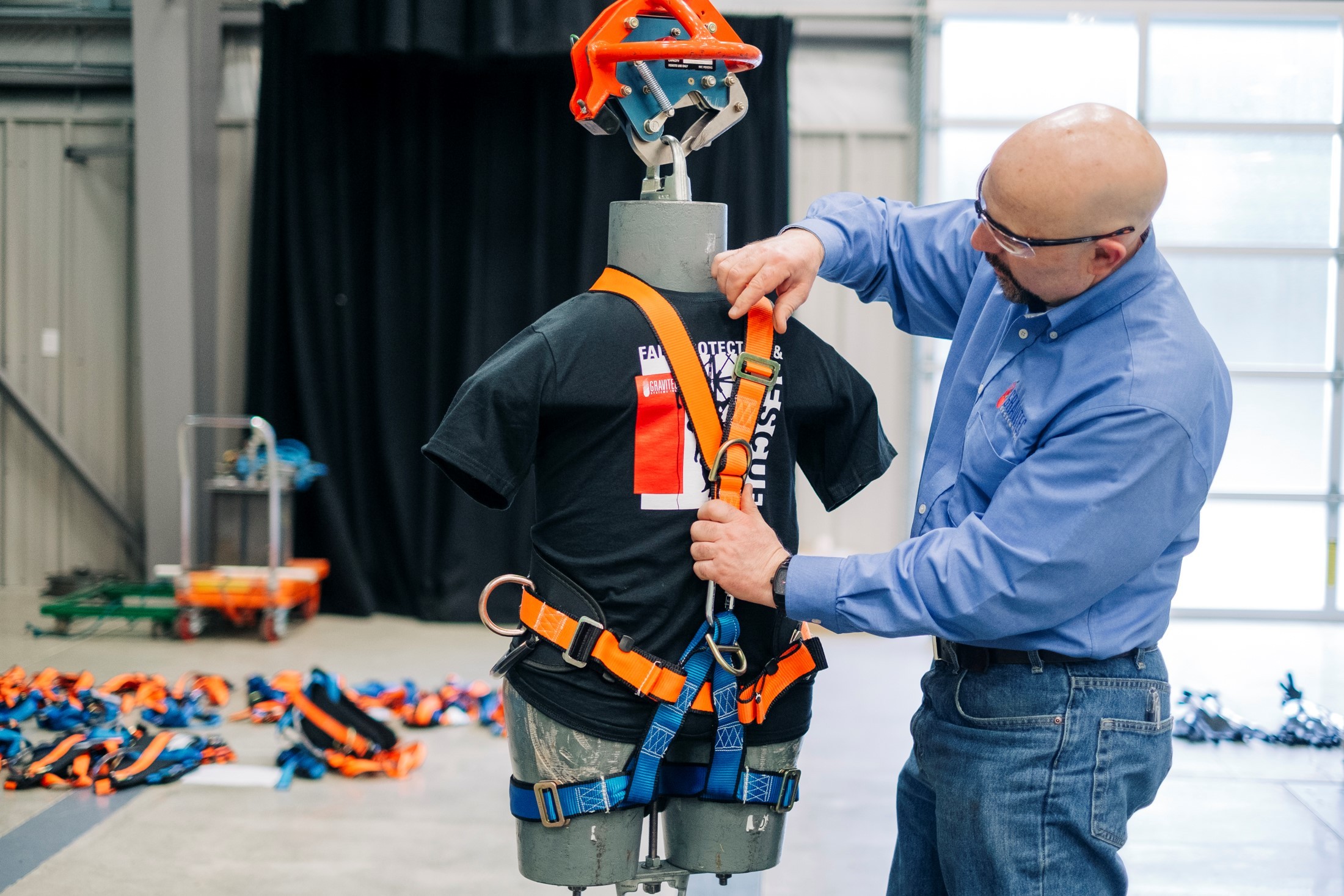
1. What is the normal life cycle of a fall protection harness? Is there a requirement to change them out every five years?
This question is probably the most common and it is difficult to give an objective answer to since the area and frequency of use determines the product service life, not the age. The age of the harness is a consideration, but not the sole factor.
A harness used in an abusive environment (i.e., painting) will not last as long as a harness used in a clean environment (i.e., warehouse). If the function and condition of the harness is not affected, a harness can provide several years of service. Manufacturers are hesitant to provide a service life duration, since a harness may be damaged or retried in its first week of use.
2. We have several employees that weigh more than 310 pounds. What is available in a harness and lanyard rated for larger folks and is it wise to put our employees in them?
There are several harnesses available for workers over 310 pounds, even up to 420 pounds; however, I would caution you regarding putting workers of this size in fall arrest systems. Keep in mind, although the harness may be rated for the heavier worker, the other equipment in use is just as, or even more important. The issue is the amount of force that a heavier worker creates during a fall. The energy absorber in use and the fall distance are more important in controlling arrest force than the harness.
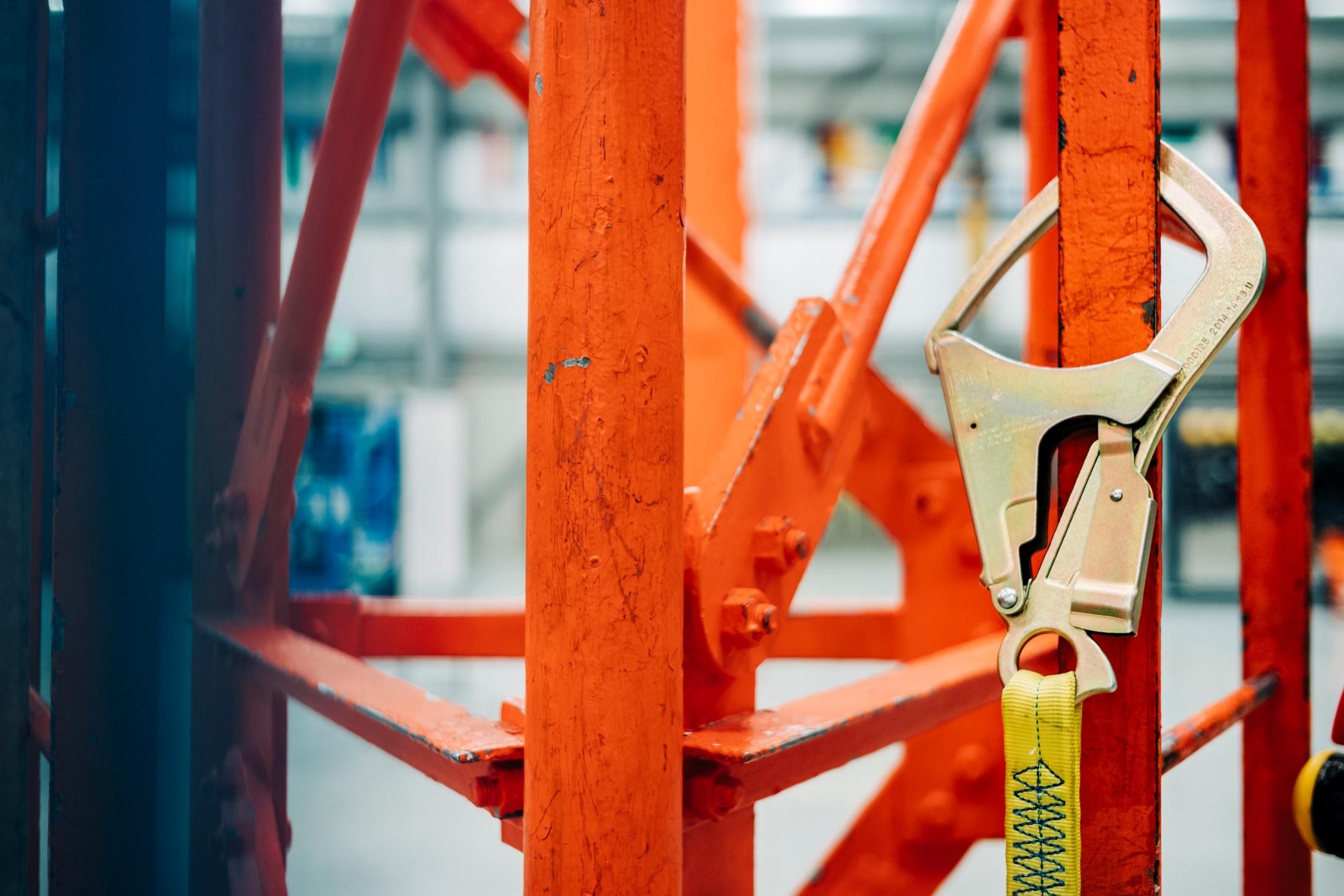
3. What are the forces experienced by the snap-hook of a fall protection component, such as an energy absorbing lanyard (EAL), during a fall event where the user falls the maximum freefall distance?
The answer to this question is not a simple one. It really depends on the situation at hand. ANSI-compliant lanyards and other connecting means, when used as designed (310-pound worker—6-foot free fall max), should only submit the worker to an average maximum arresting force (MAF) of 900 pounds.
This is also true for the anchorage; therefore, the snap hook should also only see an average MAF of 900 pounds in the event of a fall with the parameters mentioned. There are EALs that are designed for longer falls (up to 12 feet), but these have a higher average MAF and therefore result in a higher load on the body, on the anchor and the snap-hook.
4. The OSHA regs say that a connector for fall protection must be of drop forged, pressed or formed steel or equivalent material. Does this mean aluminum carabiners are out of the question or do they fall into the equivalent materials category?
It’s generally accepted that aluminum components that pass the strength and locking features tests are considered equivalent. Although aluminum and steel are not equivalent in regards to weight and durability, aluminum components are deemed equivalent regarding strength and function. There are no letters of interpretation on this issue or an official OSHA statement, but aluminum components are widely used and there are no OSHA warnings about them.
5. On the new OSHA guidelines for ladders, does “equipped with a personal fall arrest system to arrest a worker’s fall” rule out the legality of the use of Y-lanyards to climb the ladder?
OSHA isn’t clear if using a Y-lanyard to climb fixed ladders will satisfy the new fall protection regulations (1910.28). While 1910.28 is unclear, 1910.29(i) specifies what a ladder safety system must accomplish and minimum requirements. One of which is a maximum attachment length of 9 inches, therefore one could make the argument that a Y-lanyard may not be used as it would not meet the requirement of a ladder safety system.
6. What is the length that a certification is valid for a Competent Person? Where can I get this information?
The best place to look is in ANSI Z359.2 “Minimum Requirements for a Comprehensive Managed Fall Protection Program” Clause 3.3.4.5, which states that Competent Person Update Training shall be conducted at least every two years or when new fall protection systems are used or new fall hazards encountered.
These are only a few examples of the many questions we get on a daily basis. The fact that regulations can be confusing, standards can be contradictory and there are many work practices that are based on the philosophy of “this is how we have always done it,” we don’t expect a downturn on the need for common sense answers to these types of questions any time soon.
David Lough is the vice president of operations for Gravitec Systems Inc., Poulsbo, Wash., a consulting company that specializes in fall protection engineering, education and equipment. To learn more, visit www.gravitec.com[1] or call (206) 780-2898.
- www.gravitec.com: http://www.gravitec.com/
Source URL: https://www.metalconstructionnews.com/articles/answers-regarding-fall-protection/