Avoiding Common IMP Pitfalls, Mistakes
by Mark Robins | 1 July 2021 12:00 am
Understand the strengths and limitations of IMPs
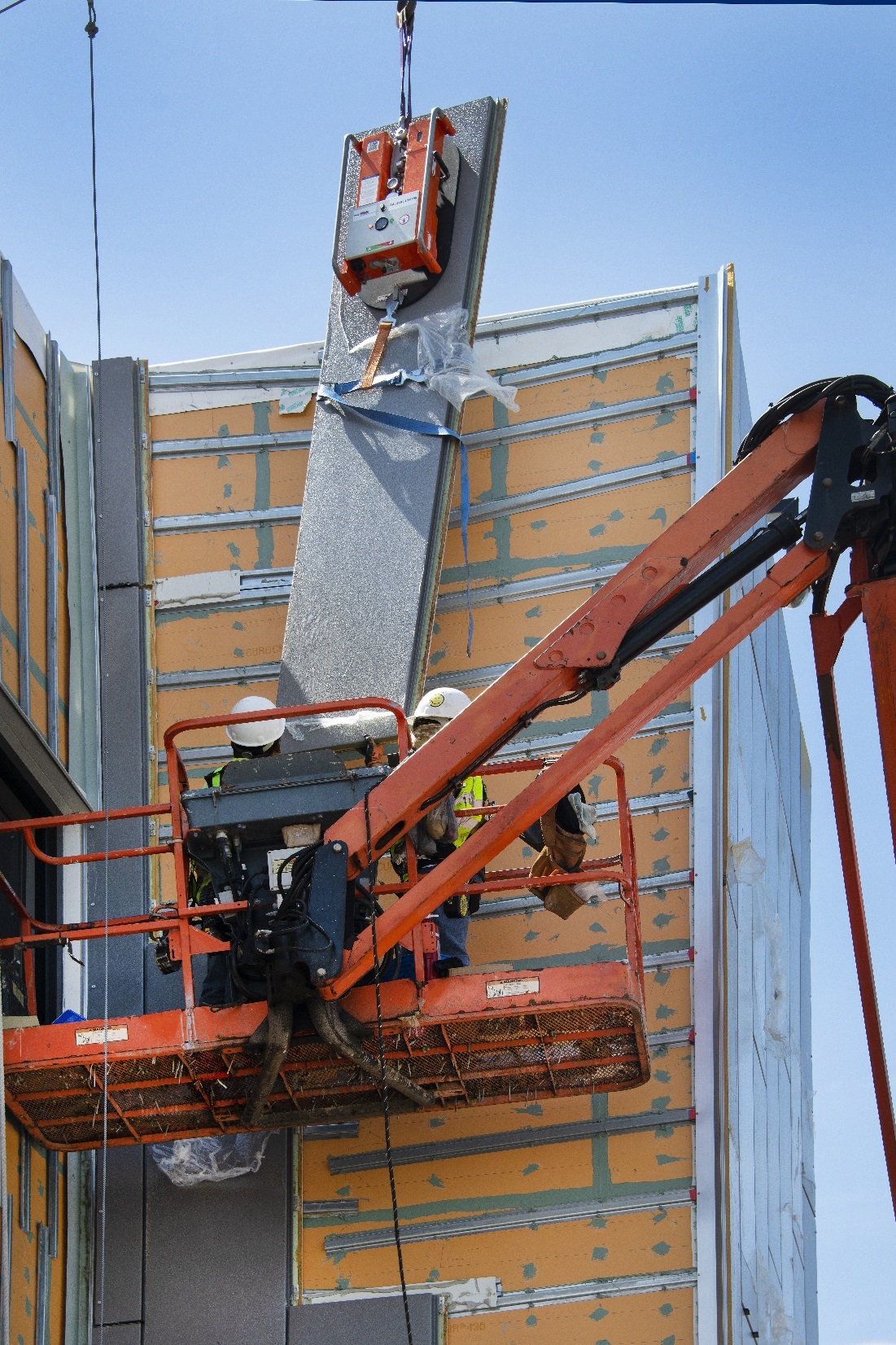
IMPs have advanced the construction industry with a broad variety of panel designs, shapes, sizes and textures, opening the door to a new family of attractive, efficient and affordable buildings. But all that diversity, color and design opportunity comes with some additional responsibility for understanding the strengths and limitations of IMP components. In other words, keep an eye on Mother Nature, pay attention to potential stress from heat and cold, and don’t forget to protect IMPs from unwanted motion.
Take this story from a European builder, for example. He was accustomed to only dealing with flat IMPs on all his projects, so when he took on a project in a tornado-prone region of the United States, he learned the hard way that not all IMPs are created the same. Unfortunately, his building was damaged by high winds that can be so prominent in the Midwest.
That was an expensive lesson that could have been avoided if the builder had paid closer attention to the range of stress tolerances that IMPs offer. He would have known that panels with deeper profiles would have been a better choice, offering greater rigidity to buildings that face heavy wind loads.
IMP Considerations
Subcontractors and architects should also take potential heat, cold and moisture into consideration. If panels are not sealed properly when intersecting with brick, glass or other building materials, outside elements can compromise energy efficiency or cause water damage, such as mold. The industry offers a variety of solutions to ensure IMPs can be sealed tightly against all adjacent materials. For example, installers can use acrylic caulk with silicone to form a seal between IMPs and materials, such as wood, brick and other masonry.
Problems also can occur when IMPs are exposed to sharply contrasting temperature differences. For example, refrigerated buildings can encounter thermal stress on hot summer days. When the interior walls are cold and the exterior is hot, the IMPs can expand and contract at the same time, resulting in a reaction called thermal bowing. There are simple solutions to the problem, such as lighter color selection on the exterior side to reduce heat absorption. Panel lengths also can be reduced to help mitigate the problem.
But weather is not the only concern architects and installers must consider. Simple foot traffic inside a multistory office building can create damaging stress if floor movement is transferred to IMPs on the building’s exterior. From time to time, architects make the common mistake of tying floors to wall studs. The problem is that wall studs move with the floors they are attached to. Because IMPs are connected to the same wall studs, energy from the moving floor can transfer to the panels, which are not designed to move. Architects can avoid trouble by using a variety of deflection joint systems that absorb movement and take pressure off panels.
IMP Training
Manufacturers, architects and installers are all on the same team. They want strong buildings constructed by trained workers using the best materials. IMP manufacturers invest a lot of time on training to ensure installers and designers have the knowledge they need to avoid pitfalls that could compromise a building’s long-term performance.
Animations, installation manuals, training videos and online classes are available. There also are frequent training opportunities at job sites. In-person training is always best, but when that is not possible, videos are available on company websites. In addition to videos, installation manuals can serve as good teaching tools as well as handy references to draw from when questions arise. Training opportunities also are available for architects. Metl-Span offers online classes on IMPs that are accredited by the American Institute of Architecture.
IMP manufacturers try to be on site to recognize installation and design problems early, so they can be corrected before becoming costly, but that is not always possible. As IMPs become more popular, training has become more important. Whether in-person or on a webinar, training can enhance a building’s appearance and functionality. Not only that, but training can open the way for the full potential of IMPs to shine through.
Arnold Corbin is the technical service manager and Ralph Bertram is the manager of product application for Cary, N.C.-based Cornerstone Building Brands, parent company of Lewisville, Texas-based Metl-Span. For more information, visit www.metlspan.com[1] and www.cornerstonebuildingbrands.com[2].
- www.metlspan.com: http://www.metlspan.com
- www.cornerstonebuildingbrands.com: http://www.cornerstonebuildingbrands.com
Source URL: https://www.metalconstructionnews.com/articles/avoiding-common-imp-pitfalls-mistakes/