Bottom Rolling Hangar Doors
by Jonathan McGaha | 2 November 2015 12:00 am
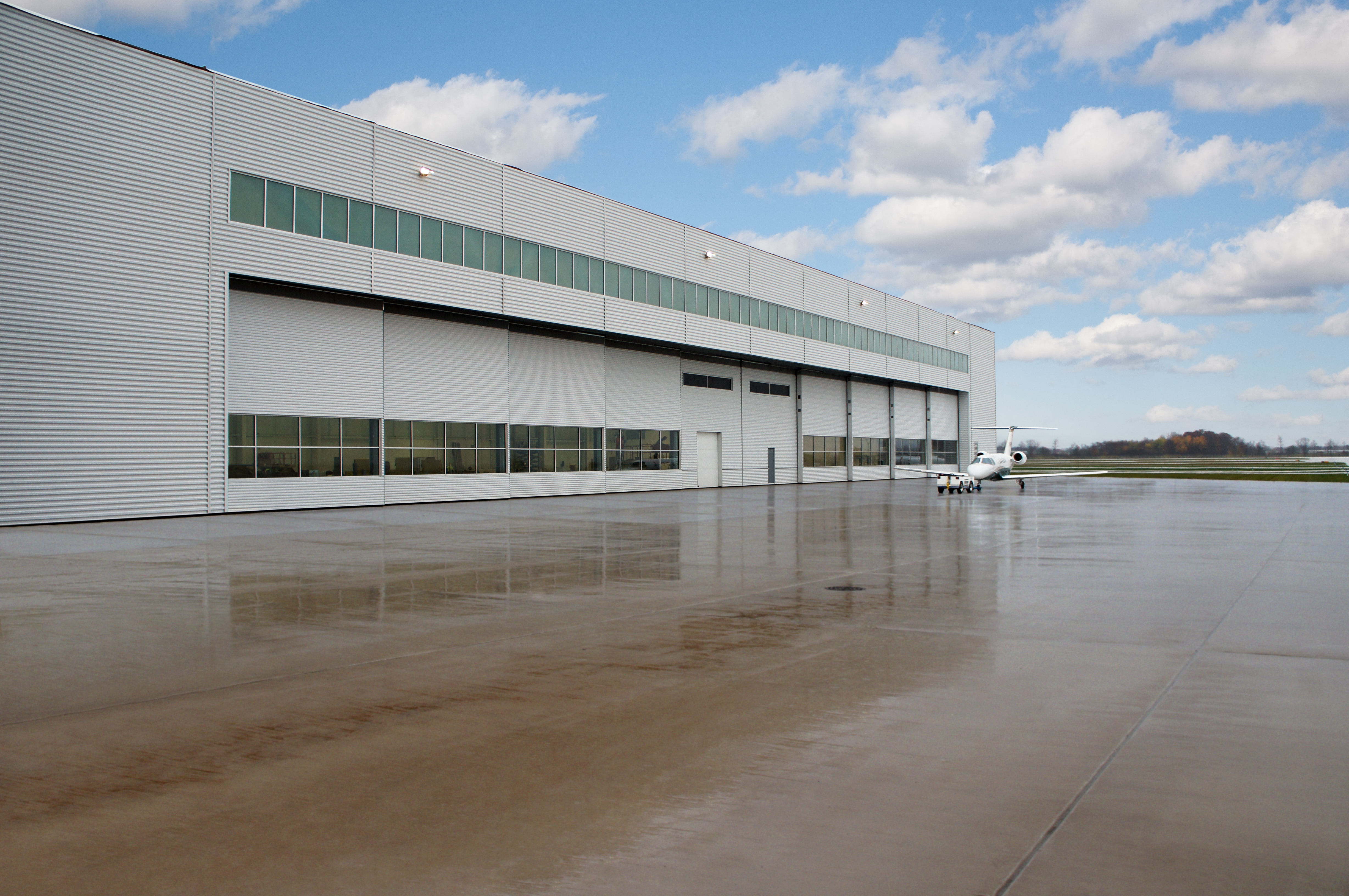
Here are considerations when selecting bottom rolling doors for hangars
When designing an aircraft hangar, there are many parts to the hangar that need to be considered. Just as important as the lighting, flooring and overall size of the hangar, strong consideration should also be given to the hangar door system. The door system needs to be made of strong materials, open efficiently, and most importantly, be reliable. In most large hangars, bottom rolling doors are specified for their ease of use, protection from the elements, and customizability. Here are some items to keep in mind when selecting bottom rolling doors for your hangar.
Configurations
Bottom rolling hangar doors come in a variety of configurations depending on the needs of the hangar. Doors can be opened one-way
(left or right), bi-parting, or be installed as floating doors that allow each door panel to move in any direction.
• One-Way Door: Only one door pocket is required on the side of the building, leaving the other side open for offices or other design requests.
• Bi-parting Door: Can be designed as either a northern- or southern-stack system. A northern system is most common and is used in areas with inclement weather. The northern stack leaves no portion of the bottom rails exposed to the elements when the doors are closed. The door panels are controlled inside and stack on the interior of the building. A southern stack door system is normally used in climates where snow and ice are not a concern. The doors stack on the outside of the building resulting in no storage needed on the inside.
• Floating Door: This door configuration is the ultimate in design flexibility. Each door panel can travel the full length of the opening, in any direction. Door panels are individually powered or can be operated together as a group. The floating door system requires minimal interior floor space and does not require storage pockets.
 |
| Photo courtesy of Norco Manufacturing Corp. |
Materials and Parts
Typically each hangar door system consists of a bottom rail system: bottom rail, leveling angles, and anchor bolts. The bottom rail system is designed so the weight of each door panel is supported on the ground and does not add additional dead weight to the building. A telescoping Pogo system is used for larger clear openings and can accommodate building deflections 9 inches down and 6 inches up, which help reduce building costs. Door construction consists of a hot-rolled structural perimeter and a galvanized secondary member, specifically engineered for each location. Heavy-duty, top-andbottom rollers prevent disengagement from the building, keeping the door panels in place.
Design Considerations
Door leaves are designed to accept any type and thickness of exterior/interior panels including preformed metal panels, insulated panels and flat sheet. Integrated windows, personnel doors, rollup doors and polycarbonate are just some examples that can be incorporated into the door system. Perimeter weather seals provide a weathertight seal on all four sides of the door: top, bottom, and both sides of each door leaf.
Integration
Using 3-D CAD software, hangar door manufacturers can export the drawings into a building information model (BIM) file to allow the building manufacturer, architect or general contractor to integrate the door into the building seamlessly. The same CAD details are downloaded into computer controlled fabrication (CNC) equipment to produce the correct components. Examples of 3-D CAD software used in the hangar door industry are Tekla, Revit and AutoCAD.
Industry Trends
The bottom rolling hangar door industry continues to customize doors based on the end user’s needs. Customized electrical solutions include touch-screen controls, Wi-Fi-enabled feedback and diagnostics. Maintenance, repair and operations, and corporate hangars are getting increasingly larger. These facilities require larger clear spans to accommodate multiple planes and configurations. The bottom rolling door system is the logical solution to fit each facility.
Dulcie Neider is marketing coordinator at Norco Manufacturing Corp., Franksville, Wis. To learn more, go to www.norcomfg.com[1] or call (262) 835-2600.
- www.norcomfg.com: http://www.norcomfg.com
Source URL: https://www.metalconstructionnews.com/articles/bottom-rolling-hangar-doors/