Choosing the right safety gear in 2026
by anthony_capkun_2 | 23 October 2026 2:40 pm
 [1]
Most employers assume that if their safety gear meets OSHA requirements, their workers are protected. But there is a growing gap between equipment that is technically compliant and equipment that reflects the latest advances in worker protection.
Metal Construction News spoke with Cam Mackey, president & CEO of the International Safety Equipment Association (ISEA), to learn how contractors and safety professionals can choose the right safety gear in 2026.
Our conversation covered the latest developments in personal protective equipment (PPE), including hard hats, safety helmets, protective eyewear, work gloves, and first aid kits.
This is especially important now, as ISEA and ANSI are publishing updated standards for head protection, eyewear, gloves, and first aid kits. The changes reflect advances in product design, testing, markings, and emergency preparedness—areas where OSHA may not always keep pace. For employers, that means compliance should be viewed as a starting point, not the finish line.
Whether you’re a contractor, safety manager, or business owner, this discussion provides practical guidance for evaluating PPE and improving worker protection on today’s jobsites.
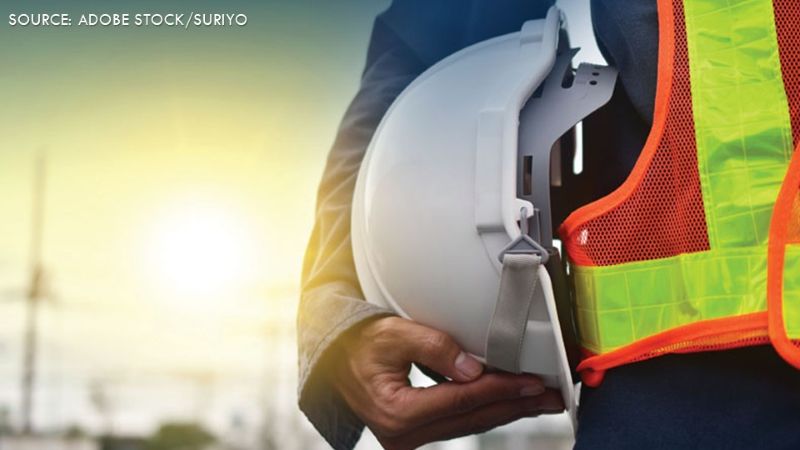
Modern head protection
There are so many options and choices for head protection; some products look like traditional hard hats while others look like climbing helmets. There are tons of different materials and performance attributes, and it has never been easier to select head protection that protects workers and fits comfortably.
But having so much selection can also be pretty daunting.
ISEA is in the final stages of publishing the latest version of ANSI/ISEA Z89.1, the national standard for industrial head protection.
OSHA’s regulations reference outdated Z89.1 versions. The agency encourages employers to keep up with modern safety advances. For example, in December 2023 OSHA purchased safety helmets for its staff members. Presumably, these met the ANSI/ISEA Z89.1-2020 version, which is currently not referenced in the OSHA regulations.
Unless you are a safety professional, it is not recommended that you try to pick out the right head protection for your workers. It is too easy to pick the wrong thing.
There are two important standards when it comes to head protection. Bump caps are covered by ANSI/ISEA 100-2024, and they’re great if your crew is working under something and are likely to bump their heads i.e. where the worker hits an object rather than an object hitting the worker.
Because many construction workers are going to be on sites where bump caps do not provide the appropriate protection, most construction-related hazards will require head protection that conforms to ANSI/ISEA Z89.1.
When selecting head protection, look for a label that shows Type I or Type II. Type I protects the top of the head, but Type II protects both the top and the sides. You cannot judge a book by its cover. You have to check the label.
What many people consider a “traditional” hard hat still contains a ton of innovation. A brimmed hard hat may look traditional, but it may be made out of bioengineered plastic or recycled material, or it could feature antimicrobial properties. It might also have built-in technology to inform responders of the amount of force an incapacitated worker sustained.
Some jobs are more dangerous than others, so the designation “+” has been added to the new ANSI/ISEA Z89.1, meaning there will be Type I+ and Type II+ head protection in the market. The “+” designation means the headgear features retention or roll-off prevention. In other words, it is going to stay on your head better in the event of a fall or if struck by an object or equipment.
Safety eyewear and hand protection
Safety eyewear, which comes in clear glasses, sunglasses, and many other styles, is covered by the standard ANSI/ISEA Z87.1, and a new version was published in 2025.
The Z87 committee did a tremendous job simplifying and clarifying the standard, including impact testing. Whether it is Z87 or Z87+, employers and safety managers can now quickly identify eyewear by its markings.
The average occupational hand injury costs about $46,000. The injury itself is painful and terrible, but then there’s also time off work, indemnity and medical costs … things can get really serious.
Yet 75% of hand injuries occur because someone was not wearing the gloves they were supposed to wear.
 [2]
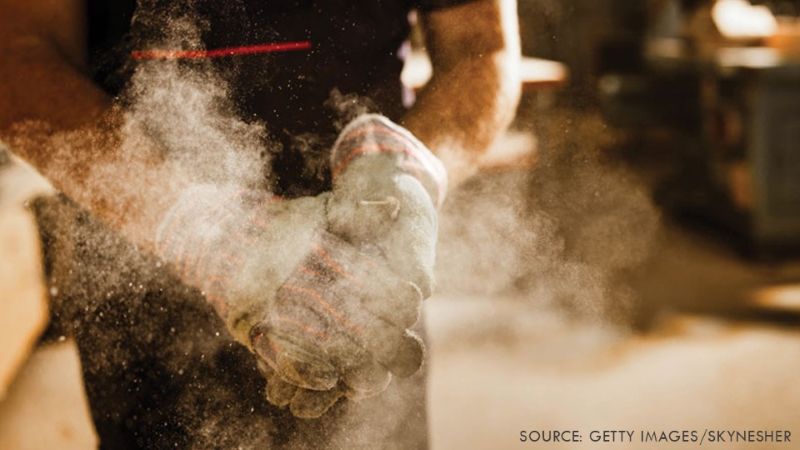
For hand protection, the standard is ANSI/ISEA 105. There is a little pentagon on the glove that tells you the level of cut and puncture resistance. Depending on the work involved, such as cutting metal, you do not want a lightweight glove that tears on the first hit. You will want something with a higher level of resistance, like an A7 or A8.
Employers should encourage workers to report gloves that do not fit properly or show signs of damage. As with other types of PPE, gloves do not last forever. Your safety partner will help you determine whether your gloves are disposable and should be pitched every day or every week, and what signs to watch for that indicate they should be replaced.
Workplace first aid kits
OSHA’s regulations are not overly prescriptive, which gives everyone flexibility and allows innovation. The downside is that while OSHA tells you to have a first aid kit, it does not tell you what should go into it.
Working with industry, ISEA is preparing to publish the latest version of the first aid kit standard, ANSI/ISEA Z308.1. Recognizing that every jobsite is different, some of the updates simply provide practical guidance, like what type of tourniquet to use based on someone’s injury. It also includes a requirement that the guide in the first aid kit be in both English and Spanish.
The standard also includes two supplements for first aid kits: opioid overdose reversal medication, such as naloxone, and an anti-choking device. While both are optional, Mackey believes every jobsite should include them.
Rely on your QSSP
The United States is fortunate to have a great ecosystem of companies and organizations with a ton of safety knowledge, and whose mission is to protect workers.
But perhaps the best people to consult are those who want to sell you PPE because they have a vested interest in doing it correctly. Many distributors have people who have been trained in a program called QSSP, or Qualified Safety Sales Professional, which is basically a crash course in OSHA regulations, product standards, job hazard assessments, and the various types of PPE.
A QSSP can come to your site and help you do a job hazard assessment; maybe 10 of your workers need Type II+ head protection while only two require Type I.
And here’s the reality, backed by studies: workers will not wear their PPE when it is uncomfortable and they feel forced into it. A QSSP or safety professional can help. Instead of saying, “Here is the hard hat everyone is going to wear, like it or not,” they can bring in different models and brands and let workers try them all.
On many jobsites, workers have the opportunity to try different styles. Often, they say, “I like this safety eyewear because I actually feel cool. It looks like something I would want to wear on the weekend.”
That’s a huge win. Involving workers, and giving them some authority and autonomy, is the best way to get workers to wear PPE and feel good and confident.
PPE is not set it and forget it. Believe it or not, a lot of PPE expires. Most hard hats provide guidance on when they are to be replaced. Frequent use in the sun could shorten that replacement schedule. Always replace a hard hat if it is struck by an object. If you don’t have the expertise in-house, bring in a QSSP and ask them to help you build a PPE program that includes timely replacement of expiring items.
You can be smart and strategic about PPE while still showing a high level of care toward your workers.
Keeping up with PPE innovation
ISEA’s advice is to be OSHA compliant, but with so much innovation available for protecting workers—and for preventing or responding to injury—employers should try to provide the best, not just the minimum. After all, that is what they ask of their workers.
Personal protective equipment is much more than meets the eye, and not all PPE is created equal. It is important to select PPE that gives your workers the protection they need to go home safe every day.
“For employers, that means compliance should be viewed as a starting point, not the finish line.”
Anthony Capkun[3] is the editor-in-chief of Metal Construction News[4] and Metal Architecture[5] magazines. Raised as a drywaller, he has spent over two decades as an editor in the construction sector.
This feature originally appeared in the October 2026 edition of Metal Construction News, which you can find in our Digital Edition Archive.
- [Image]: https://www.metalconstructionnews.com/wp-content/uploads/2026/10/Safety-Gear-MCNOctober2026-800-01.jpg
- [Image]: https://www.metalconstructionnews.com/wp-content/uploads/2026/10/Safety-Gear-MCNOctober2026-800-02.jpg
- Anthony Capkun: https://www.linkedin.com/in/anthonycapkun/
- Metal Construction News: https://www.metalconstructionnews.com/
- Metal Architecture: https://www.metalarchitecture.com/
Source URL: https://www.metalconstructionnews.com/articles/choosing-the-right-safety-gear-in-2026/