A Matter of Trust: Contractors Weigh in on Daylighting Systems
by David Flaherty | 5 April 2026 8:23 pm
 [1]
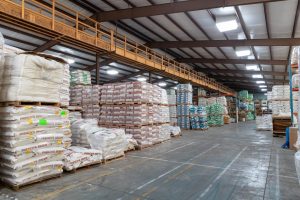
[1]Contractors place their trust in rooftop systems that provide brilliant, diffused daylight to interior spaces with easy installation and a high level of leak-free reliability.
Natural sunlight has long been considered superior to artificial light. It contains the full spectrum of colors, and studies show that people are generally happier and healthier living, working, and shopping in sunlit environments. Although windows let natural light into a building, organizations often use artificial lighting indoors. Today, many seek to let natural light illuminate the interior. As a result, homeowners, retail businesses, and warehouse owners are turning to daylighting systems to reduce, and in some cases, eliminate, the need for artificial lighting during the day.
Daylighting systems, which passively harness and enhance sunlight, are not simple skylights. Rather, they apply physics to standard glass domes, which facilitate and diffuse the light entering a building without harshness or glare. These energy-efficient systems can evenly illuminate building interiors of any size with pleasing daylight. The dramatic effect floods the space with bright light, enabling true color perception, which is crucial for selling many products. Even with these tangible benefits, the contractor is usually focused on ease of installation and reliability. Their prime concern typically is “After the job, can I sleep at night without worrying about getting a callback [for leakage] after the first rain?”
 [2]
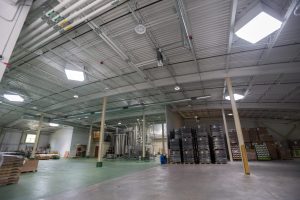
[2]After all, any penetration of a watertight roof membrane can introduce a potential pathway for water, which no one wants. Therefore, contractors need exceptional confidence that the systems they install will be leak-free and highly reliable. In the industry, one reliable daylighting system is specifically engineered for leak-free installation. Contractors make it clear to their customers that the installation process gives them confidence in its watertight integrity.
This system is composed of four parts: first, sunlight is gathered and diffused through an ultra-clear outer dome and inner collimation lens. A light shaft made of insulated panels with highly reflective interior surfaces amplifies natural light as it is captured. And finally, a ceiling lens, engineered to diffuse highly concentrated light into a broad lighting pattern, is installed on the interior ceiling. The product comes in three common sizes: 0.61 m x 0.61 m (2 ft × 2 ft), 0.61 m x 1.22 m (2 ft × 4 ft), and 1.22 m x 1.22 m (4 ft × 4 ft), although other sizes are available.
As a general contractor for 30 years, Jonas Yoder, owner of JY Construction, has installed many natural daylighting systems.
“For natural lighting in roofing, I wouldn’t consider installing anything but [this particular] system because its lighting and reliability are superior. It is a high-quality product that installs without leaks. With other choices, you may get callbacks when they leak,” says Yoder. According to Yoder, in other systems he has used fiberglass construction, which is prone to distortion and diminishes natural light over time. In addition, when cracks emerge in the fiberglass, leakage occurs.
One of the reasons for its reliability is its design and engineering to prevent leaks. This begins with a properly installed essential roof curb that provides a level platform for the daylighting components to attach. Rooftop curbs are raised metal frames designed to safely mount structures to the roof.
Typical skylights consist of a dome with pre-attached metal flashing, which the contractor cuts around to fit into an opening, then seals with caulk. However, this arrangement is more prone to leakage. In contrast, these insulated roof curbs are made of Galvalume steel or aluminum, and feature continuously welded watertight seams. The curbs can be fitted to almost any roof pitch and metal rib design. Rib caps are also supplied to fit the roof panel, as well as the mastic sealant to be applied between the roof curb flange and the roof metal.
After concerns about potential water leaks, many contractors seek a system that prevents outdoor hot or cold air from entering the home. This particular system uses an insulated roof curb and a double-glazed top dome with a vinyl thermal barrier. The system’s insulated, enhanced light shaft and lens provide 40 to 50 percent better thermal value than other designs. In addition, the system has a low solar heat gain coefficient (SHGC) and U-values that are more than twice those of common skylights. The daylighting installation process is quite simple, and a contractor does not need any special experience to perform an expert job. If the contractor follows the instructions, the system can provide many years of reliable service without worrying about rain leakage.
Roman Lambright, sales and design consultant at Daystar since 2008, can be contacted at 618-426-1868 or sales@daystar1.com.
- [Image]: https://www.metalconstructionnews.com/wp-content/uploads/2026/04/AH2I0855.jpg
- [Image]: https://www.metalconstructionnews.com/wp-content/uploads/2026/04/KL895-0002-Landwehrle.jpg
Source URL: https://www.metalconstructionnews.com/articles/contractors-daylighting-systems/