Efficient Design Utilizing Decorative Guardrails
by Mark Robins | 1 May 2018 12:00 am
Providing fall protection and facilitating safe movement with beautiful aesthetics
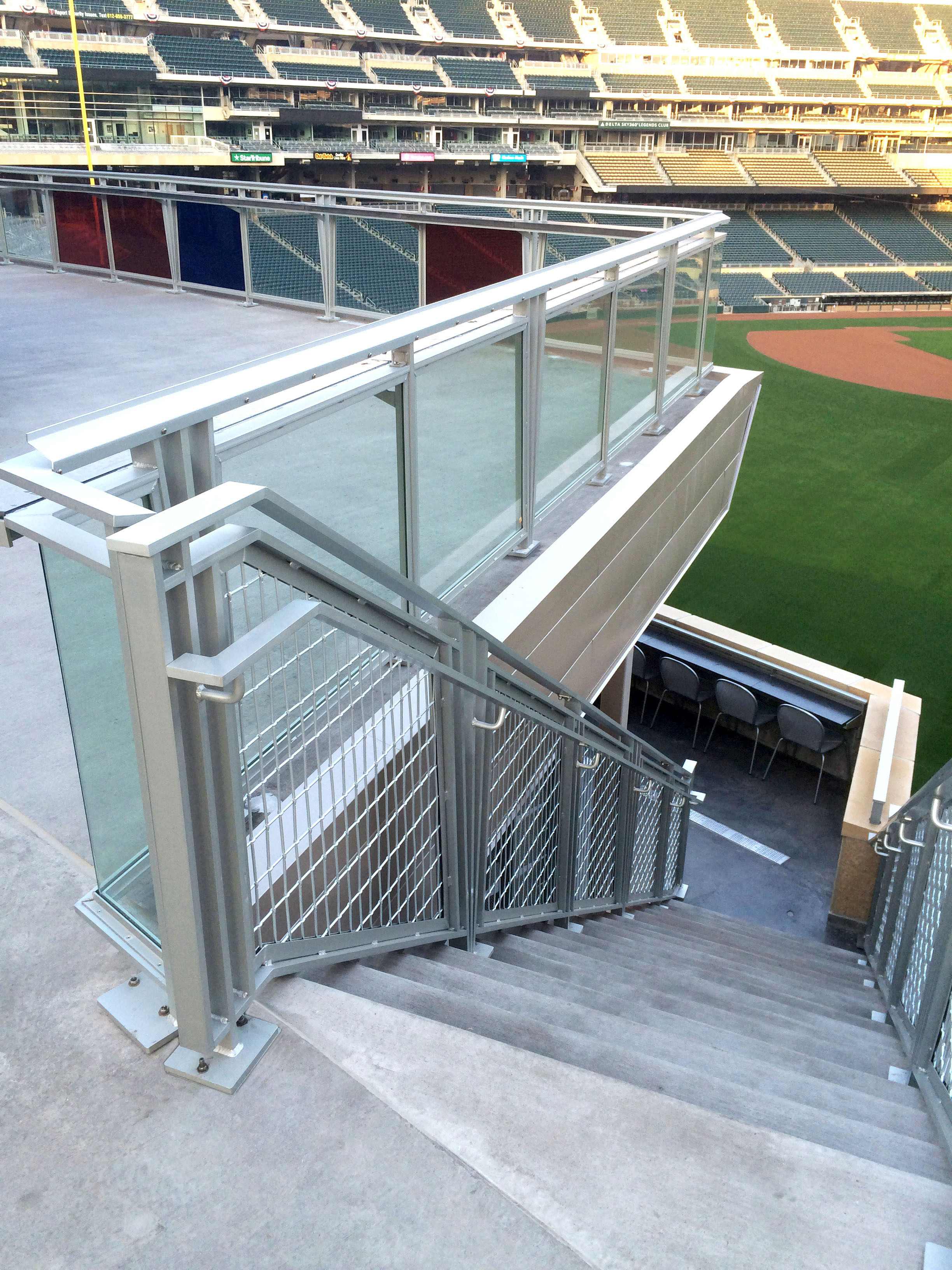
A guardrail is typically required wherever an individual could fall 30 inches or more within 36 inches of an edge. This includes all open-sided surfaces such as mezzanines, platforms, aisles, stairs, ramps and landings. In addition, a guardrail must be constructed in a manner to prevent a 4-inch sphere from passing through it at any point.
Structural considerations are driven by national and local building codes (i.e., IBC, OSHA, ADA). For railing systems to achieve these safety requirements, careful attention must be paid to material selection, the sizes and shapes used in the construction of the railing, and the method by which the railing is affixed to the structure.
When selecting a railing system, there are five key considerations: loading requirements, safety factors, material selection, deflection and style.
Loading Requirements
Guardrails must be engineered to endure specified loads without failure—typically defined as permanent deformation. Loads are driven by environment (wind loads), location (seismic loads), and use (live loads from human activity). Loading requirements vary by municipality so it is important that each project be assessed individually.
Safety Factors
A safety factor is the ratio of a material’s strength to an expected stress level. In railing systems, these ratios can vary from 1 1/2 to 4 times based on the material. The factor of safety for metals such as aluminum and steel is dictated by material specific codes (typically 1 1/2 to 2 times).
Material Selection
Another important aspect of efficient design is the use of appropriate materials and sizes. Typically, railing systems have posts spaced approximately 4 feet apart. Should a designer choose to increase the span between posts, additional material will be required on the horizontal members as well as the vertical posts. Conversely, shorter spans may allow for a reduction in materials. However, loading requirements at the vertical post may limit the possible savings in short space designs.
Deflection
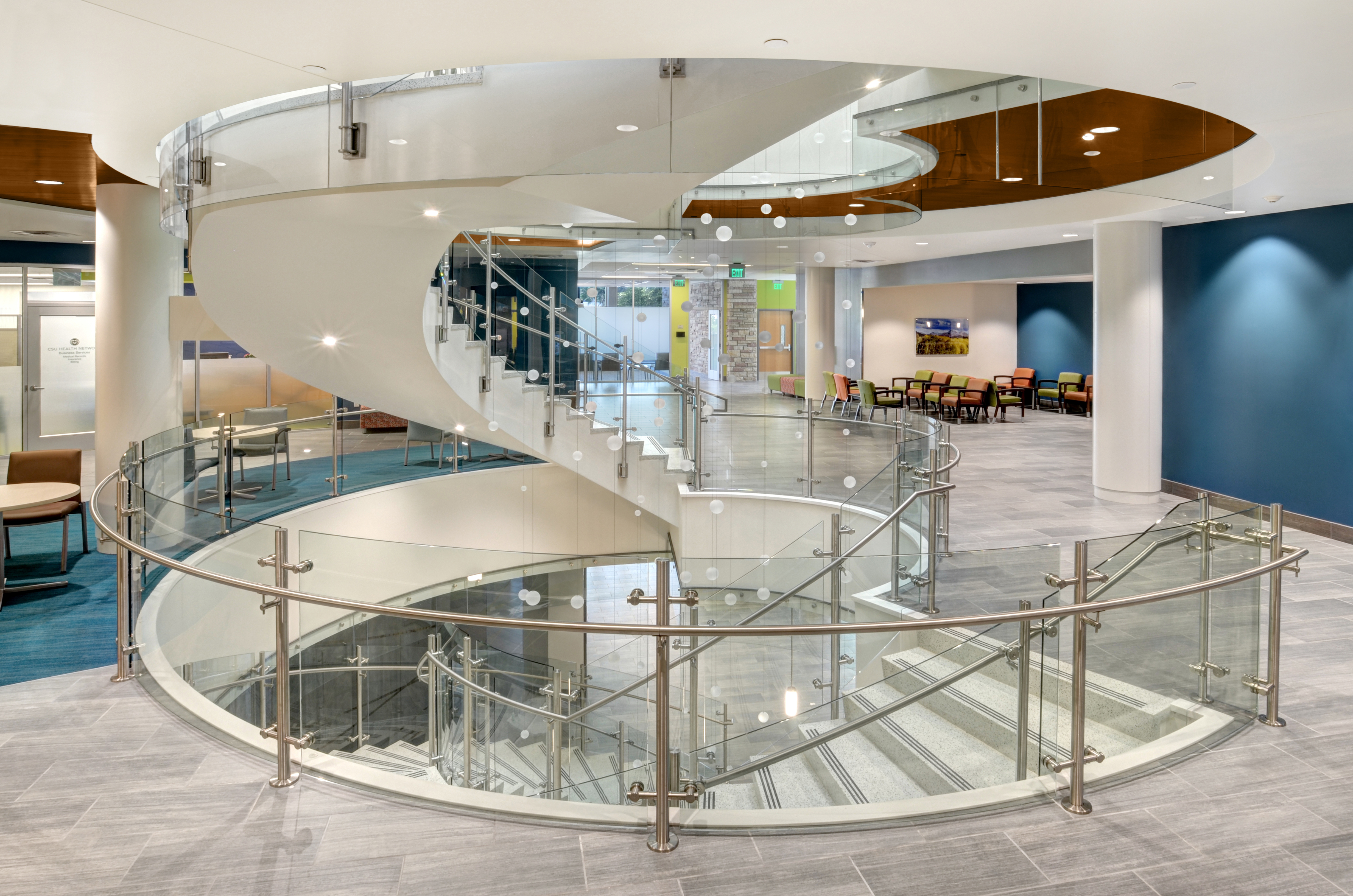
An additional consideration with slightly more ambiguity is the amount of deflection within a system. Deflection is the degree to which a structural element is displaced under an applied load. In glass design, for instance, the glass may not deflect more than the thickness of the glass between panels. This can be an issue with 1/2- inch glass at elevations in excess of 42 inches and often requires the use of a top cap and/or a handrail. The allowable deflection within any railing system should be addressed by the designer during the specification process.
Style
In light of the countless requirements, today’s designers face a considerable challenge—how to design unobstructed railing systems that enhance a view while also providing enough protection to meet structural and safety requisites. Fortunately, there are a number of stylish ways to accomplish this goal, with infill options ranging from cable and glass to mesh and grid designs: all offering their own distinct advantages.
Heightened Function and Design
A handrail’s primary purpose is to assist with movement. Handrail height should be uniformly consistent, between 34 and 38 inches from the ground. Among a handrail’s most important features is its “graspability”: the ability for people to quickly cling to the handrail for support when they lose balance or suffer from muscle weakness. With this in mind, a handrail’s diameter is critical. The IBC requires that circular handrails have an outside diameter between 1 1/4 and 2 inches. Square or rectangular handrails should have a perimeter dimension between 4 and 6 1/4 inches, and a cross-sectional dimension between 1 and 2 1/4 inches.
Keeping codes, proper installation and material selection in mind is critical for designing efficient railing systems that will withstand the test of traffic and time. Fortunately, today’s railing systems offer an abundance of options that are not only compliant, but also creatively inspiring and aesthetically designed to complement and elevate the vision of any space.
Dan Stachel is vice president of Trex Commercial Products, Minneapolis. To learn more, visit www.trexcommercial.com[1].
- www.trexcommercial.com: http://www.trexcommercial.com
Source URL: https://www.metalconstructionnews.com/articles/efficient-design-utilizing-decorative-guardrails/