Engineered Metal Grating in Urban Landscapes
by anthony_capkun_2 | 16 April 2026 9:08 am
 [1]
[1]Architects, planners, and engineers often struggle to find solutions for drainage and tree protection that meet safety codes while also matching the aesthetics of the surrounding area.
Customized grating using profile bar systems helps bridge the gap between heavy-duty engineering and refined design.
This article covers how metal gratings can enhance designs and turn functional transition zones into cohesive design features.
Why metalwork matters in urban design
Thresholds are essential in urban design. Where the street meets buildings, there is an opportunity to complement and enhance the existing architecture.
While it is necessary to incorporate functional elements, such as drains or tree grates, it can be done so in an aesthetically pleasing way. Industrial cast-iron or concrete trench drains can disrupt the visual appeal of urban landscaping projects. Every detail contributes to the overall design, including the metalwork of these functional elements.
Customized metal grating for urban landscaping seamlessly integrates the necessary functional elements. Continuous, linear grating lines can visually guide pedestrian flow or extend a building’s geometry into the landscape.
Core components of engineered metal grating systems
Custom grating can be used for various components, such as:
Tree grates. Urban trees are vital for reducing heat islands, but they struggle to grow in compact soil. Tree grates protect roots by ensuring sufficient soil volume and preventing excessive soil compaction. They also expand the walkable surface area for pedestrians while allowing water to reach the roots. Tree grates can be designed with removable inner rings to allow for tree growth and/or to accommodate integrated lighting ports.
Trench grates. Plazas need larger, longer trench grates to provide efficient drainage. They can also be used for curb transitions.
Fountains and water features. With customized grating, it can create curved radii to match more organic landscape shapes. This type of grating suits interactive dry-deck fountains, where it needs to be safe for barefoot traffic yet durable enough to withstand constant water exposure.
Entrance grilles. As the first line of defense in building maintenance, entrance grilles play a key role in preventing dirt and debris from reaching lobbies and entranceways. With aesthetic grating designs, it can also maintain a luxury visual appeal.
Manufacturing, materials, and finishes
With custom-designed grating projects, it can go beyond straight lines and basic materials to ensure a bespoke solution for an urban landscape.
Working with a custom fabricator means integrating patterns using matching grate spacing or bar orientation to align with the surrounding paving stones or building mullions. With a broad range of manufacturing processes to choose from, it can also include logos, city seals, or decorative patterns in the solid plate portions of the grating.
Alongside providing aesthetically pleasing solutions, metal grating is also functional. Metal profile bar or wedge wire screens are V-shaped, which helps prevent clogging, maximizes drainage, and makes them self-cleaning.
Unlike cast iron grates, which are prone to rusting and cracking, stainless steel grating is corrosion-resistant. In coastal cities or areas where deicing salts are used, 316 stainless steel is recommended. It also withstands foot traffic and can be a more durable option than plastic grating.
Additional anti-slip finishes can also be applied to metal grating for urban plazas and other applications to maximize safety in wet conditions. These finishes can provide extra traction where it is needed.
Compliance and safety standards
True accessibility means the space is welcoming to everyone who uses it. There are a few key safety standards to incorporate into your designs.
ADA-compliant (Americans with Disabilities Act) metal grating for public spaces helps ensure wheelchair and stroller accessibility without compromising drainage. Under ADA guidelines, the slot opening must be no wider than 12.7 mm (0.5 in.) in the dominant direction of travel to prevent tripping.
This precise tolerance means castors or cane tips do not penetrate through the bars and create trip hazards. When designing pedestrian walkways to be high heel-proof, the opening should be no more than 4.8 mm (0.188 in.).
H-20 load ratings are also crucial for plazas that need to provide emergency vehicle access or for delivery trucks. Including an H-20-rated metal grating in a project’s design ensures the hardscape can withstand the extra tonnage from heavy vehicles.
Real-world applications
These real-world case studies show how engineered solutions for bespoke metal grating can suit a wide range of urban landscape projects.
 [2]
[2]Klyde Warren Park tree grates
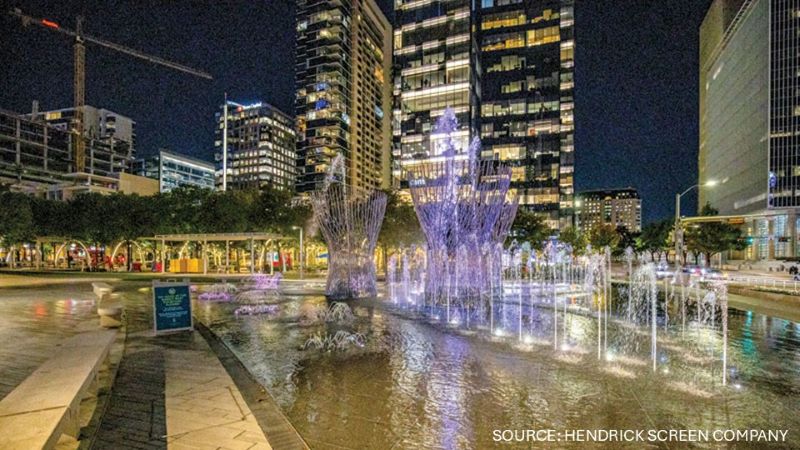
Landscape architects needed 60 custom tree grates for a 20,024 m2 (5-acre) central gathering space in Dallas, Texas, which minimized installation complexity while providing maximum load capacity.
The manufacturer devised a cantilevered support system for the tree grates to manage heavy pedestrian loads. The design featured a sunburst pattern with integrated lighting, proving that functional hardware can serve as a focal point of the park’s identity.
Holmberg Pedestrian Bridge
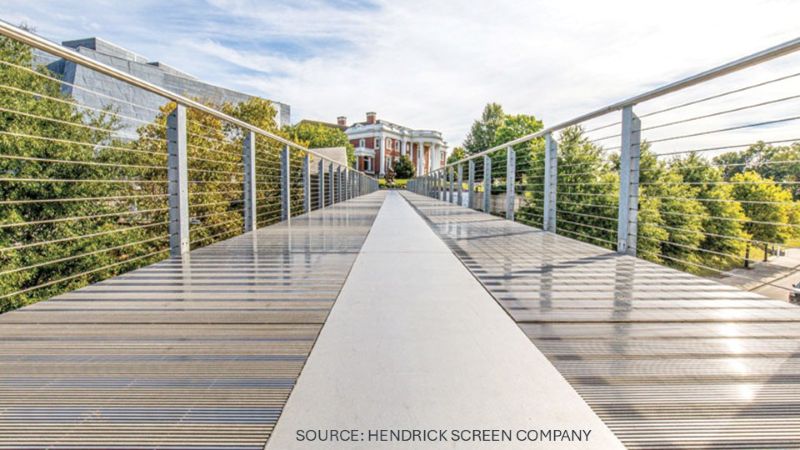
Opened in 2005, the Holmberg Pedestrian Bridge (opening photo) needed a makeover due to its damage-prone glass-paneled structure. A custom-fabricated 316 stainless steel grating was designed to ensure the bridge was both aesthetically pleasing and durable for years to come.
The manufacturer retrofitted the bridge with profile bar grating panels. They used T16 bars with 4.8 mm (0.188 in.) slot openings to ensure ADA compliance. Anti-slip coatings on the grating surface provide traction in all weather conditions.
Entrance grilles at Ringling College of Art and Design
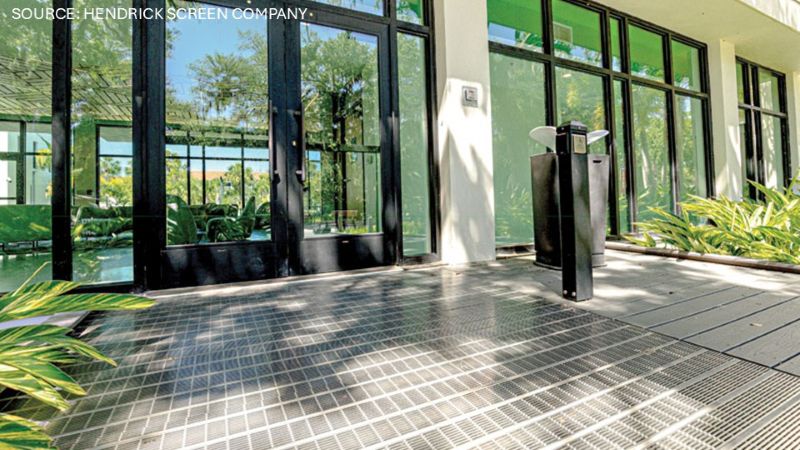
In this project, a proprietary, mechanically interlocked profile bar system worked seamlessly with the wood decking on the exterior of Ringling College’s student housing facility. This project used 316 stainless steel and B12 bars with 3.1-mm (0.125-in.) slot openings. For extra traction, half-inch strips of anti-slip coating were specified.
 [3]
[3]Installation, maintenance, and life cycle economics
Customized metal grating can have higher upfront costs, but can help achieve long-term savings.
Simplifying installs. Grating features, including hidden lockdown mechanisms or support framing, make it easier for contractors to install.
Increased lifespan. With stainless steel, there is no need to keep on top of paint jobs or rust repairs. The durability and longevity of this material can offer better long-term value than cast iron (or other materials).
Sustainability. Stainless steel bars can be recycled, but their true sustainability lies in their longevity, which eliminates the environmental and financial costs of demolishing and replacing existing structures. If the project is targeting Leadership in Energy and Environmental Design (LEED[4]) certification, added durability can contribute toward Materials and Resources credits.
Urban landscapes can be functional and visually striking spaces, especially when materials match their surroundings. Engineered metal grating turns essential infrastructure, such as trench grates, tree grates, or entrance grilles, into design assets. To ensure the success of a project, do research and select a partner with experience, aligned with the project’s needs, and who supports the vision.
Carissa Dau is the architectural product manager at Hendrick Screen Company[5], where she has been employed for eight years. She works with architects, designers, and contractors to match Hendrick’s products to project specifications and provide detailed quotes and technical support.
This feature originally appeared in the April 2026 edition of Metal Construction News, which you can find in our Digital Edition Archive.
- [Image]: https://www.metalconstructionnews.com/wp-content/uploads/2026/04/Metal-Grating-Carissa-MCN-April-2026-800-01.jpg
- [Image]: https://www.metalconstructionnews.com/wp-content/uploads/2026/04/Metal-Grating-Carissa-MCN-April-2026-800-02.jpg
- [Image]: https://www.metalconstructionnews.com/wp-content/uploads/2026/04/Metal-Grating-Carissa-MCN-April-2026-800-04.jpg
- LEED: https://www.usgbc.org/leed
- Hendrick Screen Company: https://www.hendrickcorp.com/
Source URL: https://www.metalconstructionnews.com/articles/engineered-metal-grating-in-urban-landscapes/