Cheap snow guards can be expensive
by anthony_capkun_2 | 23 October 2026 2:11 pm
 [1]
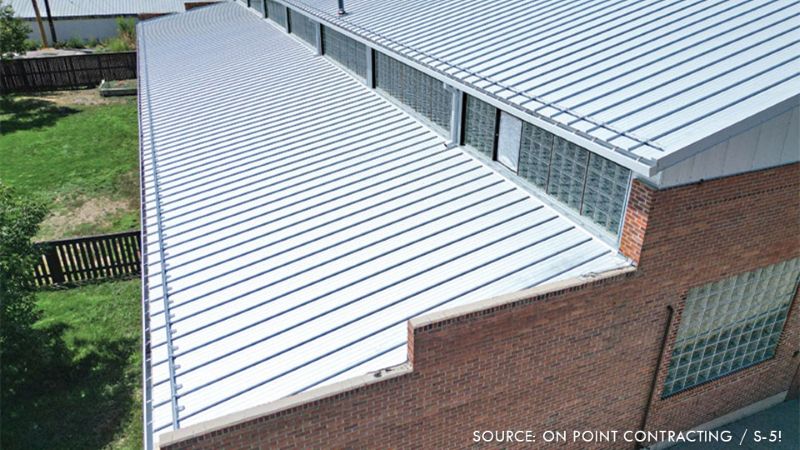
When evaluating snow retention systems for a metal roof, it is tempting to compare the price of a single component and assume the lower number is cheaper for a complete system. But price is not so easy to compare.
The purchase price of a snow guard component represents only one part of what the total system will ultimately cost.
Material quantity, installation labor, engineering, attachment method, maintenance, service life, and the consequences of an inadequately performing system can change the economics considerably. A better question than “What does a snow guard cost?” is “What will it cost to install a properly designed and engineered snow retention system that will perform for the life of the roof?”
This distinction matters because snow retention is not simply a collection of components. It is a system expected to resist substantial forces that result when accumulated snow melts and migrates down a roof. Choosing a system primarily based on a component price can leave some of the largest costs out of the equation.
Start with what the roof actually requires
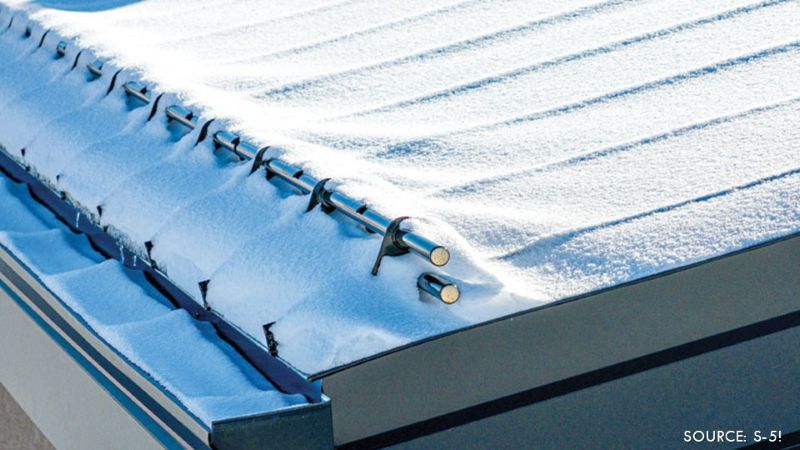
Cost comparisons become misleading when they begin with the price of an individual snow guard or a price per linear foot without first determining how much product the project requires to meet design criteria.
Snow retention requirements can vary based on roof geometry, design snow load, roof slope, panel profile and material, seam or rib spacing, roof length, and the tested capacity of the system-to-roof attachment. Those variables help determine how much material is needed and how the system must be configured.
 [2]
Two systems intended for the same roof may, therefore, require very different quantities of material. A product with a lower price per component does not produce a lower-cost system when substantially more components are required to satisfy the project’s design.
A meaningful comparison should begin only after each system has been appropriately configured for the same roof and the same design loads. Otherwise, the contractor may be comparing the price of two very different levels of performance.
Count more than the parts
Materials are only one part of the installation equation because every component that arrives onsite must be handled, positioned, assembled, and installed. That makes labor one of the most important—and sometimes overlooked—variables in the total installed cost of snow retention.
Installation time can be influenced by the number of individual components, the number of attachment points, the amount of field assembly required, whether components must be measured or cut, how many rows are needed, and how easily crews can stage materials and move across the roof.
This is why a less-expensive component may not remain that way once labor is added. Contractors should evaluate snow retention systems based on installed cost rather than material cost alone. In many cases, the most useful comparison is not dollars per snow guard or even dollars per linear foot, but the total cost of the system after both materials and labor are considered and the solution is properly engineered to that specific project.
Proper engineering should always be done
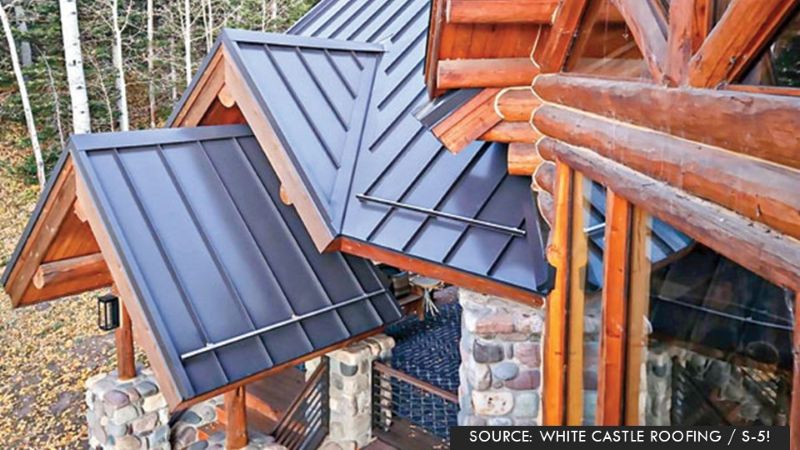
Snow retention design is another area that is often ignored. Snow sliding down a roof can generate substantial forces, and a properly designed and engineered system must resist those forces and transfer them through the attachment and into the structure. That makes snow retention a load-path issue, not simply an accessory-selection issue.
The capacity of an attachment varies from one roof profile to another. Panel thickness, material type, seam geometry, and other variables can all affect performance. That is why manufacturer claims should be supported by panel-specific load testing, not simply a published “catch-all” strength value that may not represent the completed installation.
Testing and engineering answer the more important question: How will this particular system perform on this specific roof? The system should be configured from tested attachment capacities for the actual panel profile, material, and manufacturer, with project-specific calculations establishing attachment spacing and number of rows.
 [3]
Compliance with recognized industry criteria and guidance can provide another measure of system quality and reliability. These include IAPMO Evaluation Criteria EC 029-2018 and guidance from organizations such as the Metal Construction Association (MCA) and the International Code Council (ICC).
MCA’s Technical Bulletin “Qualifying snow retention systems for metal roofing” is aligned with EC 029-2018 and provides additional guidance for evaluating these systems. Together with documented testing and project-specific engineering, these criteria help establish whether a system is appropriate for the roof and expected service conditions.
Consider what the attachment does to the roof
The way a snow retention system attaches to the roof can introduce another consideration that may not appear on the initial material estimate. Different metal roofing systems require different attachment approaches. Standing seam roofs can accommodate mechanically attached systems that do not penetrate the roof panel, while other metal roof profiles may require direct attachment through the panel and into the structure.
Neither approach should be evaluated in isolation from the roof itself. When an installation introduces penetrations, those penetrations must be properly designed, executed, and weatherproofed to last.
The attachment method should also be evaluated for compatibility with the roof manufacturer’s requirements and warranty provisions. A lower initial price loses its appeal quickly when the attachment method creates maintenance, repair, or warranty concerns.
Think in terms of service life
First-cost comparisons tend to ignore time. A lifecycle analysis should consider initial cost, service life, maintenance and repairs, replacement cost and frequency, operational disruption, and disposal. Metal roofing favors that equation because of its long service life and high recyclability.
The metal roof itself may cost more initially than alternative systems, but its service life can be two to five times longer. Over a 60-year building lifecycle, a shorter-life roof may need to be purchased, removed and replaced more than once, while a metal roof may remain in service for that period or longer. The higher first-cost roof can easily become the lower-cost option over the life of the facility.
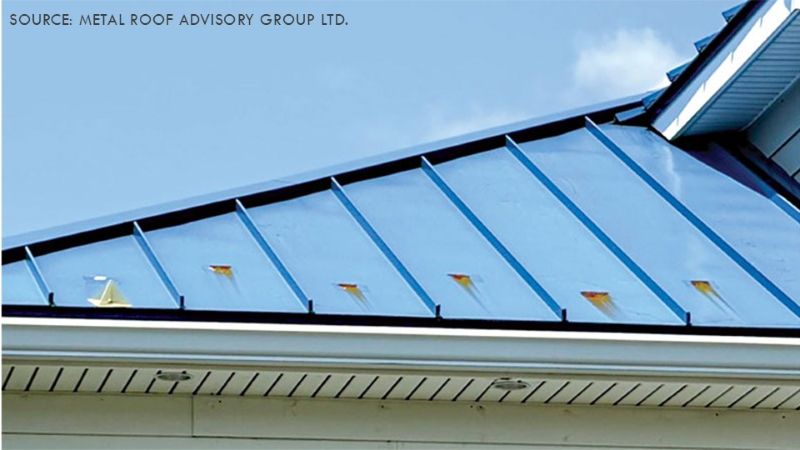
Snow retention deserves the same lifecycle view, and attachment technology is part of that equation. A system that appears inexpensive at purchase may depend on adhesives, sealants, or other materials with a shorter service life than the metal roof itself.
 [4]
If those components deteriorate from UV exposure, moisture or temperature cycling, replacement can require new materials, labor, roof access, and potentially repairs to the roof surface. A meaningful lifecycle comparison considers whether the snow retention system and its attachment method can remain in service for the life of the roof.
Understand what the warranty actually covers
Warranties can also be difficult to compare because they do not all address the same thing. A material or finish warranty may cover a component without guaranteeing that the complete snow retention system will remain attached and perform as intended. A meaningful comparison should ask whether the manufacturer provides a performance warranty, not merely a material warranty.
Contractors, designers, and owners should obtain the warranty before specification and read the fine print. They should understand whether coverage applies to materials or overall system performance, whether engineering and installation requirements are conditions of coverage, what documentation is required, and how long the coverage remains in effect. A warranty does not replace proper design or installation.
The cost of failure is difficult to quantify
The final cost category is also the hardest to put into an estimate. Snow retention is generally installed because uncontrolled snow movement can have serious consequences. Snow and ice shedding from a metal roof can damage gutters, vehicles, landscaping, lower roof areas and rooftop equipment, and can cause serious injury or death to people below.
If a snow retention system fails to perform as intended, the resulting unplanned costs may extend well beyond replacing damaged components. There may be callbacks, roof repairs, crew remobilization, and additional access costs. The existing system may need to be removed, redesigned or supplemented, and damage to adjacent building components may also need to be repaired.
There can also be disputes over liability: whether the problem resulted from design, installation, product selection, roof conditions, or an extreme snow event that exceeded design criteria. Where people or property are located beneath a potential snow-shedding area, the consequences can become considerably more severe.
Performance risk belongs in the purchasing decision. In a largely buyer-beware attachment market, contractors should verify that manufacturers can substantiate their sales claims before product selection.
Look at complete costs
Construction costs matter. Contractors must remain competitive, and owners have every reason to expect real and documentable value.
The better comparison is always “apples to apples,” and should always be based on the cost of a properly designed, tested, and engineered system that protects the roof and remains in service for the life of that roof. When material quantity, labor, engineering, attachment method, maintenance and performance risk are considered, the roof owner’s interests are best served.
Rob Haddock, CEO and founder of S-5![5] and director of the Metal Roof Advisory Group[6], is a former contractor, roof forensics expert, author, lecturer, and building envelope scientist who has worked in various aspects of metal roofing for five decades. With over 200 patents to his name, Rob is a recipient of numerous awards and is an inaugural inductee of MCN’s Metal Construction Hall of Fame. Under Rob’s leadership, S-5! was the first snow retention manufacturer to achieve an Evaluation Report of Compliance with IAPMO EC 029-2018—the industry standard for testing and certifying snow retention devices.
This feature originally appeared in the October 2026 edition of Metal Construction News, which you can find in our Digital Edition Archive.
- [Image]: https://www.metalconstructionnews.com/wp-content/uploads/2026/10/Snow-Guards-MCNOctober2026-800-01.jpg
- [Image]: https://www.metalconstructionnews.com/wp-content/uploads/2026/10/Snow-Guards-MCNOctober2026-800-02.jpg
- [Image]: https://www.metalconstructionnews.com/wp-content/uploads/2026/10/Snow-Guards-MCNOctober2026-800-03.jpg
- [Image]: https://www.metalconstructionnews.com/wp-content/uploads/2026/10/Snow-Guards-MCNOctober2026-800-04.jpg
- S-5!: https://www.s-5.com/
- Metal Roof Advisory Group: https://rmhaddock.com/
Source URL: https://www.metalconstructionnews.com/articles/evaluating-the-true-cost-of-a-snow-retention-system/