Keep It Running
by Brooke Smith | 17 April 2024 7:00 am
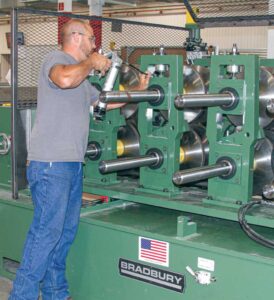
A rollformer generates profit only when it is operational, making it essential to maintain its proper function and efficient production. Regular rollformer maintenance will prevent long-term breakdown and expensive repair. Keep the following five tips in mind.
Develop a schedule
The way to ensure regular maintenance of any piece of equipment is to schedule it. Every rollformer will come with a manual that outlines the machine’s required maintenance. Review and understand the maintenance instructions provided in the equipment manual thoroughly. It is vital to adhere to the recommended schedules for routine checks, inspections, and servicing outlined by the equipment manufacturer or supplier.
Lubrication routine
Identify critical components—including rollers, bearings, and chains—that require regular lubrication. Details for maintaining a proper lubrication schedule should be supplied by, or available from, the rollformer manufacturer. It is important to follow these recommendations because the component manufacturer engineers have conducted tests to determine the best lubricant for the equipment as well as the best lubrication frequency requirements.
Rollforming equipment will usually have a monitor that determines how many hours the machine has been running. Run time varies—some customers use a rollformer for eight hours a day, while others may be running three shifts, producing product almost continuously. Busier rollformers will require more frequent maintenance.
Following these recommendations prolongs the life of the equipment and helps maintain the integrity of the manufacturer’s warranty.
Inspect and replace tooling
Regularly inspect the tooling for signs of wear or damage. Most of the tooling is chrome-coated to provide a smooth finish for painted or unpainted products. After years of operation, chrome can wear off, causing the steel in the tooling to wear faster, and can affect the radius of tooling die, and it can become larger. This creates a lazy radius as opposed to the sharp radius desired to properly form products. A mirror-like finish on tooling radiuses is an indicator of tooling wear.
Other damage that occurs could be gouging if tooling runs together. Gouging will affect the quality of the end product. Buildup on the tooling can transfer an impression onto the product or scratch it. Proper lubrication and cleaning prevents galvanizing buildup on the tooling. Wear or damage can cause the rollformer to produce metal products that are not consistent or meet the standards required by customers. Replace worn-out tooling promptly to maintain the precision and quality of the forming process for the products being rollformed.
Align critical components
It is imperative to perform alignment checks on tooling, tooling gap, and other critical components according to the timelines in the manufacturer’s specifications. Basically, this is checking to ensure tooling is calibrated and aligned properly. When initially designed by the engineers, it was a perfect fit. In addition, check the vertical alignment and make sure the horizontal gap is set correctly. This will ensure the product is produced consistently.
Use precision measuring tools to ensure accurate alignment. If, and when, any misalignments are detected, address them promptly to prevent issues like uneven profiles or production inconsistencies.
Keep equipment clean
Dirt and dust build up everywhere. Periodically, wipe down the tooling and machine with a soft cloth or some clean rags. Dirt and debris buildup is common—metal dust or paint dust. When a machine runs 9,144 to 12,192 m (30,000 to 40,000 ft) in a day, there will be buildup. Dirt and debris buildup inhibits finding problems with the rollformer. Monitor dirt, dust, or buildup on the stands and equipment to keep excessive debris from accumulating. This will aid in identifying issues with the equipment before a component fails and leads to a breakdown.
Safety and training
Provide comprehensive training to operators on safe equipment operation as well as maintenance procedures. It is important to emphasize safety to every employee operating any piece of equipment. Follow a schedule for regular safety checks, ensuring emergency stops, guards, and other safety features are functional, and maintain detailed records of operator training and safety inspections.
Follow a maintenance schedule and keep track of all maintenance. After all, the best way to get a return on investment (ROI) on a rollformer is to keep it running.
Ron Dies, with 23 years at Bradbury, started as a service technician, gaining mastery in equipment maintenance. His global work installing and servicing equipment has earned widespread customer satisfaction. As a test manager, he guaranteed the quality of advanced machinery, specializing in rollforming equipment. Dies‘ educational drive made him director of technical training, enhancing skills for Bradbury employees and for clients. An expert in rollforming, he boosts Bradbury‘s global reputation. Now, as field service manager, Dies ensures top-notch service, keeping Bradbury’s equipment running smoothly worldwide.
Source URL: https://www.metalconstructionnews.com/articles/features/keep-it-running/