IMPs Offer Many Choices for Building Designers
by Jonathan McGaha | 31 May 2016 12:00 am
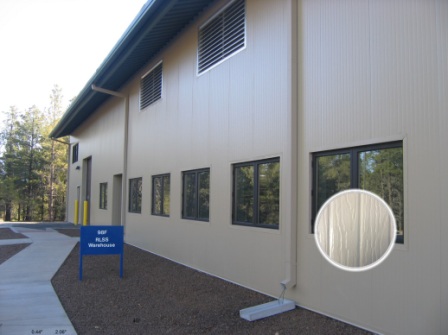
A wide range of colors, profiles and styles meet building and energy codes
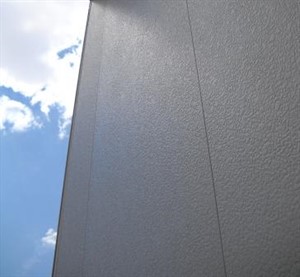 It is an understatement to say that insulated metal panels (IMPs) have come a long way since their modest origins a few decades ago. In those early days, designing a building with exterior cladding via insulated metal wall panels meant limiting oneself to very plain, industrial⎯and let’s face it:⎯boring products. Sure, IMPs were providing the insulation values for which they were invented, but they weren’t much to look at. Those few profiles that were available at the time were primarily used to get an acceptable level of flatness on the panels, rather than for any real aesthetic considerations.
Early IMPs
IMPs did not carve out their current niche in the exterior cladding and insulation markets overnight. Before they could be ready for prime time, insulated metal wall panels needed to get to a point where they were not just a functional part of the building envelope, they also needed to visually enhance it. IMPs needed to be recognized as a product that owners and designers could include as an affordable cladding option when they wanted a great-looking building. For that to happen, two primary hurdles had to be addressed.
First, the generally lower quality and flatness tolerance of the light-gauge steel used as facings was a limiting factor. Second, IMPs were being produced with early-generation manufacturing processes. This combination simply didn’t allow for anyone to think too far outside the box when it came to product design. It was hard enough just trying to maintain basic tolerances. Aside from more costly 22-gauge non-profiled architectural panels (that have been available for over 40 years in various forms), it would take time, public relations and a lot of innovation from IMP manufacturers to deliver what the market demanded.
Due to the limited amount of product offerings, IMPs were most often relegated to cold storage or very basic industrial applications. In the eyes of most building designers, IMPs had sealed their reputation as a relatively expensive no-frills building cladding that offered little in the way of design flair. As domestic steel tolerances drastically improved over the last 15 to 20 years, manufacturers began to dabble with an ever-widening variety of profiles, embossing patterns and finishes using more economical 24- and 26-gauge steel facings. This, coupled with advancements in rigid urethane chemistry to improve cell structure uniformity and dimensional stability, laid the groundwork for the future.
Diverse Assortment
The end result is a diverse assortment of product offerings in architecturally pleasing, light-gauge insulated metal wall panels. Being able to utilize 26-gauge facings as a basis of design has also allowed the price of commercial- and industrial-use IMPs to get to a point where they don’t just look good and perform well, but are cost efficient as well,⎯especially when one considers the single-pass installation.
 Finally, we have a product in which form has truly married function. Modern insulated metal wall panels are available in a nearly limitless range of colors, profiles and styles that can suit nearly any building design. Not only that, but they can do so while helping meet ever-more stringent building and energy codes with their industry-best thermal performance. Today you can find products that offer bold styles unique to IMPs or, if you prefer, even mimic the look of nearly any other construction material. Would you like the traditional look and feel of a 7.2-rib wall panel, but require the added qualities of an IMP? The product is out there. Do you envision a building featuring the look of field-applied, troweled stucco on the outside, but don’t want the extra hassle of applying the finish post-construction? Easily⎯done.
Would you like a 25-year finish warranty to go with that? Or maybe you are going for the retro look of classic T1-11 style wood paneling in your design, but don’t want to deal with the upkeep of an organic wood product? IMPs can do that too, thanks to multi-pass coil coating techniques that make for a picture-perfect wood grain appearance, but on an insulated metal wall panel that will have far more durability and long-term performance than an actual wood panel.
There really is no limit to the possibilities when it comes to designing buildings with modern insulated metal wall panels. Architects can and should be bold and inventive in their designs; the IMP industry’s innovative and diverse line-up of products will meet the challenge.
Gary Robinson is national accounts manager for All Weather Insulated Panels, Vacaville, Calif. To learn more, visit www.awipanels.com[1].
- www.awipanels.com: http://www.awipanels.com
Source URL: https://www.metalconstructionnews.com/articles/imps-offer-many-choices-for-building-designers/