Know Your Doors
by Mark Robins | 4 January 2021 12:00 am
Door longevity, maintenance costs and quality investment

The door is the only part of the building that’s touched or operated daily; it’s the only part of the entire envelope that must actively work. Quality sells itself for you. It’s your brand written in bold letters on the gables; whether it’s good or bad, everybody will know you built the structure. Even if you had nothing to do with the door, it’s still your brand on the building.
A Hole in the Wall
If your method of operation has been to only build the building with a hole in the wall and let the owner get the door, that’s not necessarily bad; I was once in that position, too. There’s plenty to do in just building the “box.” But ask yourself: Is that truly the best solution? The garage door industry is growing. Challenge yourself and take advantage of that growth by finishing the building. If you think installing a door is too much trouble, remember: your name is on the gable above the door even if you had nothing to do with it.
Sliding Versus Sectional
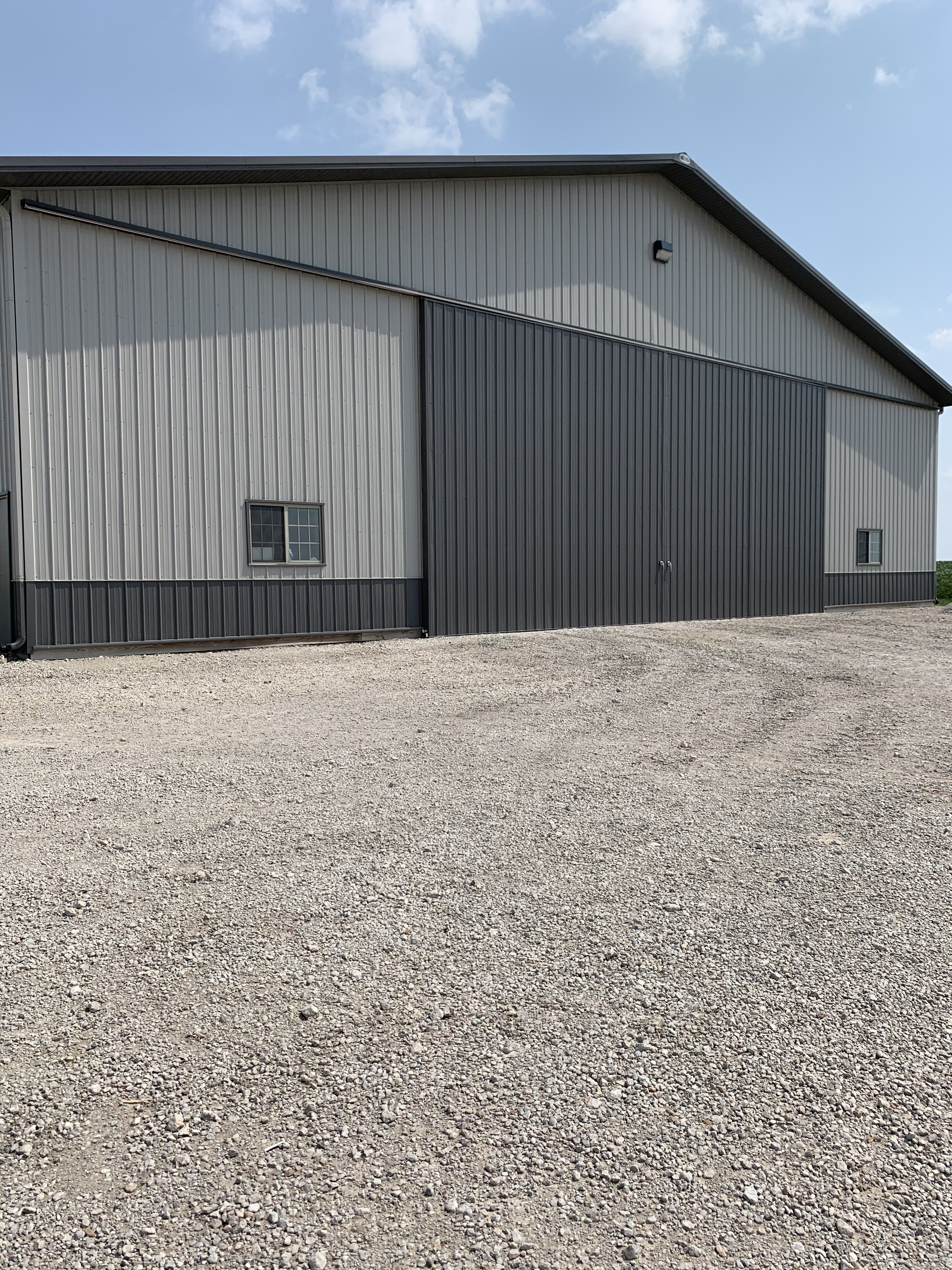
Before a door is selected, important questions need to be answered: Does the owner want hundreds of moving parts on a sectional door versus four on a slider or 14 on a swing out? What is the true cost of ownership and maintenance per door system? Can the door be insulated? Why have sliding doors become somewhat extinct? Doors are moving objects that require moving parts. As with any operating device, parts that move are typically the breaking point. Any component that requires many moving parts typically means more investment up front and costs more for lifetime operation. For example, a sliding door has two trolleys (two moving part components) per panel. By comparison, a sectional overhead panel with operator can mean hundreds of moving parts, depending on the overall size. Now calculate the cost of ownership.
It only takes 80- to 90-mph winds to destroy some doors. This is an all too common scene across the Midwest. Doors typically get replaced with something other than sliding doors because of customer frustrations. I-Beam Sliding Doors are wind rated for 115 mph. A slider that’s built right will outperform the sectional. A well-built sliding door typically lasts 40 years; a sectional typically lasts 25 to 30 years. Service costs on sectional doors with all the moving parts can be significant. How long a door lasts and how much maintenance costs all depends on the upfront investment in quality.
Jon Fehr is owner and founder of I-Beam Sliding Doors, Chenoa, Ill., a manufacturer of heavy-duty, lightweight, sliding doors for the building industry. To learn more, visit www.ibeamdoor.com[1], email info@ibeamdoor.com[2] or call (815) 945-3667.
- www.ibeamdoor.com: http://www.ibeamdoor.com
- info@ibeamdoor.com: mailto:info@ibeamdoor.com
Source URL: https://www.metalconstructionnews.com/articles/know-your-doors/