Natural Metal: Natural Choice for Roof Panels and Wall Cladding
by Mark Robins | 1 October 2018 12:00 am
Providing outstanding material longevity and desirable aesthetics
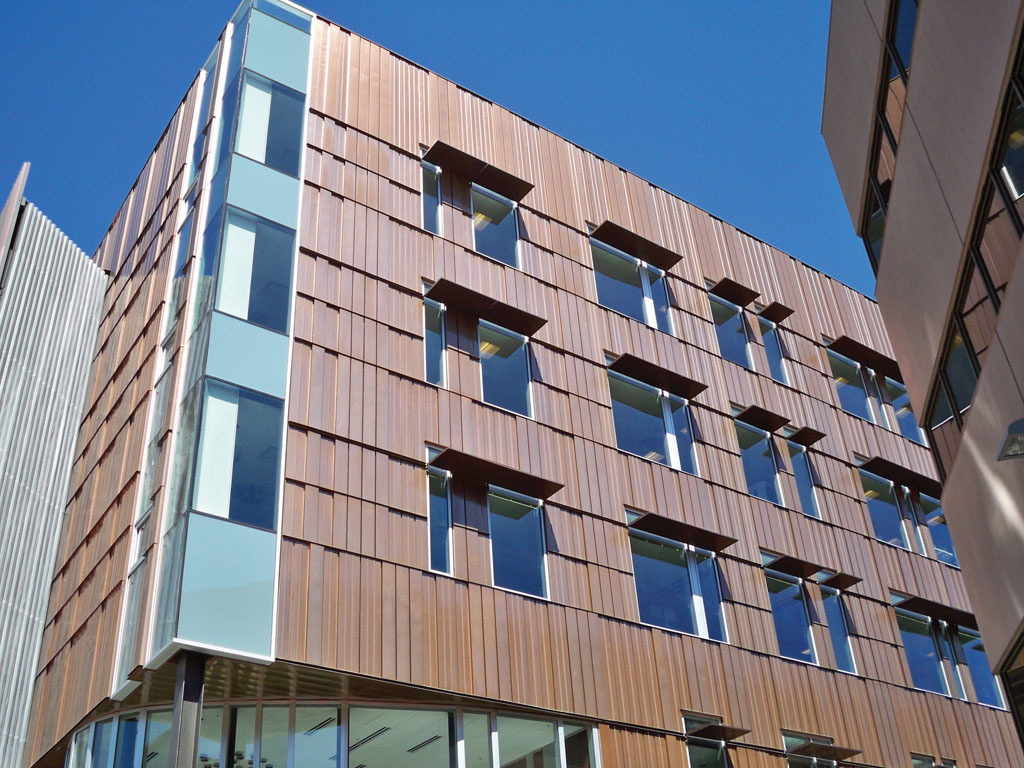
Copper
Copper is a durable and corrosion-resistant material that has had a strong presence in construction for many years. The first copper rolling mill was established in 1801 in Canton, Mass., by Paul Revere at the age of 65. One of his first orders was 7,675 pounds of copper sheathing for the State House in Boston.
The sustainable attributes of copper make it a very attractive choice, as it is 100 percent recyclable and can be perpetually recycled without the loss of performance or qualities. As well, it has a higher life cycle than other materials, and requires minimal maintenance throughout its service life. Copper naturally patinas over time, and the environment and atmosphere where a building is located will affect how quickly copper patinas. Factory pre-patinated and pre-finished copper options are available in a variety of colors and patterns. Copper is often used as a material for gutters and downspouts, as well as for wall cladding. Copper wall cladding can also be perforated if desired for use as equipment screens, sunshades and decorative accents for a building’s façade.
The ability to form complex shapes and to be soldered are characteristics of copper building components. Copper offers low thermal expansion values (lower than aluminum and zinc, but slightly higher than steel). Experience and working knowledge of copper components is imperative for a quality product installation. Gloves should be worn when handling copper, as fingerprints are quite visible on that material. To increase the energy efficiency of copper panels (and other metal panels), and yield energy savings in summer and winter, above sheathing ventilation (ASV) can be used under the panels.The use of ASV may also remove unwanted moisture within the building envelope.
Zinc
Zinc is a natural element that can be used to create a wide variety of panel systems for the building envelope. It has been used for centuries to protect and enhance buildings. In addition to the more traditional grey, pre-weathered zinc appearance, zinc is now available in a pre-weathered matte black color, as well as a variety of other colors including blue, brown, green and red. The pigmented colors are typically only used for wall cladding applications.
All pre-weathered and pigmented shades of zinc tend to weather and patina over time to a natural grey hue. Due to inherent characteristics of the natural finish, shade variations enhance the aesthetic value of the materials. Most zinc comes with a backside corrosion-inhibitive coating. If the material requires soldering, it is important to either remove the corrosion-inhibitive coating or to obtain special zinc without it.
As with copper, zinc installation training is highly recommended, as there are unique considerations when working with this material. Zinc is also able to be perforated and can be effectively used as a transpired solar collector air heating wall panel system to bring pre-heated fresh air into a building, while reducing winter heating costs.
Stainless Steel
Stainless steel differs from metallic coated carbon steel because of the presence of chromium. Stainless steel alloys typically contain between 13 percent and 26 percent chromium. It is a desirable building component material, as it does not readily corrode, rust or stain from water contact. Applications that require the strength of steel and corrosion resistance are best suited. It should be noted that although it is corrosion resistant, it’s not corrosion proof. Stainless steel can stain in areas of low oxygen, high saline and low air-circulation environments.
The actual corrosion resistance depends on the alloy (chromium and other metal content) and environmental factors. Some alloys differ from commonly available material as they have been altered slightly to enhance formability while retaining the corrosion resistance qualities. Today’s stainless steel materials can be processed with a variety of surface characteristics. A classic appearance of stainless steel provides a unique brush rolled texture, while a tin-plated material will develop a matte grey patina when exposed to the weather.
Lee Ann M. Slattery, CSI, CCPR, LEED AP BD+C, is the sales support manager for ATAS International Inc., Allentown, Pa. ATAS manufactures metal wall cladding, roofing, ceilings, perimeter edge metal and accessories. To learn more, call (610) 395-8445 or visit www.atas.com[1].
- www.atas.com: http://www.atas.com
Source URL: https://www.metalconstructionnews.com/articles/natural-metal-natural-choice-for-roof-panels-and-wall-cladding/