Nature-Inspired Metal Walls: Layering, Performance, and Durability in Interior Spaces
by David Flaherty | 17 February 2026 9:51 pm
 [1]
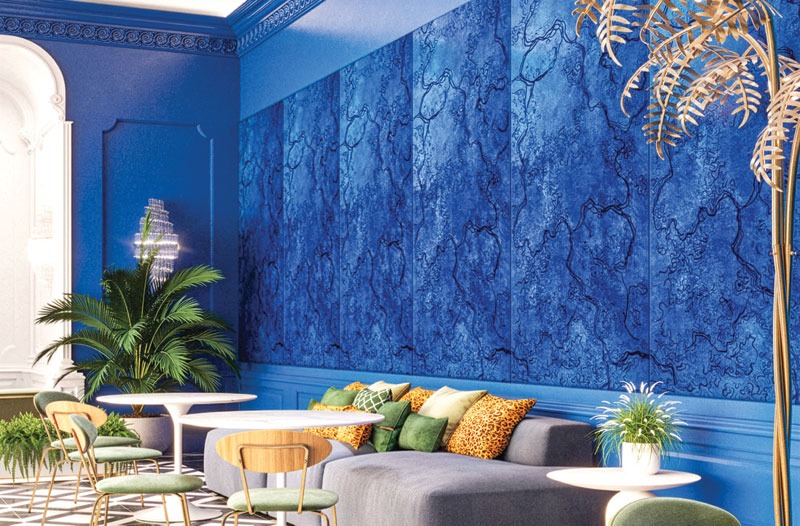
[1]Walk into an airport terminal, hotel lobby, healthcare facility, or corporate campus, and there are an increasing number of metal walls that reference the natural world, layered like sediment, fluid like water, or patterned after organic growth. To most visitors, these surfaces register as calm, textured backdrops that soften large interiors and add warmth to otherwise hard-working spaces. But for the teams designing and installing them, nature-inspired metal walls are anything but passive elements.
Metal walls of this kind do far more than decorating a space. They help organize circulation, define zones without fully enclosing them, and create continuity across walls, dividers, and vertical elements. When properly installed, they feel cohesive and intentional. However, when coordination breaks down, the issues become immediately visible: misaligned seams that interrupt pattern flow, panels that telegraph uneven substrates, vibration that creates unwanted noise, or lighting that flattens what should feel layered and dimensional.
In high-traffic environments, these walls must endure constant contact—rolling carts, luggage, furniture, cleaning equipment, and daily maintenance—while maintaining their finish and visual clarity. Selecting aluminum or stainless steel provides durability, but material choice alone does not guarantee performance. Long-term success depends on how panels are fabricated, how tolerances are managed in the field, and how the wall system is coordinated with adjacent floors, ceilings, and architectural elements.
The work before the work begins
Before installation ever begins, understanding what is being built is critical. Nature-inspired metal walls rely on visual continuity. Patterns that reference landforms, wave motion, or organic growth are typically designed to read across multiple panels, meaning layout and sequencing matter as much as attachment. Relying solely on drawings can lead to costly field adjustments. Early field verification of wall dimensions, framing conditions, and substrate flatness allows fabricators and installers to anticipate where adjustments may be needed before panels are manufactured.
The role of the panels
 [2]
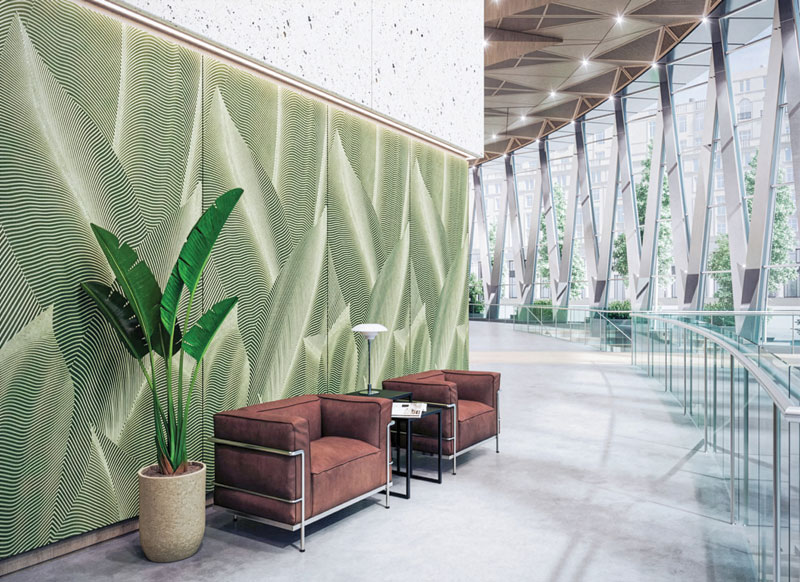
[2]Panel size and construction play a significant role in how forgiving an installation will be. While smaller panels can create a more detailed, continuous visual field, they demand tighter tolerances in framing, fabrication, and alignment because even minor deviations become more visible at each seam. Larger panels are typically more forgiving, but smaller formats require precise layout to preserve the design’s rhythm and integrity. Once fabrication is complete, opportunities for adjustment are limited, making early coordination essential to achieving a clean, cohesive surface.
The surrounding elements
Alignment with surrounding systems is where many installations succeed or fail. Metal walls rarely exist in isolation. They meet finished floors that may slope subtly for drainage or accessibility, and ceilings that shift to accommodate mechanical systems. If those conditions are not accounted for early, installers are left managing gaps or misalignments that draw the eye to exactly the wrong places. Systems that allow for field adjustability through floating details, reveals, or custom trims help absorb real-world inconsistencies without compromising the overall design intent.
At the base, metal walls are subjected to the most abuse. Impacts, moisture from cleaning, and constant foot traffic all concentrate at this transition point. Durable base details, whether recessed, flush, or protected with integrated metal trims, help prevent damage while maintaining a clean visual edge. These details may seem minor, but in public interiors, they often determine how well the installation ages over time.
Nature-inspired metal walls are also increasingly used beyond traditional wall planes, extending into dividers and partial enclosures that define space while maintaining openness. In offices, hospitality settings, and transportation hubs, layered metal dividers provide visual separation without blocking light or sightlines. These assemblies introduce depth and movement, but they also require careful planning. Multi-layered panels must be securely anchored and precisely spaced to prevent vibration or visual distortion, especially as people move past them and experience the changing relationships between layers.
Columns present another opportunity and challenge for extending metal wall systems. Wrapping structural columns with patterned or layered metal helps integrate them into the broader architectural language rather than letting them stand out as interruptions. However, column applications require additional coordination, particularly when dealing with curved or irregular shapes. Panels may need to be segmented or custom-formed to maintain pattern continuity, and seams must be carefully placed to avoid disrupting the design’s flow.
Visual and sound considerations
 [3]
[3]Acoustics are often overlooked in these applications. Hollow metal assemblies can amplify sound if not properly isolated, creating unwanted resonance in already noisy environments. Installing
sound-dampening materials on the backside of metal surfaces helps eliminate vibration and the hollow “drum effect” that can occur with unsupported metal panels. In large public interiors, this detail contributes meaningfully to overall acoustic comfort.
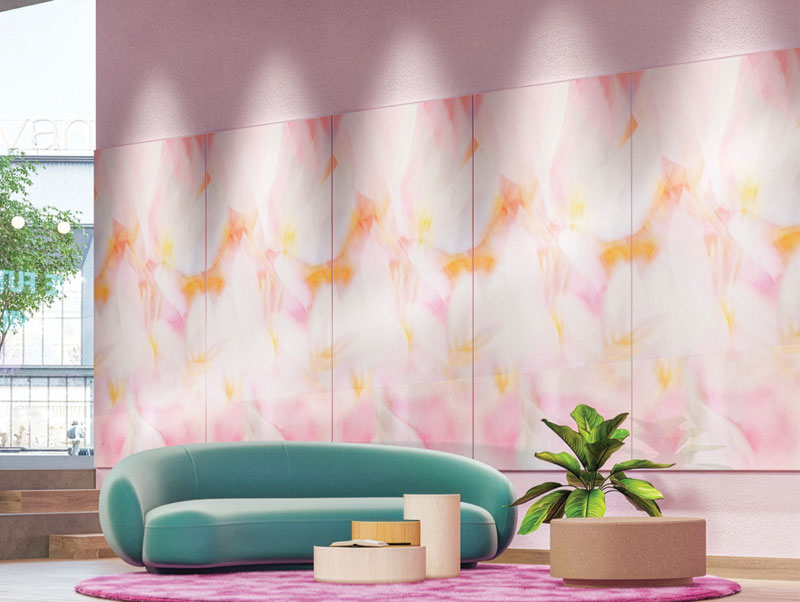
Lighting integration can further elevate metal walls, emphasizing texture and depth while reinforcing the design’s natural inspiration. Whether through backlighting, grazing light, or subtle washes, lighting must be coordinated early to avoid exposed wiring, uneven illumination, or difficult maintenance access. When thoughtfully integrated, light brings metal surfaces to life, allowing them to shift throughout the day and respond to changing conditions within the space.
Conclusion
Nature-inspired metal walls succeed when they are approached as architectural systems rather than decorative finishes. From full-height feature walls to layered dividers and wrapped columns, the most successful installations anticipate real-world use, movement, sound, and maintenance from the outset. When carefully coordinated and properly installed, these metal surfaces do not compete for attention—they quietly support the architecture, grounding expansive interiors in texture, rhythm, and durability.
Dzoanna Pavulina is a product designer at Móz Designs and the creative force behind several of the company’s most celebrated material and product launches. An Industrial Design graduate from the Academy of Art University in San Francisco, she has introduced multiple award-winning designs that have redefined the aesthetic and potential of architectural metal. With a sharp eye for color, form, and future trends, Dzoanna brings bold innovation and artistic vision to Móz projects across the country.
- [Image]: https://www.metalconstructionnews.com/wp-content/uploads/2026/02/Nightfall_1.jpg
- [Image]: https://www.metalconstructionnews.com/wp-content/uploads/2026/02/Greenvail_3.jpg
- [Image]: https://www.metalconstructionnews.com/wp-content/uploads/2026/02/Aurabelle_5.jpg
Source URL: https://www.metalconstructionnews.com/articles/nature-inspired-metal-walls/