Next Generation of Industrial Wearable Technology
by Jonathan McGaha | 30 November 2016 12:00 am
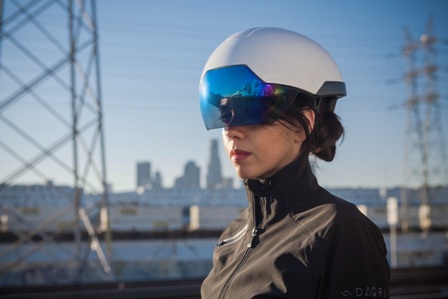
Unlock new capabilities, enhance productivity and efficiency
 In a world of wearables, the possibilities are endless. It seems today, you can’t watch the news or go to a store without running into some form of wearable technology. From smart watches and fitness trackers, to Snapchat Spectacles and Google Glass, the confluence of people and technology, in myriad form factors, is literally everywhere you look. It may be tempting to look at the consumer applications of wearable technology and dismiss the whole category as frivolous or niche, something only for the tech elite or those obsessed with the quantified self.
If you did, however, you’d miss an entire industry that’s just coming out of its infancy: the industrial wearables industry. Industrial wearables are a different type of animal than consumer wearables. They solve real world problems, for real people, doing real work. They include devices that were designed from the ground up as tools, not toys, and hold the potential to unlock new capabilities, enhance productivity and efficiency, and even make each and every one of us safer when working on the job site, shop floor or out in the field.
Tools and Tests
So what’s different about these so-called industrial wearables? And how can you tell the difference when you’re looking for tools to improve your business or your effectiveness at your job? First, an industrial wearable should be rugged enough for the environment you’re going to use it in. The key difference between consumer and industrial devices is that consumer devices are sometimes flimsy, might have battery life that works for gaming or other uses, but ultimately can’t last for the full shift you need the device available for.
 Second, does the device play nicely with your existing tools and systems? An industrial wearable should come with high-impact business applications and in many cases, should already integrate with existing software like labor management, enterprise resource planning (ERP) and materials requirement planning (MRP) systems. Lastly, an industrial wearable must pass the utility test. Is the way you’re going to perform a given task or operation easier, faster or more enjoyable than how it’s being done today? If not, the device or use case doesn’t pass the utility test and you should either look for a different device or a different use case. Remember, a cheap device that never gets used is actually a lot more expensive in the long run than a premium device that makes a difference from day one until the last day it’s used on-site.
The Sweet Spot
So what kinds of things do industrial wearables enable for the construction industry and for the worker on the job site? What we’ve seen at DAQRI is that there’s a sweet spot at the cross section of tasks or operations that are mission critical (i.e., have a critical path impact or very high cost of error), that require significant know how or expertise, but that don’t get performed very frequently. This might be a complex assembly, preventative or other maintenance on high-value equipment, or anything that requires a checklist worth of unfamiliar steps and hands free access to information.
One classic error that’s made in evaluating or implementing wearable technology is just assuming that there’s a single “silver bullet application” that applies across every industry, job class or even job site. The slightly frustrating but very true answer to the question of where to start is the age old: it depends.
Ultimately, where wearable technology makes the biggest impact is where the biggest pain points or problems for your crew or company already are. Luckily, devices like DAQRI Smart Helmet are sort of like Swiss Army Knives of useful sensors, capabilities, and provide a platform on which you can build exactly the tool or application you need to avoid errors, cut costs, and ultimately, to generate even more profit over time.
Matt Kammerait is vice president of product marketing, DAQRI, Los Angeles. For more information, visit www.daqri.org[1] or call (213) 375-8830
- www.daqri.org: http://www.daqri.org
Source URL: https://www.metalconstructionnews.com/articles/next-generation-of-industrial-wearable-technology/