Performance and Profit: Optimizing Sheet Metal Workflow
by David Flaherty | 19 January 2026 9:48 am
 [1]
[1]More than 100 years ago, the optimization of workflows led to a revolution in manufacturing. In the early 1900s, Henry Ford revolutionized manufacturing with a fundamental concept: keeping the process moving by reducing time and labor costs, thereby making the Ford car affordable for everyone.
How does your sheet metal shop or central manufacturing factory compare to concepts from the early 1900s? Over the last 30 years, the sheet metal industry has undergone significant changes in technology and equipment, as well as in the interaction between these two factors.
A timeline of innovation
In the early to mid-1980s, the sheet metal industry experienced its first significant change with the introduction of CNC folding technology to the U.S. market. By early 1998, the U.S. market had seen the introduction of the first color graphic control system on a CNC sheet metal folding machine. Early 1999 saw the coil processing market change with the introduction of an affordable slit-to-width and cut-to-length machine. Now, it is possible to outfit a shop with nearly completely hands-free operations. These introductions, along with others, have enabled the sheet metal industry to evolve.
The Fourth Industrial Revolution
The last 30 years have brought about some of the largest technological changes to our everyday lives. This period is often considered the Fourth Industrial Revolution. The Fourth Industrial Revolution revolves around two key elements: key technology, including cyber-physical systems—the Internet of Things—and the second, increased connectivity and intelligence, which blur the lines between physical and digital. When looking at these factors, these questions must be asked:
- How can these advances boost performance and profit?
- How can these advances boost sheet metal workflows?
- Is your company taking advantage of systems developed and designed to increase performance, efficiency, and profitability?
Optimization goes beyond the work floor
Optimizing sheet metal workflow involves more than just the physical flow or movement of goods from their raw material form to a finished product ready for delivery to their intended purpose. The process starts with how an order is entered into a company’s system. Many software systems exist today to help with the ease of entering orders, maintaining inventory, and even drawing a desired profile to determine if it is possible to produce the equipment a company owns. These software systems are at the heart of optimizing a company’s efficiency. A company’s decision to transition from a pen-and-paper system or a basic electronic system to a robust enterprise resource planning (ERP) system that uses graphic technology, AI scheduling, and time-to-produce requires discipline and dedication. Today’s market is very competitive. How you set your company apart from others begins with the very first interaction. The ease of placing an order with digital details, order confirmations, and schedule updates is one of the benefits of using
software systems.
These systems can optimize production schedules, making a shop more efficient and productive. Most of today’s equipment can communicate with software systems. Some can even provide feedback on the software systems, such as when a process has started and finished. Real-time production data can be collected to optimize scheduling and determine production times. This information enables a company to determine actual costs, production times, and delivery schedules, which in turn allows for ensuring profitability.
Updating the shop floor
 [2]
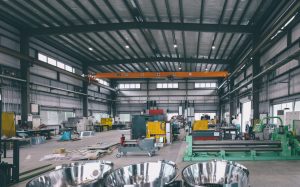
[2]Shop floor layouts must evolve in tandem with the advancements in upgraded equipment technology. Utilizing the shop space to minimize any non-value-added movements must be considered when adding new technology. Systems with built-in automation are only as good as the plan to keep them fed with materials.
However, manually moving materials over a considerable distance is counterproductive. Shop layouts can be a challenge, so to use space in its most effective manner, out-of-the-box thinking is required. At a minimum, change will be necessary. Statements such as “this is how we have always done it” and “it’s worked well so far” will only keep you exactly where you are—they do not allow you to grow.
Performance and profit
What is performance, and how is it measured? Performance is often tied to profit. The better the profit, the better the performance must be, is a common thought. The amount of effort, labor, and lack of efficiency in performance does not lead to profit. Performance must be a combination of all the tools available to maximize profit.
What is the right combination of tools for a shop?
Performance is measured in different ways. Feet per minute, bends per shift, pieces per hour, and hours on a job site are just a few examples. Performance must be considered in relation to the task, past performance, expected performance, and goals. I am often asked to quantify performance based on the speed of a specific machine function. Rarely am I asked what the performance is, what the throughput is, and how that relates to how I am producing my products today. Challenges exist in every aspect of achieving the desired performance, leading to the desired profit. By applying the principles established in the early 1900s in conjunction with current technology, organizations can anticipate improved performance and profitability in the years to come.
Chad Rowe is the director – business development for MetalForming. Rowe spent the first nine years of his professional career with the US Navy as a nuclear submarine-trained electrician. Joining MetalForming in 1999 as a field service technician, Chad has 25 years in the industry, serving in multiple capacities. He is currently providing customers with the guidance necessary to find the optimum solutions to their architectural sheet metal needs
- [Image]: https://www.metalconstructionnews.com/wp-content/uploads/2026/01/Schechtl-Hanover.jpg
- [Image]: https://www.metalconstructionnews.com/wp-content/uploads/2026/01/GettyImages-1631907778.jpg
Source URL: https://www.metalconstructionnews.com/articles/optimizing-sheet-metal-workflow/