Architectural aluminum products are essential to constructing modern commercial and institutional buildings. A building envelope’s facade, daylighting systems, and exterior components are usually fabricated from aluminum. The finish applied to these products plays a critical role in how they perform, their life cycle, and how well they contribute to a project’s design and sustainability goals.
Painted coatings, anodize finishes, and specialty options protect the aluminum and enhance its material properties, while adding visual appeal. When these finishes are applied to architectural aluminum products under controlled conditions and paired with proper handling, installation, and maintenance, they deliver decades of durable service.
Aluminum applications
In North America, aluminum is readily available, easily formed, has a high strength-to-weight ratio, and can be recycled at the end of its long life. For commercial building construction projects, it is extruded in linear lengths, stretch-formed into curves, and produced as flat sheets.
The aluminum material is then finished, fabricated, and assembled into:
- Window, skylight, curtain wall, storefront, and entrance framing systems.
- Doors, column covers, and wall panels.
- Facade and rainscreen systems.
- Canopies, sunshades, and other shading devices.
- Coping, fascia, and louvers.
- Ornamental and decorative elements, trim, and railings.
Performance-driven decisions
More than an aesthetic choice, exterior aluminum finishes represent an intentional decision for building performance. Architectural-grade finishes protect the aluminum and its appearance from weather, wear, and much more.
To ensure expected performance and color consistency, experienced finishing service providers apply the paint or anodize under quality-controlled conditions using a combination of automated equipment and human control. Along with quality assurance procedures, they adhere to stringent industry standards and offer detailed warranties for their finishes.
The Fenestration Glazing and Industry Alliance’s (FGIA) AAMA standards are commonly referenced for architectural aluminum finishes, especially for windows, doors, skylights, curtain walls, and storefronts.
Painted coatings
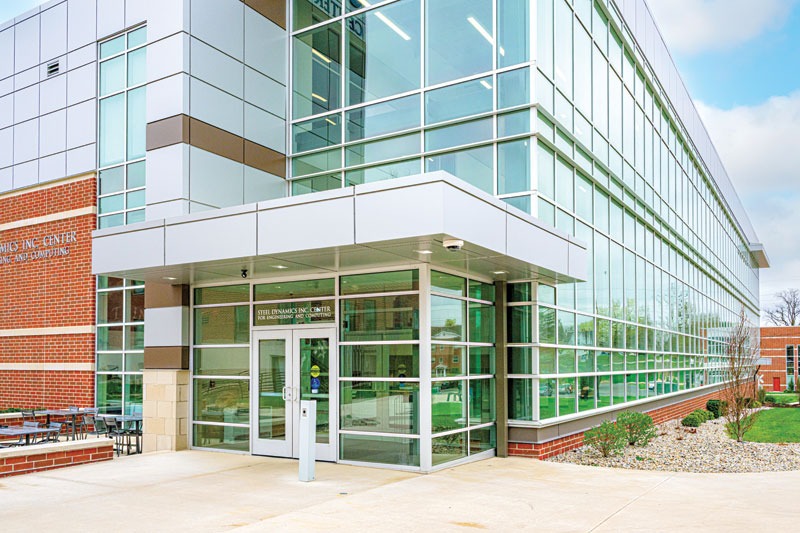
Because of their nearly unlimited color choices, painted coatings remain the most widely used for architectural aluminum. High-performance, 70 percent fluoropolymer resin-based coating systems meet the industry-leading AAMA 2605 standard for architectural aluminum extrusions and panels. Finished materials meeting this standard exhibit excellent color uniformity, gloss, film hardness, and adhesion, as well as superior resistance to impact, chemicals, corrosion, and weathering-induced fading.
AAMA 2605 is the highest-level standard for painted coatings, with a 10-year outdoor weathering test and 4,000 hours of high-humidity and salt-spray testing. When applied correctly, these painted coatings provide decades of service in various climates, from hot, coastal, solar-intensive locations to cold, precipitation-intensive regions to those with a combination of extreme temperatures and weather.
The long-term performance of an architectural coating is influenced strongly by pigment composition. Inorganic pigments are commonly used and preferred for their exceptional durability and resistance to fading. Historically, some bright, high-chromatic colors, such as vibrant reds, were achieved using organic pigments. With some manufacturers moving away from these, the range of intensely saturated colors available in specific coating systems may be limited today. When organic pigments are used, adding a clear coat provides additional UV protection and helps maintain color vibrancy over time.
Anodize finishes
Anodizing offers a fundamentally different approach to painting aluminum. With an inherent metallic appearance and an exceptionally durable surface, anodize finishes are integral to aluminum. They are produced via electrochemical processes that accelerate oxidation and increase surface hardness.
Anodization produces a uniform, hard oxide film that protects the remaining aluminum from corrosion. The resulting anodize aluminum cannot peel or flake. It does not require a clear coat or ongoing treatment to maintain color stability. Anodize color choices typically are offered in clear, black, bronze, and champagne.
Meeting the AAMA 611 specification performance standards, Class I anodize aluminum ensures excellent resistance to abrasion, weather, UV exposure, and salt spray, plus exceptional wear in high-traffic environments. Some anodizing service providers list a 40-year life expectancy.
Specialty finishes and custom options
Beyond traditional painting and anodizing techniques, specialty finishes continue to expand the design options available for architectural aluminum products, such as:
- Copper and Bordeaux anodize specialty finishes create rich and earthy elemental tones using a proprietary three-step color process. The resulting finish retains its luster and will not patina like natural copper.
- Mica and metallic specialty painted coatings contain reflective flakes that add sparkle, shine, and shimmer to the finished aluminum.
- Textured painted coatings contain an additive to simulate the tactile feel of brick, stone, terra cotta, and other masonry.
- Woodgrain textured specialty coatings mimic the look and feel of natural wood grain using a dye sublimation process.
- Dual finishing options allow different colors or finish types on a building’s exterior and interior surfaces, such as a window frame or door.
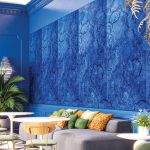
- Custom finishes can be precisely matched to almost any natural or manufactured material, brand standard, or decorating style. Architectural coatings manufacturers’ 2026 Color of the Year selections range from light natural neutrals to fresh-cut green to a sea of subtle to vibrant blues.
Sustainable advantages
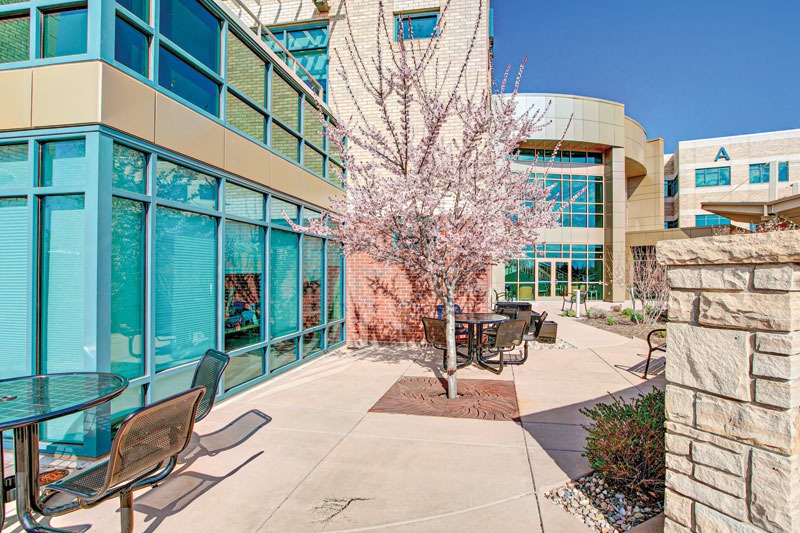
The selected finish can significantly impact a project’s sustainability profile. Durable finishes that extend the service life of aluminum components reduce the need for replacement and refinishing, conserving resources over time.
Factory-applied finishing also reduces waste through controlled processes and, in many cases, the use of reclaimed energy or recycled materials.
Liquid-painted coatings contain solvents with volatile organic compounds (VOCs). An environmentally responsible finishing service can safely capture and destroy VOCs within its facility before the finished material is shipped to the jobsite.
Anodize finishes do not contain VOCs. The finished aluminum material is inert, non-combustible, and 100 percent recyclable. A few anodize aluminum providers and product manufacturers have earned a Declare Label as Living Building Challenge (LBC) Red List Free. This means the finished material is fully compliant with the highest level of LBC criteria established by the International Living Future Institute (Living Future). Red List Free and sustainable building materials can contribute to green building certification programs, such as the U.S. Green Building Council’s (USGBC)Leadership in Energy and Environmental Design (LEED) Rating System and the International WELL Building Standard.
When combined with aluminum’s inherent recyclability, high-quality finishes help support long-term sustainability goals without compromising durability or appearance.
Care and cleaning
Even the highest-quality finish can be compromised by improper handling or installation during transportation and construction. Following manufacturer guidelines for storage, protection, and installation is essential to preserving finish integrity and ensuring the full warranty is retained.
Warranties can vary from 12 months to five years to more than 10 years. Almost all of them require routine maintenance as a condition of coverage. The installation team plays a key role in educating owners and property managers about proper care and cleaning of their finished products.
Whether the architectural aluminum is painted, anodized, or uses a specialty finish, it represents a long-term investment in a building’s performance and appearance. When correctly specified, applied, and maintained, these finished products contribute to smooth installation and operation for many years to come.
Tammy Schroeder, LEED Green Associate, is the director of marketing for Apogee Architectural Metals, which includes Linetec, EFCO, Wausau Window and Wall Systems, Tubelite, and Alumicor brands. With more than 25 years of industry experience, she serves as an educator on high-performance architectural products, finishing, and services. She can be reached at tammy.schroeder@apog.com or through linetec.com