Replacing Metal Building Walls
by Paul Deffenbaugh | 1 September 2021 12:00 am
From damage repair to facelifts, replacing metal building walls faces unique obstacles
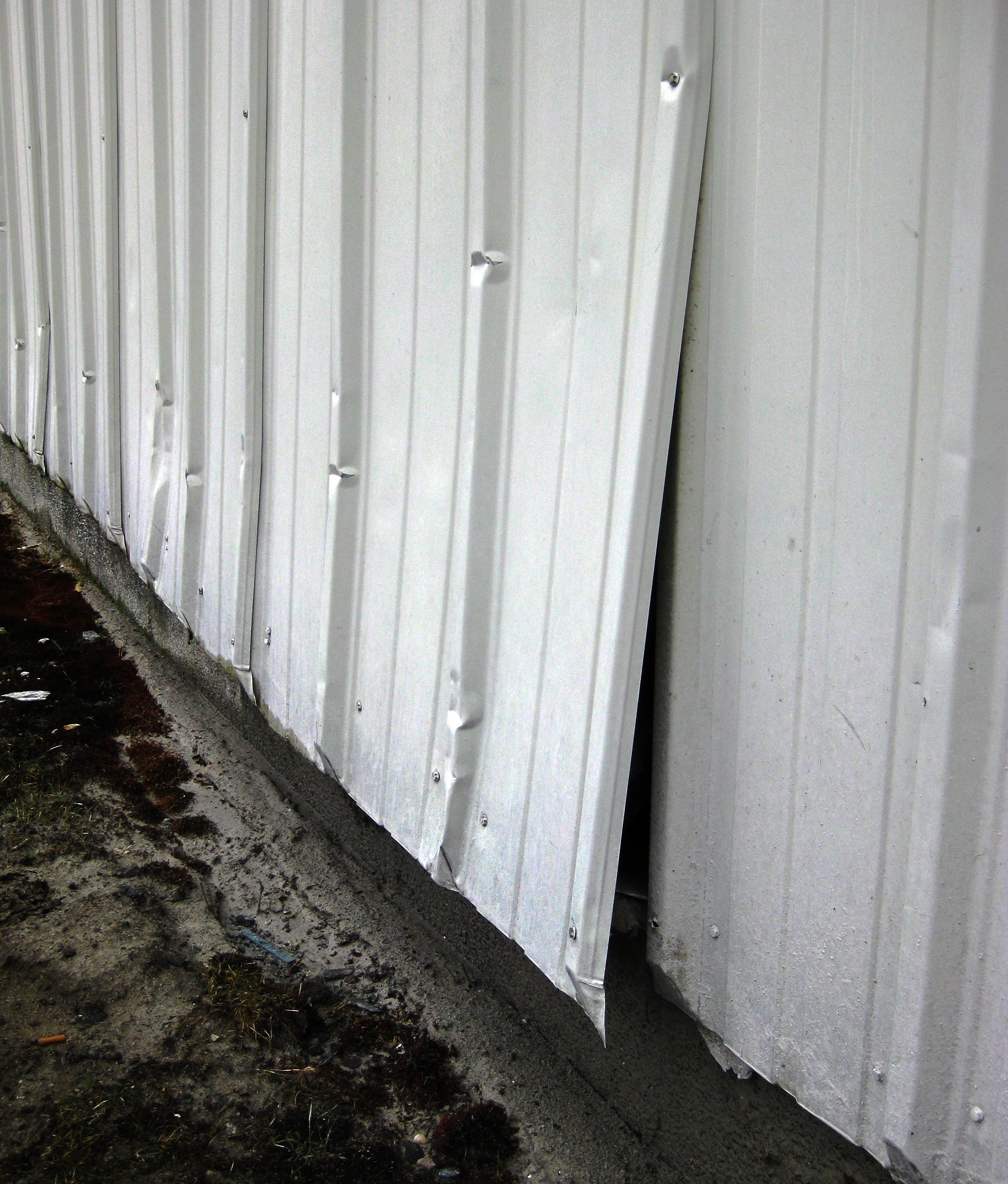
Photo courtesy of Alexander Newman
Metal building systems (MBS) structures can last decades with the proper maintenance and repair. Periodically, though, exterior panels need to be replaced and usually the reason is either damage to the wall or deterioration due to weather or use.
Repair Work
“Existing walls—typically, metal siding—tend to suffer from deterioration, such as rusting and discoloration,” says Alexander Newman, PE, a forensic structural engineer in the Boston area and author of a book titled, “Metal Building Systems,” now in its third edition. “Also, they could suffer from mechanical damage, which construction equipment such as trucks and forklifts can easily inflict on thin metal panels. In some cases, the owner is looking to spruce up the building to increase its appeal to a potential buyer. Finally, replacing the walls made of single sheets of metal with pre-insulated panels allows the building to become more energy efficient.”
For Justin Beall, president of DD Construction, a metal building erector in Lakewood, Colo., the most common of those events is the smaller repair because of damage, which seems to be the most typical kind of work in the business. It’s smaller in scale. Whole building reskinning is far rarer.
This kind of work accounts for less than 5% of the projects he does a year. “We usually only do it for existing customers,” he says. “If one of our general contractors has a job they did way back when, or they’re just one of our good customers or clients, and they call of us out of the blue and say, ‘we have five sheets to replace,’ we’ll do that. But I’m not really actively looking for resheet jobs.”
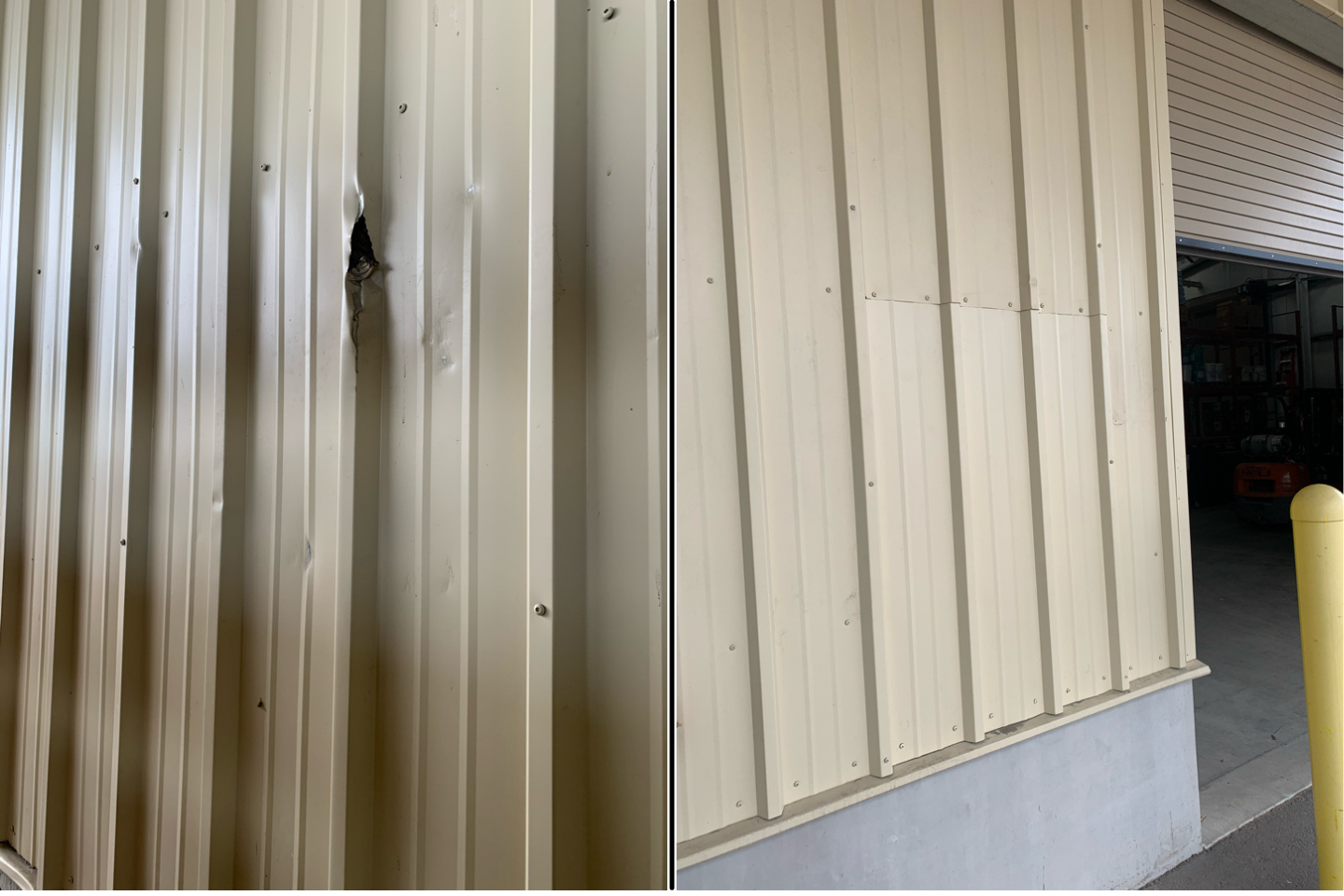
Photo courtesy of DD Construction
T.B.T. Construction Services Inc., Columbia Station, Ohio, does a lot more renovation work on metal buildings, but much of that is still the result of damage. CEO Jerrod Turner says, “There’s a lot of damage on these shipping facilities, so we get in there and do repair and maintenance, and fix the damage from trucks hitting them.”
Few of the buildings DD Construction works on are, understandably, new ones. “Most of them are 10 to 15 years old,” says Beall. “It’s not just one forklift hit it. It’s usually five or six spots in some manufacturing facility or warehouse that over the years guys have backed into it or clipped it moving something.”
He adds that seldom is this done on an emergency repair. Building owners will wait a long time before acting to repair damaged siding. “By the time we get there, it’s been that way for a number of years. In a traditional sense, nothing is urgent.”
The rare time when DD Construction does replace all the panels on a building, it’s usually due to corrosion of the metal siding. Salt storage facilities can cause incredible corrosive damage, and sometimes the only solution is to replace the entire skin.
There are, of course, times that building owners want to give a facelift to a metal building, motivated more to sell it than repair it. Newman points out that may be more difficult than just doing a simple exterior cladding replacement. “Depending on the building owner’s goals, replacing the exterior walls may or may not be even feasible,” he says. “For example, the owner insists on replacing metal siding with brittle masonry veneer. This might not be technically feasible, because the existing metal building structure is probably too flexible to provide a proper lateral backup for brittle masonry. In this case, building replacement should be considered. On the other hand, replacing the rusted steel siding with a similar product could probably be done without incident.”
Code Requirements
Replacing a few sheets of metal siding alongside a bay door for a warehouse is pretty straightforward and likely doesn’t require much regulatory oversight. Many locales may not even require a building permit. But there are specific concerns about code compliance when refinishing a metal building. “From the standpoint of code compliance,” says Newman, “replacing exterior walls constitutes building renovation. Sometimes other, unrelated, renovation tasks must be accomplished before a building permit is issued, and a simple wall replacement may or may not be allowed, depending on the reason for reskinning.”
While building permits may not be required, any work done on the building does need to meet building codes. “Virtually in every state of the country repairs and renovations to buildings must comply with the provisions of the International Existing Building Code (IEBC) or a similar set of provisions contained in the state building code,” says Newman. “The extent of the required construction efforts depends on the category of the proposed work. The code provisions differ for work assigned to such categories as Repairs, Alterations (three classes), Additions and Change of Occupancy.
The Repairs category has very specific requirements. “When the proposed reskinning work qualifies as Repairs, defined in 2018 IEBC as ‘reconstruction, replacement or renewal of any part of an existing building for the purpose of its maintenance or to correct damage,’” says Newman, “exterior walls would generally be allowed to be replaced with similar materials. But complications could arise even here. For example, if the proposed reskinning would be done to a metal building where the structural framing has sustained ‘substantial structural damage,’ as defined in the code, structural analysis and possibly an upgrade of the entire building would be required. In that case, it might be more economical to replace the entire building, not just the exterior walls.”
In other words, all those forklifts and trucks damaging the panels may be doing more than just punching holes in sheeting; they may be hitting structural elements. Bent columns or foundation bolts sheared off are cause for far greater intervention than just a simple reskinning. There also is a difference between simple repairs and a total reskinning of a building in terms of how it fits into the code.
“It is logical to classify wall replacement under the Repairs chapter of IEBC when a partial wall replacement is done for ‘maintenance or to correct damage,’” says Newman. “A total reskinning of the building should be more properly assigned to the IEBC category of work called “Alteration— Level 1,” which in IEBC-18 includes removal and replacement of existing elements with new that serve the same purpose. The chapter dealing with this category of work contains a variety of unrelated requirements, from the maximum slope of access ramps to a structural evaluation of the roof diaphragm (when ‘reskinning’ is accompanied by reroofing). Therefore, the designers and contractors involved in exterior wall replacement projects should be careful not to violate the code provisions that have little to do with the replacement efforts.”
Right Materials
Aside from code compliance, contractors doing this kind of work face some other unique obstacles that focus primarily on specifying the right materials. “Specific to the pre-engineered metal buildings,” says Turner, “it’s a little bit of a challenge to make siding profiles look similar enough whether you’re putting an addition on or trying to make repairs to a building. The metal building industry itself is kind of unique because there are so many different manufacturers or so many different profiles. Recently, three or four big manufacturers or umbrella companies own the other subcompanies, so it can be a challenge trying to track down where to find profiles or if siding profiles even exist anymore of if you have an extinct profile that can’t be found anywhere.”
Beall faces the same difficulty. “Usually, we try to figure out who manufactured the building and get panels direct from the supplier,” he says, “because some the companies that have been around a long time, the base model R-panel they use hasn’t changed in 50-some years. That’s always step one. As far as the paint, you have to make the owner aware that this building has been in the sun for however many years, and the paint might not match. But there’s not as much concern about that. They’re more concerned about closing it up if there’s a hole or some sort of rust spot. We haven’t seen a ton of pushback from the owner on the panel not matching a hundred percent.”
Upgrade Issues
As Newman points out, replacing an entire building that had single-skin panels with insulated metal panels not only avoids the problem of matching profiles but also allows for an energy upgrade to the building. “Of course, the biggest contributor to energy efficiency is typically the roof,” he says, “not the walls.”
Still, substantial changes to any building may cause it to meet new codes, and the energy codes have changed significantly. “Updating codes is on a project-by-project basis,” says Turner. “Every one of them is different, but usually you only need to update a new structure to the new codes. A lot of times, the older codes, the energy and insulation stuff can be sort of grandfathered in because of the usage of the building or if it’s just considered a storage building and not a manufacturing building, they have different requirements on the energy side.”
Code compliance, both structural and energy, are essential to a successful project. But there can also be more to it than that. “Beyond these code issues,” says Newman, “any time a replacement of the exterior walls in metal buildings is proposed, the owner should engage a qualified structural engineer to evaluate structural adequacy and condition of the existing framing, such as girts, that would laterally support the new walls. The size and spacing of the existing girts should be appropriate for the new wall panels. Also, a lateral support at the foundation level should be evaluated or added. In some cases, a brand-new system of lateral supports is needed, which substantially increases the cost of the project and makes a building replacement appealing.”
Source URL: https://www.metalconstructionnews.com/articles/replacing-metal-building-walls/