Sealant Selection Guide for Metal Building Systems
by David Flaherty | 2 April 2026 4:39 pm
 [1]
[1]Metal building systems rely on the right caulk or sealant to stay watertight, structurally sound, and protected from environmental stress. Selecting the correct sealant for each application requires matching the substrate, temperature range, and exposure conditions to the sealant’s chemistry. Metal expands, contracts, and reacts to weather differently than other substrates. The wrong product can lead to leaks, separation, or premature failure.
Choosing the proper sealant for roofs, gutters, wall panels, penetrations, ductwork, and high-heat components helps ensure that each connection performs as intended.
Understanding how different sealants behave, what conditions they must withstand, and which ones are compatible with specific metal surfaces allows contractors to avoid callbacks and support long-term system performance.
What sealants must withstand in metal building systems
Metal expands and contracts with temperature changes. This places constant stress on sealed joints. Outdoor exposure introduces additional factors such as UV radiation, moisture, freezing conditions, and salt.
For this reason, sealants must remain flexible while maintaining adhesion. Proper curing depends on applying products within the manufacturer’s recommended temperature range. When this is not done, seals can fail prematurely.
Common sealant types for metal applications
Silicone sealants
Silicone performs well in exterior and wet environments. It supports movement and resists UV exposure, making it appropriate for gutters, downspouts, and exterior seams. This type of sealant cures tack-free in 30 minutes and fully cures in 24 hours. It operates over a temperature range of -75°F to 450°F and supports 25 percent joint movement, helping accommodate the expansion and contraction of metal assemblies.
Polyurethane sealants
Polyurethane sealants offer strong adhesion and flexibility and are frequently used in gutter systems due to their tolerance for temperature swings and outdoor exposure. The most eco-friendly options offer a 0 percent VOC, polyurethane formulation with a service range of approximately -40°F to 180°F. It is suitable for metal applications that experience routine movement or vibration.
High-heat sealants and cements
High-heat components require materials rated for elevated temperatures. High-heat silicone and high-heat cement maintain structure around boilers, vents, and flues. They can operate over a temperature range of -80°F to +600°F with 25 percent joint movement, supporting seals exposed to continuous or intermittent heat.
Roof and flashing sealants
Select petroleum-based flashing sealants only when confirmed compatible with surrounding materials, as some can affect rubber components.
Key sealant applications in metal construction
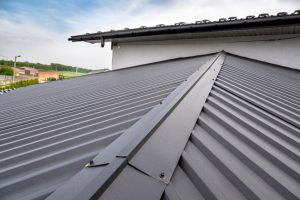
Metal roofs
Metal roofs require accurate placement of penetrations because errors cannot be concealed once the panels are installed. Roof joints must withstand exposure to the sun, freezing temperatures, and the potential for standing water. Flashings designed for metal surfaces help maintain a secure seal.
Gutters and downspouts
Gutters are exposed to constant moisture and wide temperature fluctuations. Sealants must withstand repeated expansion and contraction at seams, especially in climates with freeze–thaw cycles. Silicone accommodates movement from thermal cycling, while plastic seal supports flexible sealing in joints that experience regular vibration or shifting.
Metal wall panels and facades
Wall panel joints must bond to coated or painted surfaces and accommodate movement resulting from daily temperature changes. Exterior exposure increases stress on vertical seals, especially on elevations with high sun exposure. Sealants adhere to coated substrates and provide a flexible, weather-resistant seal.
HVAC systems and ductwork
Metal ductwork experiences vibration from equipment operation and temperature changes during system cycles. Sealants must withstand airflow pressure and work in conjunction with mechanical fasteners to maintain joint stability in temperatures from 40°F to 180°F, supporting stable joints in systems exposed to continuous airflow and mechanical movement.
Vents, flues, and high-heat components
High-heat components require materials rated for elevated temperatures up to 600°F. High-heat silicone and high-heat
cement support joints exposed to continuous heat and thermal cycling around boilers, water heaters, and exhaust pathways. This provides a durable seal for metal flues, furnace transitions, high-temperature ductwork, and other assemblies exposed to sustained or intermittent heat.
Penetrations for pipes and valves
Penetrations through metal often require both sealing and structural support. Pipe sleeves create space for movement and protect the pipe where it passes through a wall or roof. Proper support systems reduce sagging or shifting that may damage the seal over time.
Industrial metal equipment and tanks
Chemical exposure, vibration, and moisture are present every day in industrial environments. Sealant selection must reflect the operating conditions. Compatibility and manufacturer recommendations guide the choice. Plastic sealants, for example, bond to metal and withstand these conditions, supporting joints that experience environmental or operational stress.
Gaskets, fasteners, and small-profile areas
Gaskets and O-rings generally provide their own seal when installed correctly. Supplementary sealant should be used only if supported by the manufacturer’s instructions. Screws, rivets, and small gaps require clean, prepared surfaces and sealants rated for the metal and environment.
Environmental and material compatibility
Climate and metal type significantly influence sealant performance. UV exposure, moisture, and freezing temperatures affect how long a seal will last. Metals such as aluminum, galvanized steel, and copper respond differently to sealant chemistries. Surfaces must be clean, dry, and free of grease or debris to support adhesion. Light abrasion can improve bonding when recommended, especially where mild oxidation is present. Petroleum-based products can deteriorate rubber components. Compatibility checks help reduce the likelihood of premature failure.
Best practices for preparation and application
- Ensure the surface is clean, dry, and free of debris, grease, or oxidation.
- Prepare the surface as needed, including light abrasion when recommended to improve adhesion.
- Apply sealants only within the temperature range specified by the manufacturer.
- Monitor weather conditions, since temperature and moisture influence curing and final seal integrity.
- Take accurate measurements before creating penetrations or cuts, especially on metal roofs, where corrections are difficult to conceal.
Inspection and long-term performance
Routine inspection helps identify cracks, gaps, or separations early. Water intrusion or unexpected air movement also indicates seal deterioration. Commercial facilities benefit from annual inspections, with additional checks conducted after severe weather events. Residential structures typically require a seasonal visual review, especially in spring and fall when temperature changes place added stress on metal assemblies.
Reliable sealing depends on selecting the proper product, thorough preparation, and installation that aligns with environmental conditions. These steps help metal assemblies achieve long-term durability across a wide range of applications.
Sean Comerford is manager, inside sales and tech support at Oatey Co. He is a third-generation tradesman with nearly 20 years of plumbing experience, including serving as the lead plumber for commercial/residential new-construction, service, and fire protection jobs. He holds a State of Ohio Fire Protection License for Sprinkler and Standpipe.
- [Image]: https://www.metalconstructionnews.com/wp-content/uploads/2026/04/iStock-1267218291.jpg
Source URL: https://www.metalconstructionnews.com/articles/sealant-selection-guide-metal-building-systems/