Self Storage Systems
by Jonathan McGaha | 29 July 2012 12:00 am
Uncomplicated Construction, Advanced Technology
Purveyors in the construction industry, like  all businesses, are interested in profitability, efficiencies and predictable turnaround. What they try to avoid are unexpected difficulties that may cause unnecessary delays, and/ or increase costs, which may compromise the success of the project.
Of course, many commercial construction projects are necessarily complicated and protracted. This doesn’t mean they should be avoided, but contractors ought to have the opportunity to handle alternative projects that offer a simpler, faster and more concise operation.
Where self storage comes in
Self storage, which came onto the real estate scene less than 50 years ago, has not only become a successful, mainstream business, but it has evolved into a state-of-the-art, metal building production process, using 21st century technology.
Try to imagine self storage as an oversized erector set with parts and components that interconnect correctly to form a series of empty storage spaces. Some buildings are single-story, others bi-level to fit sloping terrains, and more and more structures are becoming multistory to better solve restricted land availability.
(If land is too expensive or there simply isn’t enough available, the developer has the option to build “up” rather than “out.”)
Then there were climate-controlled and dry-air storage buildings to satisfy the need for contents that required temperature or humidity control. Small portable units and RV and boat storage units soon followed as the need arose. Even storage for more eclectic goods, such as wine, excess business records and inventory or even industrial machinery, eventually required design accommodations.
There’s no question that self storage construction and engineering have advanced technologically. As the business became more popular, mom and pop operators, as well as multi-facility owners, investors and entrepreneurs, looked to self storage for more versatility and better-built facilities. It turned from a cookie-cutter, standardized building design business to manufacturers who could develop complete self storage systems to meet the needs of a fast-growing business. In a sense, this meant simplifying the process.
Sound odd?
Simplify by providing more 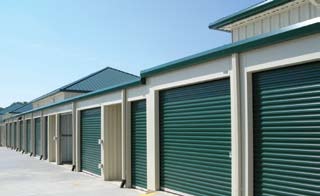
The manufacturing leaders in the industry have realized that the more they provide to the owner/ operators, the simpler the process becomes. How so? Consider this. If one company can design and engineer the buildings, manufacture the components, provide erector crews familiar with the building design, and ship the components on a timely basis, time and money can be saved. And the entire process of building a self storage facility can be simplified.
It means the owner is dealing with a single source. If there are questions to be answered or problems to be solved, there is only one source to turn to. This advantage avoids the complexities of dealing with multiple suppliers, which often leads to a duplication of effort and possibly additional costs. Plus, confusion can sometimes result when there are “too many cooks in the kitchen.”
A responsible manufacturer will also provide a site superintendent to oversee the construction process and make sure everything goes smoothly and stays on schedule. He is a welcomed intermediary for the owner and the contractor to ensure that the manufacturer’s product is not only properly installed and on a timely basis, but assures that all product and service warranties offered by the manufacturer will be realized.
In the final analysis, owners and contractors need to know that self storage construction can be counted on to be as routine as possible, with a stable timetable, predictable costs and desired results. This will go a long way toward giving them some relief from those over-complicated, timeconsuming projects that can too often leave them pulling out their hair and wondering why they got into the business in the first place.
Terry Campbell is vice president of sales and marketing for BETCO Inc., a single-source manufacturer of self storage systems, based in Statesville, N.C. To learn more, visit www.betco.com.
Uncomplicated Construction, Advanced Technology
Purveyors in the construction industry, like all businesses, are interested in profitability, efficiencies and predictable turnaround. What they try to avoid are unexpected difficulties that may cause unnecessary delays, and/ or increase costs, which may compromise the success of the project.
Of course, many commercial construction projects are necessarily complicated and protracted. This doesn’t mean they should be avoided, but contractors ought to have the opportunity to handle alternative projects that offer a simpler, faster and more concise operation.
Where self storage comes in
Self storage, which came onto the real estate scene less than 50 years ago, has not only become a successful, mainstream business, but it has evolved into a state-of-the-art, metal building production process, using 21st century technology.
Try to imagine self storage as an oversized erector set with parts and components that interconnect correctly to form a series of empty storage spaces. Some buildings are single-story, others bi-level to fit sloping terrains, and more and more structures are becoming multistory to better solve restricted land availability. (If land is too expensive or there simply isn’t enough available, the developer has the option to build “up” rather than “out.”)
Then there were climate-controlled and dry-air storage buildings to satisfy the need for contents that required temperature or humidity control. Small portable units and RV and boat storage units soon followed as the need arose. Even storage for more eclectic goods, such as wine, excess business records and inventory or even industrial machinery, eventually required design accommodations.
There’s no question that self storage construction and engineering have advanced technologically. As the business became more popular, mom and pop operators, as well as multi-facility owners, investors and entrepreneurs, looked to self storage for more versatility and better-built facilities. It turned from a cookie-cutter, standardized building design business to manufacturers who could develop complete self storage systems to meet the needs of a fast-growing business. In a sense, this meant simplifying the process.
Sound odd?
Simplify by providing more
The manufacturing leaders in the industry have realized that the more they provide to the owner/ operators, the simpler the process becomes. How so? Consider this. If one company can design and engineer the buildings, manufacture the components, provide erector crews familiar with the building design, and ship the components on a timely basis, time and money can be saved. And the entire process of building a self storage facility can be simplified.
It means the owner is dealing with a single source. If there are questions to be answered or problems to be solved, there is only one source to turn to. This advantage avoids the complexities of dealing with multiple suppliers, which often leads to a duplication of effort and possibly additional costs. Plus, confusion can sometimes result when there are “too many cooks in the kitchen.”
A responsible manufacturer will also provide a site superintendent to oversee the construction process and make sure everything goes smoothly and stays on schedule. He is a welcomed intermediary for the owner and the contractor to ensure that the manufacturer’s product is not only properly installed and on a timely basis, but assures that all product and service warranties offered by the manufacturer will be realized.
In the final analysis, owners and contractors need to know that self storage construction can be counted on to be as routine as possible, with a stable timetable, predictable costs and desired results. This will go a long way toward giving them some relief from those over-complicated, timeconsuming projects that can too often leave them pulling out their hair and wondering why they got into the business in the first place.
Source URL: https://www.metalconstructionnews.com/articles/self-storage-systems/