Self-Storage Trends
by Jonathan McGaha | 2 May 2017 12:00 am
The self-storage industry has been active and growing for the past five years
 Self-storage construction boomed in the mid-2000s, declining in 2007 and abruptly halting in 2008 as financing became difficult to obtain. Throughout the recession many operators could not expand their properties, but they did maintain occupancies and rent better than other real estate sectors. The major players (known as REITS, or Real Estate Investment Trusts) did very well throughout and following the recession, and caught the eyes of many new investors. In 2010 and following years, financing slowly became more available and property values have rebounded.
In the last three years, lending for self-storage projects has become more available than it’s ever been. Sellers are receiving record prices for existing properties, and high rental rates and low borrowing cost have allowed developers to build nicer sites in better locations than they would have in the past. In fact, self-storage developers have been able to outbid residential developers for land in some markets.
Here’s a rundown of trends in the self-storage industry:
Better Locations
Consumers increasingly use their mobile phones to initiate their contact with a self-storage facility. Google Maps will generally show results for businesses closest to you, so it has become more important than even for self-storage operators to be located close to rooftops. That cheap land at the edge of town is no longer the default choice for self storage. Zoning restrictions have however moderated the growth of self storage in some markets. In established urban areas, projects are commonly interior conversions of existing buildings rather than new construction.
Bigger, More Complex Buildings
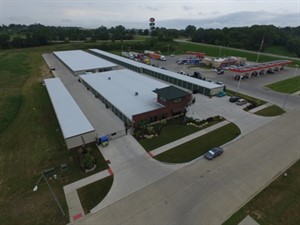
As storage developers build on more costly land in the above-mentioned locations, it becomes more sensible to maximize rentable space on a parcel by constructing extra-wide or multistory buildings. The use of climate control is increasing, and spreading into smaller communities than you would have seen 10 years ago. Just as with hotels, consumers recognize that not all sites are the same. They are willing to pay more for a site with better security features and curb appeal.
More Curb Appeal
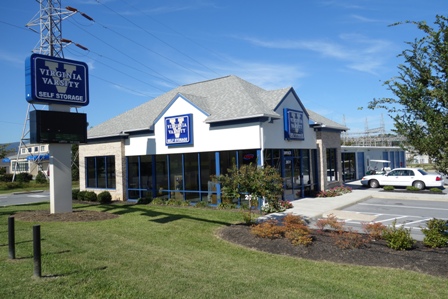
Speaking of curb appeal, many of today’s newer self-storage properties are going all out to create a great first impression. Offices can be either a steel-framed portion of a self-storage building itself, or may be a conventional structure that is detached. More elaborate landscaping and architectural finishes are becoming common on the street side of storage facilities. Having doors visible from a major road is still a major goal for marketing purposes, developers are seeking to add features to soften the look while touting security. Barbed wire for example is out, while decorative aluminum picket fences are in.
More Technology
 Behind the scenes of today’s self-storage operation you might find a pretty impressive collection of technology. Camera systems can be remotely viewed, and gate systems talk to the computer to allow access only to tenants that are paid up. Kiosks (similar to bank ATMs) can execute rental contracts, dispense locks and connect tenants to a live person in a remote location. Tenants can reserve and pay using a computer or mobile device. Planning for this technology up front, even if it will be a later addition, is critical. Data and power conduits should be run separately to each building and locations where gates, keypads or kiosks will go. Buildings may contain networking equipment to facilitate long runs of computer cable or fiber option equipment. Before construction begins, the developer should have mapped out equipment locations and power requirements. Careful consideration should be given to gate, kiosk and keypad locations to allow for a smooth traffic flow. If the site has a kiosk or office, these need to be outside of the gate.
For those looking to develop self storage, we congratulate you on deciding to take a plunge into a reliable class of real estate with proven returns. But we caution you to do the homework to carefully evaluate the needs of the community in which you will build. Overbuilding is becoming a concern in some markets as multiple aggressive developers plan and build large projects.
Developers should be considering not only existing facilities in their demand study, but should also be checking with city (and neighboring city) planning departments to be aware of projects that may be applying for building permits in the area. One large developer building a 1000-unit site can drastically change the outlook for a local market.
Steve Hajewski is the marketing manager for Trachte Building Systems, Sun Prairie, Wis., a manufacturer of self-storage buildings. Additionally, he owns and manages a self-storage property in Wisconsin. To learn more, visit www.trachte.com[1].
- www.trachte.com: http://www.trachte.com
Source URL: https://www.metalconstructionnews.com/articles/self-storage-trends/