Retrofit Report Spray Foam Insulation
by Jonathan McGaha | 31 August 2011 12:00 am
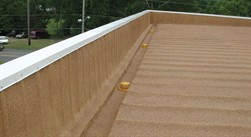
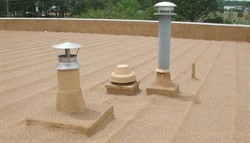
The Utility Operations Building on Jackson Bluff Road is the operations hub of Tallahassee, Fla.’s city-owned electric utility, which provides safe and reliable electric power services to more than 115,000 homes and businesses in the Tallahassee area.
The 34,590-square-foot building was designed with a 4-foot parapet wall along the edge of its low-slope metal roof, which was intended to enhance its appearance from the street level. Unfortunately, the wall also caused rainwater to pool when rooftop drains and an internal gutter system proved inadequate to handle the drainage requirements in one of the country’s 10 rainiest cities.
Problems with the roof began to appear shortly after construction was completed in 1967. Before long, water leaks were a constant problem at the facility, affecting utility employees, disrupting operations and causing headaches for the facilities professionals charged with keeping city buildings running safely and efficiently.
Over the years, the facilities team tried a variety of methods to fix the leaks. While they were often able to stop or reduce water leaks for extended periods of time, the facilities team was unable to find a solution that solved the problem once and for all.
In fact, the leaking became noticeably worse as the building and its roof aged. Decades of scorching summer heat, torrential rains and contraction and expansion caused by temperature changes took their toll on lap joints, fasteners and other metal roofing components and caused roof performance to deteriorate over time. Fortunately, the roof itself was rust-free and years of leaking had not caused significant damage to the building itself.
In the early 2000s, Tallahassee officials began looking for ways to improve energy efficiency, trim operating costs and reduce the environmental impact of a number of city buildings. The city chose to work with an experienced energy services company to develop and implement a comprehensive series of energy-saving upgrades to more than 40 facilities, including the Utility Operations Building.
Facility team members saw the opportunity to leverage the city’s investment in energy conservation measures by installing a new roof using materials that would reduce energy consumption and solve the leakage problem at the Utility Operations Building at the same time.
After engaging an experienced independent roofing consultant to help them consider various roofing systems, city officials chose to update the roof with spray polyurethane foam. Construction and facilities management professionals have been using spray polyurethane foam to make roofs more weather resistant and energy efficient for more than three decades.
The new roof was installed in 2004 by Brazos Urethane, a leading national contractor specializing in spray foam roofing. Brazos used proven polyurethane materials manufactured by Neogard and applied using Honeywell’s Enovate blowing agent, a zero ozone depleting and low global warming potential liquid
hydro-fluorocarbon. Enovate technology causes the polyurethane foam to expand, creating an extremely effective heat, moisture and air barrier.
The facilities team chose a polyurethane spray foam roofing system for several reasons. For starters, the foam is an excellent insulating material, providing the highest thermal-resistance (R-value) per inch of any roofing material. Polyurethane foam is fast and easy to install over a wide range of current roofing systems. Foam roofing is durable, easy to maintain and easy to recoat if necessary after years of service. A polyurethane foam roofing system is cost effective compared to other roofing materials, especially when total lifecycle costs including energy and maintenance cost savings are considered.
Spray polyurethane foam is particularly well suited for metal roofs because it creates a seamless, monolithic coating that effectively covers the entire roof surface. There are no exposed lap joints, seams or fasteners that can allow heat, moisture or airborne contaminants to enter the building.
“Foam roofing is durable and lasts almost forever,” says the former City of Tallahassee facilities manager who led the project. “I’ve seen 40-year-old polyurethane roofs that are still in service. There is no problem with seams and fasteners because you have one solid, dynamic roof that water and heat cannot penetrate.
“Polyurethane spray foam is simple, no frills, no hoopla, but extremely effective,” she continues. “In many ways it’s one of the best-kept secrets in the roofing industry.”
The Utility Operations Building’s polyurethane foam roof has performed extremely well
since it was installed in 2004, according to project participants.
Team members who worked on the Tallahassee project underscore the importance of choosing proven materials, technologies and partners before tackling a polyurethane foam roofing project. “Considering total life cycle costs and savings opportunities is the best way to approach a roofing project,” one team member emphasized. “Scrimping on materials or choosing an unproven contractor may save some money in first costs but will ultimately cost more if there are significant problems or if you have to replace the roof prematurely.”
Readings taken on the roof of the Utilities Operation Building show a dramatic drop in typical summertime temperature, according to the independent roofing consultant who worked on the project. Prior to installation of the new roof, temperatures often reached the 180-degree level; today readings in the 110-degree range are more typical.
The insulating properties of the polyurethane foam have resulted in an estimated 10 percent reduction in annual electricity costs for the building. Installing foam roofing on the Utilities Operation Building and five other city buildings are estimated to have saved Tallahassee taxpayers more than $167,000 in energy costs over the past five years.
Jim Rist has been solving roofing problems for building owners for more than 30 years. Although he has specified many different types of systems, he specializes in the spray-in-place polyurethane foam system due to its long term success when applied properly. Jim is currently employed by Honeywell International and is the business development leader for North America. For more information, visit www.honeywell.com/enovate[1].
- www.honeywell.com/enovate: http://www.honeywell.com/enovate
Source URL: https://www.metalconstructionnews.com/articles/sept-2011-retrofit-report/