Silicone sealants deliver: The advantages and applications of precured joint and sealant
by Jonathan McGaha | 25 October 2010 12:00 am
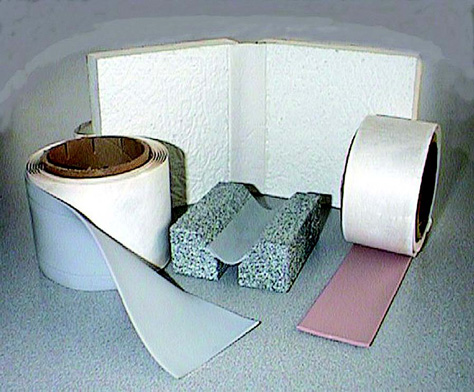 Precured joint sealant-sometimes referred to as membrane, extrusion or flexible flashing-is produced by extruding an elastomeric material and allowing it to cure to a flexible product in a controlled manufacturing environment. Precured joint sealants are packaged in cured form, typically in rolls, and installed using a thin layer of adhesive near the edges to attach the material to the substrate being sealed. With the outer edges adhered to the substrate, the middle of the precured sealant, which is not bonded to the substrate, acts as the area for expansion and contraction. Precured sealants are manufactured in widths ranging from less than 1 inch
(25 mm) to greater than 12 inches (305 mm).
Advantages
Several basic types of precured joint sealants are used in the construction market today, but silicone precured joint sealant is the most commonly used for several reasons. First, because of its molecular structure and high bond energy, silicone has excellent aging characteristics and is resistant to ultraviolet light and weathering. This gives silicone a longer effective lifespan than organic materials,such as EPDM, polyurethane, polysulfide and butyl, which are prone to degradation from UV light. Because silicone does not degrade when exposed to the elements, it is possible to produce the material very thin (0.04 to 0.08 inch [1 to 2 mm]).
 In addition, the movement capability for silicone precured joint sealant can be as high as +200 percent/ -75 percent, which is significantly higher than other products used in similar applications. The high movement capability coupled with the thin material gives precured silicone sealant the ability to handle the multidirectional movement commonly found in metal building applications. Additional advantages of silicone over other materials include a wide operational temperature range and better resistance to color fading.
Uses
Precured silicone sealant has been used for many years in a variety of building envelope restoration applications and has become increasingly common in the metal building industry in the past couple years.
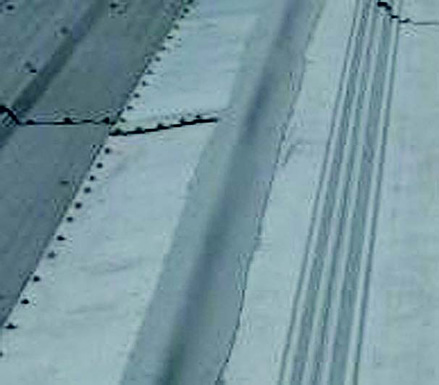
There are many features of precured silicone sealant that make it ideal for a variety of metal building-related applications. First, flexibility and high movement capability make precured silicone sealant perfect for sealing areas with a large amount of thermal expansion and contraction, a situation commonly found in metal building applications. Second, the UV stability of silicone gives precured silicone sealant a long effective life and keeps it from degrading under the intense, long-term exposure to the elements routinely found in metal roofing applications. In fact, silicone sealants that have been in place on building exteriors for more than 40 years are still performing well. Figure 2 shows a precured silicone sealant application on a metal roof joint between a new addition and an existing metal building. Because of the UV- and weather-resistant nature of this material, there is no need for a cover plate to protect it.
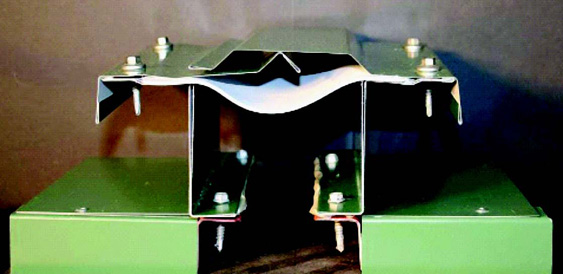 Perhaps the most exciting and ground breaking feature of precured silicone sealant systems in metal building applications is that they require no mechanical fasteners for installation. The strength of the adhesive allows the precured sealant to be installed without any other means of attaching the material to the substrate, even when installed on a vertical surface. The effect of this feature is wide-reaching. Installing precured silicone sealant systems is quick and efficient, particularly when compared to other systems commonly used in these and similar applications. Other systems, such as all-metal or membrane type systems, generally require many mechanical fasteners-as many as 1,500 per 100 linear foot (30 m) of material-often in addition to sealants and/or mastics. These fasteners dramatically increase the time and labor cost required for the installation of these systems.
In addition, because every fastener creates another hole in the roof, the potential for leaks increases significantly. Further complicating the installation process is the requirement of an often-complicated splice kit to fuse the ends together. Precured silicone sealant systems require only an overlap of the ends of the material and a bead of the silicone adhesive to adhere them together.
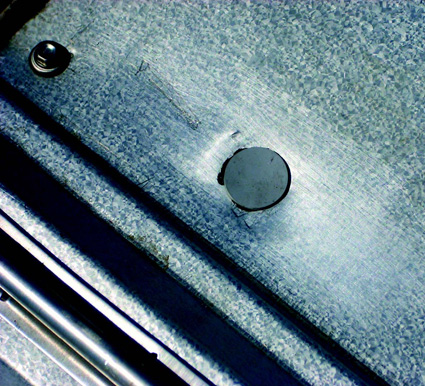 Further Applications Precured silicone sealant systems are being installed successfully in many applications within metal buildings, including:
• Expansion joints
• Roof-to-wall transitions
• Roof height change details
• Joints between new and existing buildings
• Ridge applications
• Pipe and other penetrations
• Roof curb seals
In addition to the new construction applications already discussed, precured silicone sealant can be used in various repair applications. These include the repair of holes in roof decking, repair of failed standing seams and other roofi ng repairs.
Using a premium silicone adhesive in the precured silicone sealant system allows the material to be attached to a variety of metal substrates without the use of a primer, including Galvalume, stainless steel, galvanized steel, Kynar coated, acrylic coated, aluminum and others.
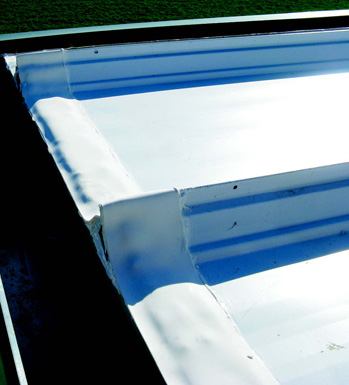 Precured silicone sealant is available in many standard sizes and colors. Manufacturers offer custom color and custom-designed precured sealant to fit an assortment of application requirements. Custom colors can be matched to various metal roofing finishes, allowing the material to blend into the roof system.
Finally, the use of precured silicone sealant can result in a greener, more energy efficient building. Most buildings have numerous leaks in the building envelope and, therefore, must be pressurized, resulting in higher heating and cooling costs. Virtually any leak in a building can be sealed using precured silicone sealant. Once these leaks are sealed, the amount of air required to keep a building pressurized is drastically reduced. This results in a significant reduction of heating and cooling costs, making the building more
energy efficient.
As leaders in the metal building construction industry realize the impact that cost savings and product performance can make in a wide variety of applications in both new construction and renovation projects, it is expected that the market share for this material will continue to grow.
Jason Bakus is vice president of Sealex Inc., Harbor Springs, Mich. Details are at www.sealexinc.com.
Source URL: https://www.metalconstructionnews.com/articles/silicone-sealants-deliver-the-advantages-and-applications-of-precured-joint-and-sealant/