Specifying Roofing Fasteners and Their Performance Criteria
by Jonathan McGaha | 31 January 2016 12:00 am
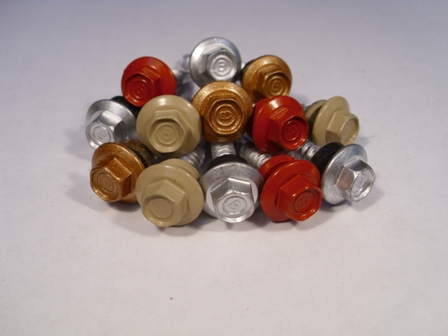
Fasteners are small and low cost, but have a big impact on projects
 Have you ever heard the expression, “a chain is only as strong as its weakest link”? This is frequently lost in translation when some construction planners are considering what fasteners are needed for upcoming roofing projects.
Often fasteners and other low-cost items are the last to get attention, with the focus on selecting the big ticket items first, then often at the last minute going back to the low-cost fasteners, etc. Last minute considerations often lead to cut corners and poor choices when a project’s integrity can depend on something as simple as using the right fastener for the right job. When cuts are made to save a few pennies on the smallest parts, the integrity of the roof can be jeopardized.
Typically for roofing projects, panel manufacturers will specify what fastener should be used, or the performance criteria the part must meet. There are many variables can play into proper fastener selection, such as:
• What materials you are you fastening together?
• What is the performance expectation you must meet?
• Is there a consideration for pull-out, or pull-over or shear characteristics?
• These factors may determine a specific fastening pattern, or spacing of fasteners, or in some cases how far from the edge a fastener can be used in certain substrates.
• Is moisture or condensation an issue?
• Are there treated lumber, dissimilar metals or any condition not noted in the drawings?
• Is this new construction or an addition/renovation of an older structure?
• Are there architects and/or engineers involved?
Often most of these concerns can be eliminated with job-site testing to confirm the fastener’s ability to accomplish job expectations. Core sampling is exactly what it sounds like: a section of the roof is cored to determine what is there and what may be unseen on the surface. Pull tests in the existing structure will accurately determine what fastener would be the best for a particular application. These tests can save money on the front end and help avoid surprises that may arise along the way. Once the substrates are tested and evaluated, the best fastener for this specific condition can be specified. With metal roofs systems there are two basic designs that require two very different types of fasteners to attach each roof correctly.
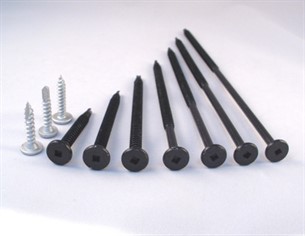 Screw-Down Roofs
Screw-down roofs or exposed fastener roofs are typically just that, screwed down into the substrate. This is more of a basic roof system and is used in many utilitarian buildings. Head styles, thread and drill points vary with the mating materials and application specifics.
The design consideration for the fastener should be for a specific coating and finish. Often people refer to galvanized base finishes, but this is really something of a misnomer. The industry standard today is for a new generation of corrosion resistant coatings applied to the head and threads of all fasteners resulting in much higher corrosion protection.
For additional protection as well as appearance, fasteners are color matched to match the roof panel. The fastener head then blends with the panel color and is not as visible as a non-painted part. Again there are choices here; paint or powder coat, often a personal preference.
The best option to avoid corrosion is the use of a long-life head. These fasteners are designed exclusively for roofing applications, and have a rust-free head. Typically the head is either a zinc aluminum alloy or 300 series stainless and are guaranteed not to rust. These parts can also be painted to match the roof panels. A washer is required on these fasteners as well. This improves the seal once the fastener is set.
Standing Seam Roofs
Standing seam roofs are more of a high-end product typically used on higher visibility projects when more of an aesthetic appeal is needed. Standing seam is so named by the vertical seam that joins the two panels together, with the fasteners typically hidden beneath the panel, hidden from view and the elements. In standing seam applications a clip is attached to the roof deck with pancake or low-profile head fasteners
At this point the male and female legs of the panels are attached to the clip, and they are seamed together. Unlike the through panel method, these are not exposed to the environment. Even so care should be taken when choosing these fasteners.
Although there may be no requirement for finish, it is recommended to always use coated fasteners as extra insurance. The cost difference between coated and non-coated fasteners is negligible, and the peace of mind is well worth it. Fasteners are some of the smallest and lowest cost components in any roofing job, but can have a huge impact on the project. Buy quality parts from quality suppliers and know this link is covered.
Keith Self is product manager at Birmingham Fastener, Birmingham, Ala. To learn more, visit www.bhamfast.com or reach him at keith.self@bhamfast.com[1].
- keith.self@bhamfast.com: mailto:keith.self@bhamfast.com
Source URL: https://www.metalconstructionnews.com/articles/specifying-roofing-fasteners-and-their-performance-criteria/