Standing Up to the Fire Test
by Mark Robins | 1 June 2020 12:00 am
Choosing the right metal panel and related fire rating
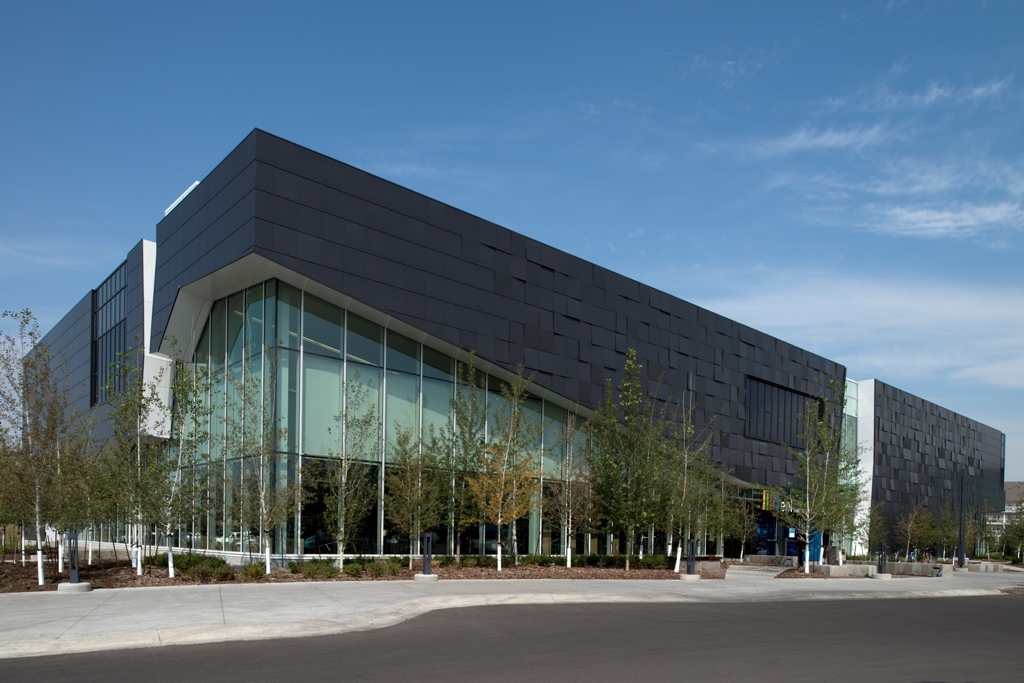
Building material manufacturers have engineered products that slow or stop the spread of fire, keeping a building’s content safe and a structure’s integrity intact. Architects and contractors need to understand the importance of choosing the right cladding and related fire testing.
A Single-Skin System
There are several classifications of metal wall panels; review them and speak with manufacturers about system benefits. We can only speak to a single-skin metal panel system.
Metal by nature is a non-combustible material. The substances—insulation, sealants, tapes, caulks and other materials—that are added to the metal are what cause combustion in a metal wall panel system. The single-skin system does not have any composite materials. Because of this, they are non-combustible. This classification opens the door for it to be used on a wide variety of wall assemblies.
Standard Testing
To verify manufacturer claims, manufacturers seek NFPA 285 compliance, a fire test from the National Fire Protection Association (NFPA). “Standard Fire Test Method for Evaluation of Fire Propagation Characteristics of Exterior Non-Load-Bearing Wall Assemblies Containing Combustible Components” is a large-scale wall assembly test that determines the potential for flames to spread vertically and horizontally in a building via the exterior wall. It is a requirement for Type I, II, III or IV construction to use NFPA 285 approved products if the products contain foam plastic insulation or combustible water-resistive barriers, according to Section 2603.5 of the International Building Code (IBC).
The 35-minute test creates a fire in a room vented through an open window. This exposes the exterior wall assembly from the inside fire as well as the fire that is escaping through the window. The assembly performance is observed by the testing authority’s visual inspection and thermocouple temperatures of the wall assembly. Fire propagation is (for the most part) limited for accurate testing, and any propagation is also reviewed.
To truly test the entire wall panel assembly, the wall panels and their attachment methods are tested; if manufacturers allow for multiple attachment methods—all must be tested to achieve certification. Testing typically occurs on a flat panel. Panels that have an embossed, textured or other finish fall under the certification of their flat counterpart. If panel assemblies use thermal barriers or insulation, they also must be tested as part of the assembly.
Metal wall panels come in a variety of sizes and even different orientations. Testing should look at a panel’s full height and full width. The orientation also needs to be considered because most metal wall panels can be installed both vertically and horizontally.
Shop Smart
Since first being adopted by the Uniform Building Code in 1992 for foam plastic insulation in exterior walls, NFPA 285 has expanded in IBC to include EIFS, metal composite materials, fiber-reinforced plastics and high-pressure laminates. Some interpret these additions as restrictive because of the constraints places on the entirety of a system.
Manufacturers and associations nevertheless continue to test individual products and categories of products to better the metal wall panel marketplace and, more importantly, ensure the safety and integrity of buildings. That is why the single-skin system was tested. Reach out to metal wall panel manufacturers to discuss their assemblies, testing and installation recommendations.
Jason Zeeff is the vice president of sales for Dri-Design, Holland, Mich. He can be reached at jason.zeeff@dri-design.com. Visit www.dri-design.com[1]for more information.

- www.dri-design.com: http://www.dri-design.com
Source URL: https://www.metalconstructionnews.com/articles/standing-up-to-the-fire-test/