The Role of Butyl Sealants in Long-Term Metal Building Performance
by anthony_capkun_2 | 16 April 2026 10:29 am
 [1]
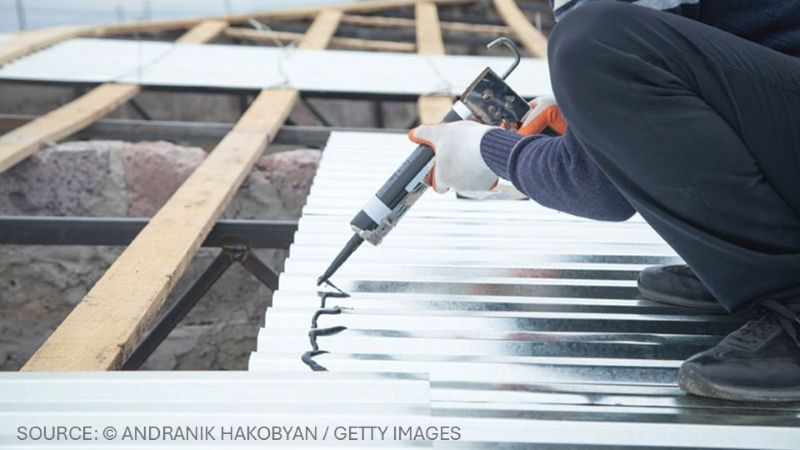
[1]Butyl sealants were first introduced to the U.S. metal roofing industry more than 60 years ago and are now gaining traction as a preferred sealant for metal roof and building envelope attachment systems, offering strong weatherproofing and extended service life.
As metal buildings increasingly support a wide range of systems—including roof-mounted snow retention, fall protection, and HVAC equipment, as well as wall-mounted façades, signage, communications hardware, and other structural attachments—understanding which butyl is being used matters more than ever.
Behind the popularity
Butyl sealants are popular because they can be applied at both cold and hot temperatures. Non-curing butyl compounds have a sticky constitution—often compared to chewing gum—that is retained throughout their service lives, even in extreme temperatures. These sealants are sustainable, non-toxic, and environmentally friendly. They require little, if any, surface preparation beyond removing visible dirt and debris.
 [2]
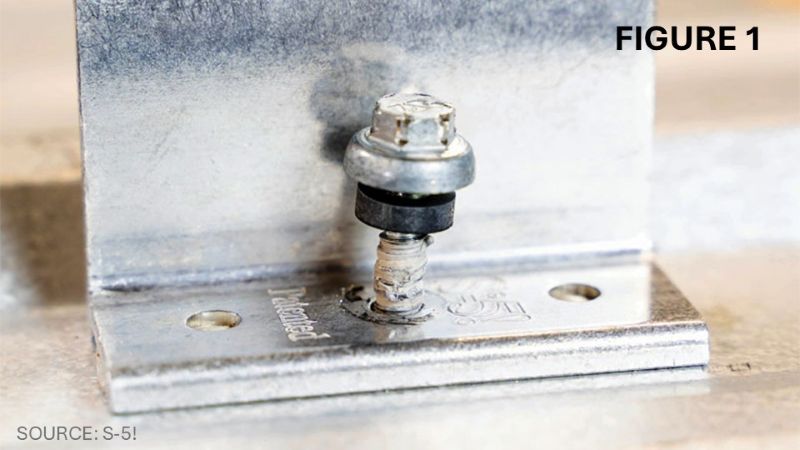
[2]The sealant also “tacks” (clings) to threaded fasteners (Figure 1), providing an additional layer of secondary weather protection. That adhesion and elastic recovery are especially critical on metal building systems, where thermal cycling and panel movement can challenge lesser sealants.
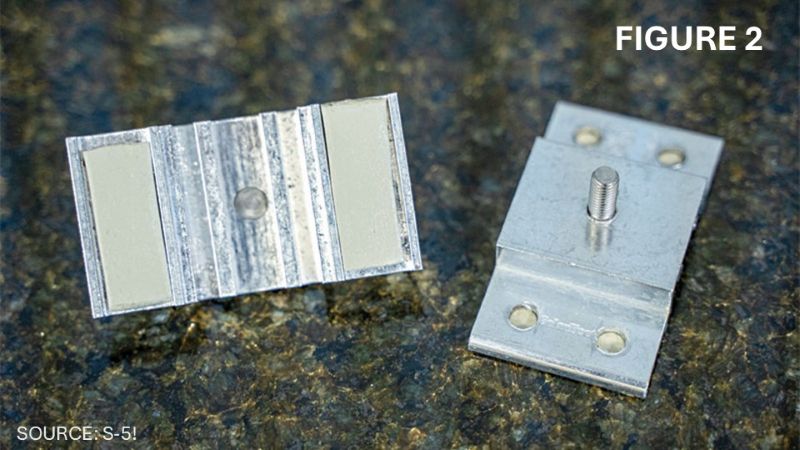
Although pumpable tube grades (72%± solids) are available, extruded tapes (98%± solids) are strongly preferred due to their manufactured dimensional consistency, eliminating the variability of field-applied sealant and guesswork about how much is enough. Over- or under-application can both be detrimental to long-term performance (Figure 2).
 [3]
[3]Efficiency that is certified
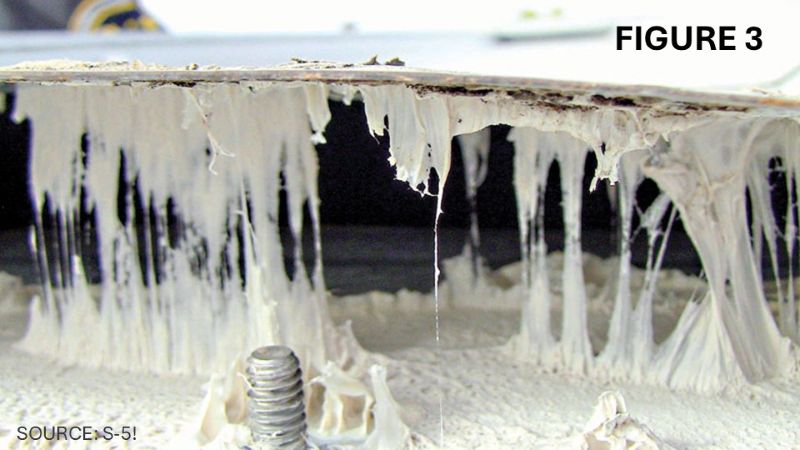
A service life study conducted by the Metal Construction Association (MCA) demonstrated that certain brand-specific butyls still exhibit exceptional elasticity, adhesion, cohesive tensile strength, and webbing properties after 35 years of service (Figure 3). Based on laboratory analysis of specimens taken from 14 aged roofs, those same sealant chemistries are estimated to deliver service lives exceeding 60 years.
 [4]
[4]While butyl formulations have evolved, and many have improved over time, it is important to note that not all butyl polymers are created equal. There are currently no industry standards governing butyl composition.
Butylene rubber blended with isoprene typically accounts for less than 20 percent of a formulation, and a higher rubber ratio does not necessarily translate into a better sealant. Additives such as ultraviolet (UV) inhibitors and insect or fungal repellents are often included, but exact formulations remain proprietary and vary widely among manufacturers.
A qualified lab chemist may evaluate sealants using tests for cone penetration, tensile strength, and adhesion, but these tests provide only early-life indicators. The only reliable measure of aged performance for butyl polymer sealants is documented, brand-specific performance on real roofs over decades of service.
Formulations unable to withstand the test of time can harden, lose adhesion, or exhibit compound breakdown (de-polymerization) in a fraction of the service life of superior counterparts—sometimes within seven or eight years.
The changing approach to sealants
As more metal construction system manufacturers and attachment producers recognize the benefits of butyl sealants, they are increasingly incorporating field- or pre-applied sealants during production rather than leaving sealant selection to contractors, who often rely on whatever is most convenient at a local building materials store.
This shift represents a meaningful step forward in quality control and long-term building-envelope performance.
Sourcing a butyl compound with at least 40 years of empirically proven performance is critical, but material selection alone is not enough. Proper product design for pre-applied sealants is equally important. Applying the correct amount with the appropriate part and mating sealant geometries—while preventing over-compression and limiting UV exposure—are all critical design considerations.
Attachments with pre-applied butyl should incorporate a reservoir to reduce over-compression, thinning, and UV exposure, all of which can compromise service life in metal roof and wall assemblies.
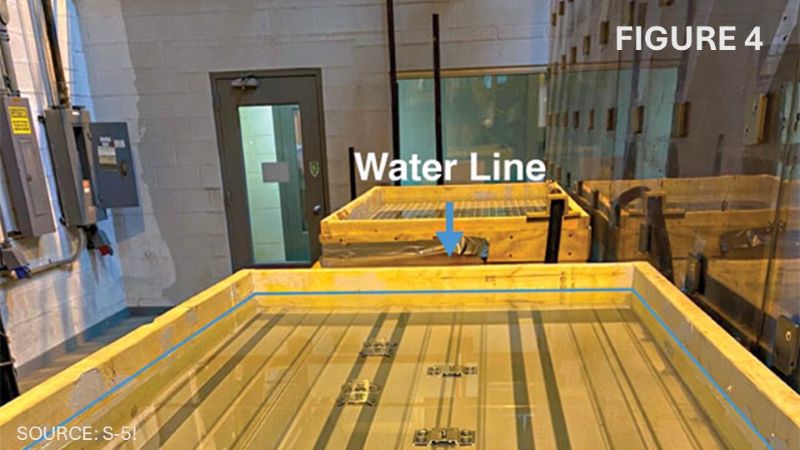
To validate attachment design, leak testing with pre-applied sealants must be conducted in the specific application for which the product is intended. One of the most demanding—and most applicable—tests for metal roof panels and roof attachments is ASTM E2140, The Standard Test Method for Water Penetration, a static water test developed specifically to evaluate attachment performance under controlled conditions (Figure 4).
 [5]
[5]Further considerations
Beyond selecting a butyl sealant with a proven performance history and designing attachments properly for pre-applied butyl tape, the following best practices can help ensure long-term watertightness:
Avoid relying on surface-applied sealants for repairs. Surface-applied sealants are exposed to UV radiation, ozone, mechanical abrasion, dirt, and other contaminants. Butyl polymers are particularly vulnerable to UV exposure. If sealants are not properly protected, multiple factors can break down their chemical bonds. While gasket-style applications offer improved protection, the most effective designs fully conceal the sealant and limit extrusion at the attachment perimeter.
Prevent over-compression. More torque does not equal better performance. Over-tightening fasteners can thin or displace sealing material, reducing effectiveness and service life. The best practice is to use attachment designs that limit compression and protect the sealant by providing a dedicated cavity for the material.
Bottom line
The growing use of non-curing butyl polymers to seal metal roof attachments and envelope interfaces represents a positive trend for the metal construction industry. Butyl is a superior sealant capable of long-term performance when properly sourced, applied, and protected.
With increased adoption comes increased responsibility to select durable formulations from proven sources with proven histories and to employ attachment designs that support the sealant throughout the full-service life of the metal roof or metal building system. Pre-applied butyl, combined with thoughtful engineering and validated testing, remains a best practice for long-term envelope integrity.
Rob Haddock is the CEO and founder of S-5![6] and the inventor of metal roof attachment solutions. A former contractor turned building-envelope scientist, Haddock has dedicated more than five decades to advancing the metal roofing industry. He is an award-winning roof forensics expert, author, lecturer, and educator, as well as the director of the Metal Roof Advisory Group, Ltd.[7], a consulting firm specializing in metal roof design, installation, and performance.
This feature originally appeared in the April 2026 edition of Metal Construction News, which you can find in our Digital Edition Archive.
- [Image]: https://www.metalconstructionnews.com/wp-content/uploads/2026/04/Butyl-Sealants-MCN-April-2026-800-01.jpg
- [Image]: https://www.metalconstructionnews.com/wp-content/uploads/2026/04/Butyl-Sealants-MCN-April-2026-800-02.jpg
- [Image]: https://www.metalconstructionnews.com/wp-content/uploads/2026/04/Butyl-Sealants-MCN-April-2026-800-03.jpg
- [Image]: https://www.metalconstructionnews.com/wp-content/uploads/2026/04/Butyl-Sealants-MCN-April-2026-800-04.jpg
- [Image]: https://www.metalconstructionnews.com/wp-content/uploads/2026/04/Butyl-Sealants-MCN-April-2026-800-05.jpg
- S-5!: https://www.s-5.com/
- Metal Roof Advisory Group, Ltd.: https://rmhaddock.com/
Source URL: https://www.metalconstructionnews.com/articles/the-role-of-butyl-sealants-in-long-term-metal-building-performance/