Understanding Different Snow Retention Systems
by Mark Robins | 1 January 2023 12:00 am
Knowing how snow retention works is a necessary first step in its success
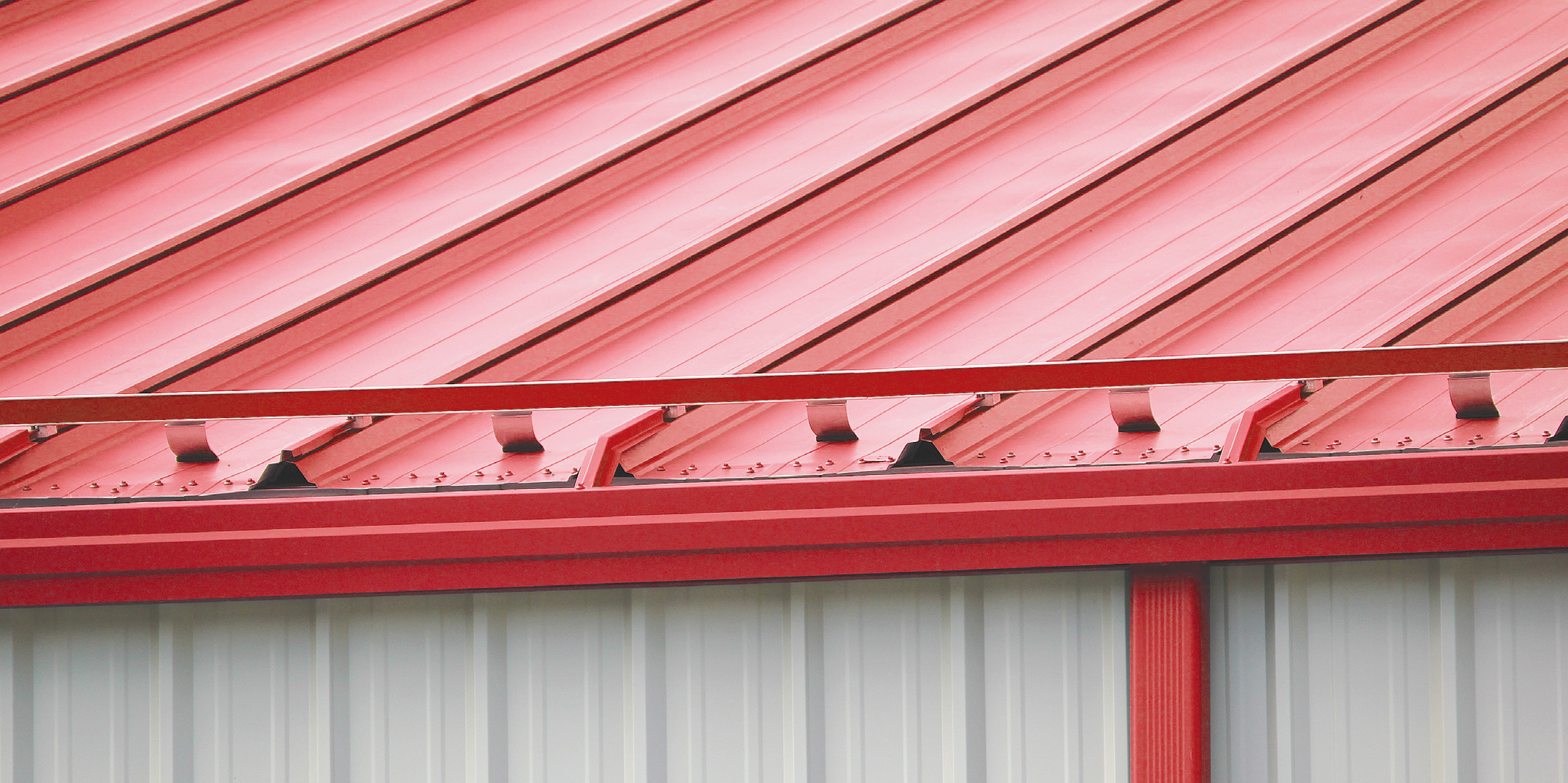
Desired systems use a continuous rail or extrusion that is manufactured according to ASTM material standards from aircraft quality, high-tensile aluminum and attach to the roof panel seam via aluminum clamps with stainless steel round point non-piercing fasteners. The rail/extrusion is constructed with a slot or recess that will accept color strips made from flat stock panel to be inserted.
Using the same coated/painted metal in your snow guards as what is used to produce your roof panels will ensure roofline aesthetics for years to come without fear of it fading at a different rate than the roof panels. To further fortify the system, an aluminum snodam that interlocks with the rail/extrusion and rests its integrated rubber foot on the flat of the roof panel should be installed between every seam. This snodam will help to limit snow and ice from migrating under your rail-system.
Load Values
An extremely vital aspect when deciding on which variety of snow retention to use is what independent engineering has been performed on the system. The engineering data should be available on the whole working system, not just available on the attachment devices themselves.
Some manufacturers tout their load values for the attachment device to the roof panel, but go no further. Superior manufacturers should be able to provide the attachment device load value as well as the uniform load on the rail/extrusion. Knowing the combination of these two values will supply you with what potentially could be or would be the weak link in your chain. Only then can the system be properly engineered to accommodate what is desirable for the project. Job-specific calculations using both values should be obtainable from the supplier.
Warranties
Any warranty provided should also be a strong consideration. A minimum 30-year manufacturer’s warranty should be expected and included in your purchase free of charge. Keep in mind, a warranty is only as strong as the financial stability of the manufacturer providing the warranty. Require that your vendor carries at least a $10 million liability insurance umbrella.
Other Considerations
No matter the system, no matter the amount of testing or engineering that has been performed on the system, having a supplier you can count on to properly analyze the roof and consider all the factors that can be applied is essential. Simply inputting numbers into a program does not take into consideration crucial factors: elevation changes, drift loads, hips or valleys on the roof, ice damming, and the many other variables that can obstruct the performance of your snow retention system.
Using a knowledgeable and dependable supplier with numerous years of experience with snow retention systems, and how they perform is a necessary first step toward optimizing the performance of your system as well as facilitating the installation process.
Jerod Webber is a sales manager for Dynamic Fastener, Kansas City, Mo. To learn more, visit www.dynamicfastener.com[1] or call (800) 821-5448.
- www.dynamicfastener.com: http://www.dynamicfastener.com
Source URL: https://www.metalconstructionnews.com/articles/understanding-different-snow-retention-systems/