Building with metal composite materials
by anthony_capkun_2 | 24 August 2026 1:16 pm
 [1]
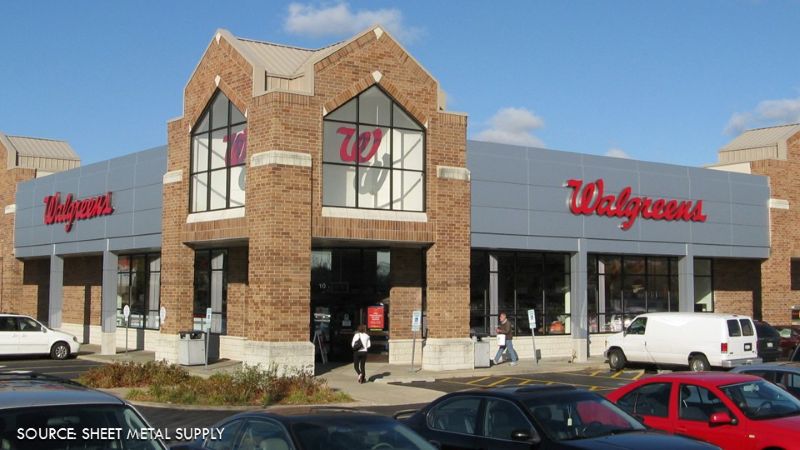
[1]First developed in the 1960s and originally marketed as a strong, lightweight, aesthetic, and flat alternative for billboards and signage, MCM (metal composite material) gained architectural popularity for its use in facades by the 1980s.
After the original patent expired, the market has seen tremendous increases in global adoption, producers, innovation, and the availability of materials and coatings, making ACM (aluminum composite material) a popular choice for both new and retrofit construction.
In the spirit of both the architectural adage “the most sustainable building is the one we don’t build” and the sustainable principles of “reuse, reduce, recycle,” MCM has many attributes that put it at the top of the list for adaptive reuse and retrofit projects. Whether to assist in neighborhood rejuvenation, aesthetic appeal, corporate identity, or even building efficiency, MCM is a smart choice.
Deliberate specification, precise fabrication
MCM refers broadly to metal skins on both faces of a typically fire-retardant core and encompasses a full range of materials from aluminum and zinc to copper, titanium, and stainless steel. ACM is the most popular, affordable, and easily fabricated type of MCM. More “exotic” materials can be used, but often pose challenges for both the fabricator and the routing and cutting equipment.
Fabrication begins with CAD drawings of the facade and individual panels, which are then translated into cutting parameters. Panels are most commonly milled on large CNC table routers with multiple heads, which route a V-groove along bend lines while a second routing head cuts the perimeter to size, and may also drill fastening and weep holes.
Routed flat panels are then typically folded by hand, and an aluminum extrusion is mounted to the perimeter. From this point, stiffeners are added as needed, and the panel is ready for installation.
Advantages of ACM
The aesthetic advantages of ACM include, first and foremost, the array of finishes available: white to black and everything in between, woodgrains, patterns, and anodized aluminum. There are many options to add curb appeal to an existing building and modernize its facade.
Modern technology has taken the traditional flat ACM wall and elevated its aesthetic by enabling curvature and borrowing origami-style folding techniques, applying them to composite materials to give otherwise mundane facades a bespoke, unique look. Custom perforations and designs can be cut into the material to further enhance identity and integrate LED backlighting, creating a stunning facade.
Fire, weather, and temperature resistance are key material advantages of ACM. All metal components in the assembly are aluminum, providing rust and corrosion resistance in humid climates, while common paint formulas—PVDF and FEVE (polyvinylidene fluoride and fluoroethylene vinyl ether)—are warrantied against chalking, peeling, and fading for decades, even in direct sunlight.
Substructural components can be designed and utilized to plumb decrepit or bowing walls. Minor adjustments can be made using a variety of widely available shims, while walls that need further adjustment can use more advanced multi-part components to bring an existing wall back to a flat plane. Several companies offer pultruded fiberglass girt options, in lieu of traditional galvanized steel, which prevent thermal bridging and enhance energy efficiency.
The use of an ACM rainscreen on an existing building also offers the opportunity to increase or add insulation to the exterior. If sustainability and reduced energy consumption are part of the project goals, this is a very economical way to achieve them.
Sustainability and efficiency
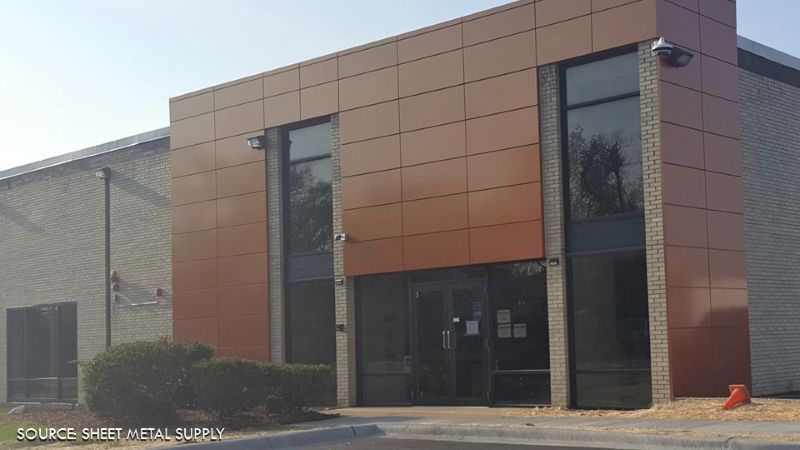
In addition to enhancing performance and sustainability, ACM is environmentally friendly. Most of the aluminum used in the face and backside of the panels comes from recycled materials, and scrap from a project can be sent to a specialized recycling plant for processing. At the end of its usable facade life, ACM panels can be easily removed from the wall, substructural components can be reused, and new ACM panels can be applied.
 [2]
[2]By nature, ACM is a very lightweight facade material. This reduces the structural requirements of the existing building and the seismic force on it. Lightweight panels reduce transportation costs and make them easy to move on a jobsite, enabling installation with minimal labor for maximum coverage.
Care and maintenance
While they are extremely low maintenance, ACM facades are not maintenance-free. The manufacturer’s cleaning recommendations should always be followed but, in general, cleaning the facade once a year with water, mild soap, and non-abrasive cloths, brushes, or sponges satisfies this requirement.
Harsh solvents, alkaline cleaners, and abrasive cleaning tools should be avoided at all costs, as they can scratch, damage, or discolor the paint. If graffiti is a concern, approved graffiti removers are available and work very well, but should be tested in an unobtrusive area to ensure they do not damage the coating.
When cleaning, inspect any gaskets or sealants used in the panel assembly to ensure their integrity, and take note of any scratches or damage to the panels.
Additional ACM perks
Many municipalities offer grants for streetscape improvements and beautification. While some seek to reinvigorate their tired downtown restaurant and retail areas, others offer incentives in industrial tax increment financing (TIF) districts.
These grants typically help defer costs to the building owner through an application process and reimbursement after completion, and can help cover thousands of dollars in exterior improvements. Compared to simply painting an exterior, an ACM facade offers modern appeal with a plethora of finish options and potential performance enhancements.
ACM continues to be a frontrunner in modern facade design, whether for new construction or retrofit, and for good reasons. Developments are constantly driving the market and quality forward, with cores shifting away from the original thermoplastic polyethylene (PE) to a mineral-filled thermoplastic fire-retardant (FR) core.
ACM manufacturers continue to create better, safer materials, and the finishes continue to evolve as well. From the sheer number of standard and stocked colors to color-shifting finishes—even mimicking granite and marble—incorporating ACM into a facade has never been more appealing.
Ben Kweton is the president of Sheet Metal Supply[3] Ltd. Founded in 1991, the company fabricates zinc and provides custom-formed perimeter edge systems, wall facades, flat-lock tiles, substructural components, ES-1-rated products, glazed-in panels, standing seam systems, and ACM/MCM/plate panels.
This feature originally appeared in the August 2026 edition of Metal Construction News, which you can find in our Digital Edition Archive.
- [Image]: https://www.metalconstructionnews.com/wp-content/uploads/2026/08/Metal-Composite-MCNAugust2026-800-02.jpg
- [Image]: https://www.metalconstructionnews.com/wp-content/uploads/2026/08/Metal-Composite-MCNAugust2026-800-01.jpg
- Sheet Metal Supply: https://sheetmetalsupplyltd.com/
Source URL: https://www.metalconstructionnews.com/main-slider/building-with-metal-composite-materials/