Every roof is also a workspace
by anthony_capkun_2 | 26 September 2026 3:25 pm
 [1]
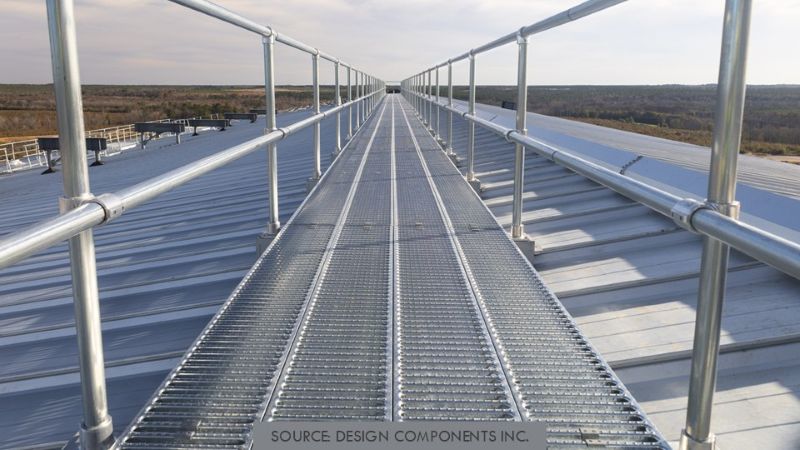
[1]The question is not whether someone will walk on a roof, but whether that access was planned ahead of time. A metal roof may be designed to provide decades of service, but very few roofs go through their entire life without repeated foot traffic.
HVAC technicians, electricians, inspectors, solar contractors, and maintenance personnel all need routine access to rooftop equipment. Without a planned access strategy, those routine visits can create safety challenges, unnecessary wear, and long-term impacts to the roofing system.
Architects carefully design hallways inside a building because they know people need safe, predictable routes to move from one location to another. Metal roofs deserve the same consideration. Once construction is complete, the roof effectively becomes another workspace—one that may be accessed hundreds of times throughout its service life.
Without a designated access route, maintenance personnel naturally take the shortest path from Point A to Point B. Over time, those repeated trips create traffic patterns that can impact both worker safety and the long-term performance of the roofing system. A planned rooftop access strategy—centered around designated walkway systems—helps address those challenges while protecting one of the structure’s biggest investments.
Protecting the people who access the roof
Every maintenance visit begins with a step onto the roof. Whether technicians are carrying tools, replacement filters, or repair parts, they need a stable, predictable walking surface that guides them safely to rooftop equipment they are servicing.
Without designated pathways, personnel often choose the most direct route, which may take them unnecessarily close to roof edges or across areas not intended for repeated foot traffic. Weather conditions such as dew, frost, rain, or snow can make rooftop navigation even more challenging, particularly on metal roofing systems where smooth panel surfaces can become particularly slippery when moisture is present.
A clearly defined walkway helps provide a more predictable walking surface, guiding maintenance personnel safely to where they need to go. Rather than relying on individual judgment each time someone steps onto the roof, a planned walkway system establishes the intended travel path from the roof access point to the equipment being serviced, improving consistency and confidence for everyone.
Protecting the roof system
Metal roofs are engineered to withstand decades of exposure to the elements, but they are not intended to absorb years of random foot traffic.
Repeated walking can dent panel flats, bend panel ribs, and damage standing seams. While a dent may appear as a cosmetic blemish at first, it can create low spots where water collects. If the panel coating has also been compromised, standing water can accelerate corrosion and shorten the roof’s service life.
Damage to panel ribs or standing seams can be even more concerning. These features are integral to the roofing system’s performance and weathertightness, making it vital to prevent unnecessary traffic across them whenever possible.
Areas surrounding rooftop units often receive the highest concentration of foot traffic. Service technicians routinely change filters, replace motors, inspect electrical components, and perform preventive maintenance. Dropped tools and repeated movement around equipment can gradually leave their mark.
By directing traffic onto designated walkways, building owners can help minimize wear on surrounding roof panels while preserving the appearance and long-term performance of the roof system.
Preserving roof integrity through proper attachment
A rooftop access strategy should protect the roof—not create new opportunities for damage.
For standing seam and insulated metal panel roof systems, walkway systems should utilize attachment methods that have been specifically designed to secure to the roof profile without penetrating the roof panels.
Properly designed, non-penetrating attachment systems help preserve the roof’s weathertightness while accommodating the unique characteristics of standing seam and IMP roof construction. They also eliminate the need for roof penetrations that could affect long-term roof performance, or may conflict with the roof panel manufacturer’s installation requirements.
Selecting attachment methods that are compatible with the roof system is just as important as selecting the walkway itself. A well-designed access system should work with the roof—not against it.
Creating safer, controlled access routes
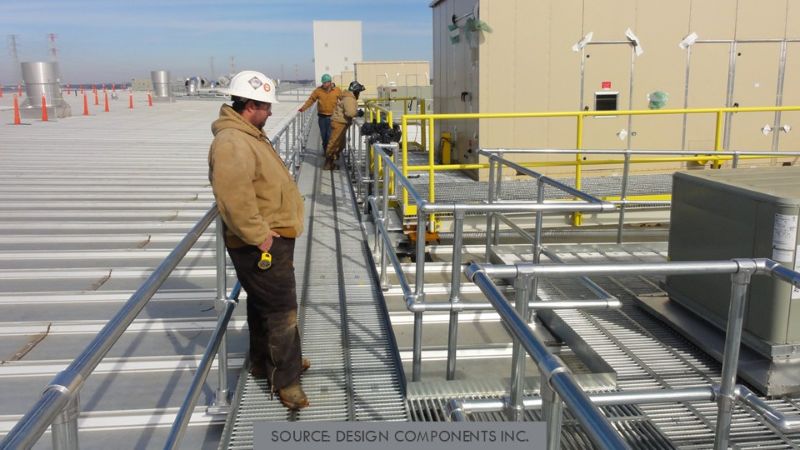
A rooftop walkway does more than define where people should walk—it establishes a predictable, safe route to rooftop equipment. On buildings where equipment is located near roof edges or other potential hazards, walkway systems may also incorporate guardrails designed to meet applicable OSHA performance requirements, providing an additional level of protection for maintenance personnel.
 [2]
[2]Beyond fall protection, guardrails create a clear visual boundary that reinforces the intended travel path. Instead of allowing technicians to wander across the roof or create their own shortcuts, the walkway and handrails guide foot traffic along a designated access corridor.
This controlled approach offers benefits beyond worker safety. Keeping maintenance personnel on established routes reduces unnecessary traffic across adjacent roof panels while helping facility managers maintain consistency, regardless of which contractor is servicing rooftop equipment.
As metal roofs continue to support more mechanical, electrical, communications, and solar equipment, creating safe, clearly defined access routes becomes an increasingly important part of roof design. Depending on the roof configuration and maintenance requirements, additional walkway features can further enhance worker safety and confidence.
4-in. toe boards can help prevent tools and materials from accidentally sliding off the walkway, while pitch-corrected walkway sections installed perpendicularly to the slope of steeper roofs provide a level walking surface that improves footing and stability during routine maintenance.
Planning for the roof’s entire service life
The best time to develop a rooftop access strategy is during the design phase of a new building, when equipment locations and maintenance routes can be planned together. That said, existing metal roofs can benefit just as much from the addition of a properly designed walkway system.
Whether installed during original construction or as a retrofit, designated walkways specifically designed for metal roof systems acknowledge an important reality: roofs are not simply installed and forgotten. They are living workspaces that require routine inspection, maintenance, and repair throughout their service life.
Every metal roof will eventually develop traffic patterns. The difference is whether those paths emerge by chance or are established by design.
A planned rooftop access strategy recognizes that maintenance is not an exception but an expectation. By creating designated walking surfaces, protecting roof panels from unnecessary wear, preserving roof integrity through proper attachment methods, and guiding maintenance personnel along safe access routes, building owners can help protect both the people working on the roof and the roof system itself for decades to come.
Nathan Plaxco is senior technical sales specialist with Design Components Inc.[3], a designer and supplier for the metal building industry. Its solutions include rooftop walkway systems, die-formed plastic roof jacks, metal roof curbs, EPDM pipe flashings, and custom fabricated curb systems.
This feature originally appeared in the September 2026 edition of Metal Construction News, which you can find in our Digital Edition Archive.
- [Image]: https://www.metalconstructionnews.com/wp-content/uploads/2026/09/Every-Roof-MCNSept2026-01-800.jpg
- [Image]: https://www.metalconstructionnews.com/wp-content/uploads/2026/09/Every-Roof-MCNSept2026-02-800.jpg
- Design Components Inc.: https://designcomponents.com/
Source URL: https://www.metalconstructionnews.com/main-slider/every-roof-is-also-a-workspace/