Where are the crews that data centers need?
by anthony_capkun_2 | 26 September 2026 4:33 pm
 [1]
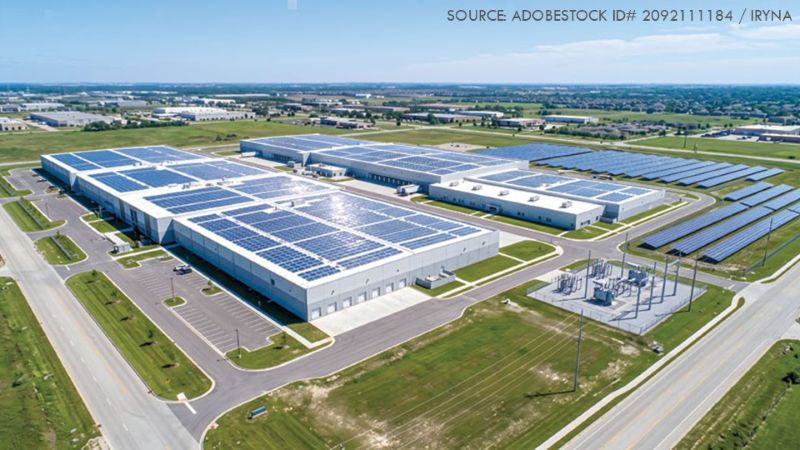
[1]Data center construction has tripled in two years, but the supply of qualified metal building erectors has not. The consequences of this disparity are measured in months of delay and millions of dollars.
DC construction starts hit $77.7 billion in 2025, up 190% from 2024. Through April 2026, the industry had already put $49.5 billion in the ground. The average project now runs $475 million, up from $178 million 12 months ago. By any measure, this is the fastest construction ramp in modern industrial history.
The PEMB and IMP erection labor market didn’t ramp with it.
The shortage is real, but it’s widely misunderstood. This isn’t a general construction labor problem; it’s a shortage of a specific trade with a specific skill set that takes years to develop and that hyperscale DC work demands at a level most industrial construction never has.
Understanding why that gap exists, and why it will get harder before it gets easier, starts with understanding what DC envelope work actually requires.
Why these timelines are different
A standard industrial build has schedule flexibility. An owner would prefer Q3, expects Q4, and tolerates a six-week slip as a manageable inconvenience. Hyperscale data centers don’t work that way.
The commissioning date is established before the first anchor bolt goes in because the entire downstream sequence depends on it. Main power transformers average 128 weeks on order, according to Wood Mackenzie’s 2025 survey. That clock starts running before the erection contract is signed.
Mechanical and electrical fit-out, rack installation, and network commissioning all sequence behind the building envelope being closed and airtight. The erection crew isn’t just on the critical path. For a significant stretch of the project, they are the critical path.
The financial exposure is direct and measurable. On a 60-MW facility, each month of schedule slip runs roughly $14.2 million in deferred lease revenue—a figure the hyperscaler has already told investors in the form of a go-live date. A slip isn’t an inconvenience. It’s a material financial event that traces back to when the envelope closes.
A trade that can’t scale overnight
An ironworker apprenticeship runs five years. Similarly, PEMB and IMP erection is a specialized trade, yet the PEMB industry’s first formal national apprenticeship program doesn’t launch until 2027. Qualified metal building erectors are produced over years, not months. That arithmetic doesn’t resolve quickly.
These aren’t policy footnotes; they are the structural reasons why the pool of qualified crews has not grown as fast as the demand.
Associated General Contractors’ 2026 Hiring Outlook finds 82% of construction firms struggling to fill craft positions, with more than half flagging worker quality—not headcount—as the core issue.
For DC envelope work, the quality bar is substantially higher than most industrial construction. A crew that’s erected dozens of warehouses or distribution centers may have no experience with what commissioning-grade data center envelope work demands.
Manufacturer familiarity compounds the problem: a crew experienced on one building system—Butler, Nucor, Metallic Building Company, Robertson-Ceco—will slow down on its first build under a different system’s erection sequence, trim conventions, and torque requirements.
Experienced erectors do exist, but experienced erectors who can clear the gate for hyperscale work are part of a much smaller pool, which is already stretched thin across campuses in Northern Virginia, Phoenix, Columbus, Dallas, Reno, Atlanta, and Chicago.
What the work actually demands
Being qualified for DC envelope work means something specific and more demanding than most industrial erection.
IMP panels run 40 to 50 feet long and weigh 300 to 600 pounds. A vacuum-lifter rig on a telehandler or crane does the pick. The crew’s job is precision: seams close tight, sealant runs continuous, no field cuts without engineering sign-off. A field-cut penetration in the wrong location breaks thermal continuity at the panel.
That failure doesn’t show up during erection. It shows up on the commissioning pressure test after the crew has left the site.
 [2]
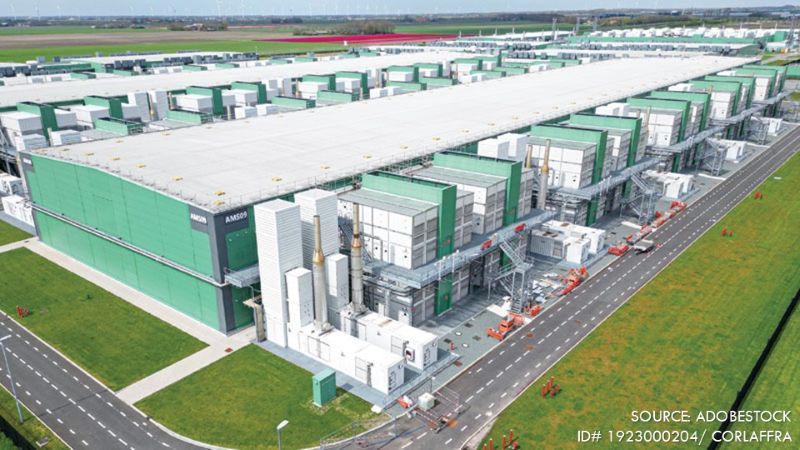
[2]These envelopes target air-leakage rates below 0.1 cfm/sf at 75 pascals. A 1/8-in. gap at a trim seam is a real, measurable air leak. Holding that standard consistently across 400,000 square feet and 150 or more workers is a fundamentally different job than erecting structural steel on a conventional industrial build. It requires crews who understand that every seam—not just the ones a commissioning agent might inspect—is a performance seam.
Beyond the technical skills, compliance requirements have their own depth. E-Verify, the federal system used to confirm employment eligibility, is now table stakes at every hyperscale site, pushed by owners down to every sub and labor provider in the chain. Manufacturer-specific training records are required and don’t transfer between systems. Jurisdictional licensing varies state to state while prevailing wage calculations shift county to county.
A contractor who can field a technically capable crew but cannot produce compliant documentation on 24-hour notice is, practically speaking, not available for this work.
Safety: where mistakes cost millions
Most construction sectors treat safety as a regulatory and ethical obligation. On a hyperscale data center, safety failures carry direct, quantifiable financial consequences for the owner. This changes how every layer of the project is managed.
An EMR (Experience Modification Rate) above 1.00 doesn’t make a contractor expensive on these projects. It removes them from consideration before the bid is read. Most hyperscale builds run under an Owner-Controlled Insurance Program. Enrollment requires EMR below a threshold, typically 1.00 or better, often 0.85 to 0.90 for steel erectors and workers at height. EMR is a three-year rolling average. A single recordable incident in 2025 impacts eligibility through 2028.
Safety documentation is an active audit target, not an administrative exercise. Owners run unannounced compliance checks and expect drug-test results, pre-task hazard assessments, and daily safety logs for a sampled set of workers within 24 to 48 hours. Non-compliance means immediate removal from the approved-vendor list.
But the deepest safety concern on a data center isn’t injury prevention alone but envelope quality. One improperly sealed panel seam that slips past close-out doesn’t appear as a safety incident. It appears as a failed commissioning pressure test weeks after the crew has demobilized. Finding the failed seam, remobilizing to repair it, and re-running the test costs days on projects where each month of delay costs over $14 million.
MEP trades hold. Rack installation holds. The go-live date moves.
This is why experienced hyperscale owners treat envelope quality the same way they treat safety: as non-negotiable, documented, and verifiable. A worker hurt on the jobsite is a tragedy. A building that fails its pressure test is a financial event that reverberates through the owner’s revenue calendar. The crews who understand both—and who run every seam like the commissioning test is the next morning—are genuinely in short supply.
A gap that won’t close quickly
The qualified PEMB erector shortage on hyperscale sites is structural. Demand grew faster than any workforce could imagine, let alone match. The skill set takes years to develop. The industry is losing experienced workers to retirement faster than apprenticeship programs can replace them. And the campuses aren’t slowing down—they’re multiplying.
Corporate workforce pledges have crossed $365 million. Federal Pell Grants now fund short-term trades programs for the first time. These are real starts. A commissioning-grade data center erector still takes years to develop, and the build cycle that created the shortage shows no sign of plateauing.
The hyperscale boom has exposed something the PEMB and IMP industry has always known but rarely had to confront at this scale: the erectors who can close a data center on time, on spec, with a clean pressure test are a narrow and finite group. There aren’t more of them than there were two years ago. There are far more projects that need them.
Matt Johnston is founder of Alpha Labor Co.[3], a national PEMB and IMP erection workforce operating in all 50 states. The company carries a 0.71 EMR and has erected 17M+ square feet with 700,000+ injury-free hours.
This feature originally appeared in the September 2026 edition of Metal Construction News, which you can find in our Digital Edition Archive.
- [Image]: https://www.metalconstructionnews.com/wp-content/uploads/2026/09/Data-Centers-MCNSept2026-01-800.jpg
- [Image]: https://www.metalconstructionnews.com/wp-content/uploads/2026/09/Data-Centers-MCNSept2026-02-800.jpg
- Alpha Labor Co.: https://www.alphalabor.com/
Source URL: https://www.metalconstructionnews.com/main-slider/where-are-the-crews-that-data-centers-need-imp-and-pemb-erection-demand-specialized-skills/