How Customization is Redefining Pre-Engineered Metal Building Solutions
by David Flaherty | 17 December 2025 11:59 am
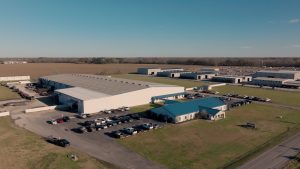 [1]
[1]Pre-engineered metal buildings (PEMBs) have long been valued for their efficiency, strength, and cost-effectiveness. But as design expectations grow and building applications diversify, customization has emerged as a defining trend, reshaping how manufacturers approach the modular steel building process.
Rather than relying on one-size-fits-all solutions, today’s metal building companies are investing in flexible systems that address a wide range of client needs while preserving the core benefits of pre-engineered construction: speed, scalability, and structural integrity.
“Today’s builders want more than just a box,” says JT Curtis, general manager of Ideal Steel, a manufacturer of custom metal buildings[2]. “They want buildings that are optimized for their operations, future-proofed for expansion, and tailored to the site and climate. That’s where customization comes in.”
Mass Customization: Flexibility at Scale
With over 600 years of collective team experience, Ideal Steel supports projects ranging from backyard workshops to large-scale industrial facilities. Its in-house engineering and project management teams work closely with clients to tailor building systems to site-specific and operational requirements, whether that means designing for phased expansions, integrating large clear span interiors, or addressing regional climate challenges.
Across the industry, customization in PEMBs does not mean starting from scratch. Instead, many manufacturers are embracing mass-customization techniques, using modular components that can be adapted to specific design, function, or aesthetic goals. This hybrid approach enables efficient production while supporting a wide range of applications, from commercial warehouses and agricultural operations to institutional buildings.
Straight Line Metal Buildings, a supplier and erector based in the Southeast, notes customization has also become a competitive differentiator when working with contractors who need to pivot quickly due to changes in permitting or tenant-specific modifications.
Technology as a Customization Catalyst
Technology plays a central role in advancing this trend of customization. From design software to automated fabrication systems, new tools are enabling manufacturers to offer tailored solutions faster and with greater precision.
For example, Ideal Steel has invested in automated welding systems and upgraded design platforms, allowing it to deliver clear span structures up to 60.96 m (200 ft) wide and modular systems extending to 121.92 m (400 ft). These options enable the accommodation of everything from compact retail units to large-scale industrial operations.
“Design flexibility isn’t just about aesthetics; it affects timelines, interior functionality, and long-term ROI,” Curtis says. “When we customize, we’re thinking about what the client needs now and what they’ll need in 10 years.”
Market Adaptability Through Design
Customization is also helping manufacturers stay resilient in a dynamic market. With material costs fluctuating and project timelines in flux, adaptable design strategies offer clients more certainty and control.
By pricing projects individually and building in flexibility from the start, companies can avoid delays, minimize waste, and better align with evolving client priorities, even amid economic uncertainty.
A Broader Shift in Building Expectations
From boat storage facilities in the Bahamas to community centers in the Midwest, the growing use of customized PEMBs reflects a broader shift in the industry.
As Curtis puts it, “Customization is no longer a luxury. It’s the new standard.”
- [Image]: https://www.metalconstructionnews.com/wp-content/uploads/2025/12/202502-ideal-steel-metal-buildings-3.jpeg
- metal buildings: https://www.metalconstructionnews.com/?s=metal+buildings
Source URL: https://www.metalconstructionnews.com/news/pre-engineered-metal-building/