More than 50 years ago, Pennwalt Corp., Philadelphia, started licensing Kynar 500 polyvinylidene fluoride (PVDF) resin to paint companies. This breakthrough product, now owned by Arkema Inc., King of Prussia, Pa., and based on Wilmington, Del.-based DuPont’s popular Teflon fluoropolymer technology, demonstrated many applications in the building industry and eventually enabled coated aluminum to capture 50% of the market from anodized aluminum.
Many different innovations now possible in color and style
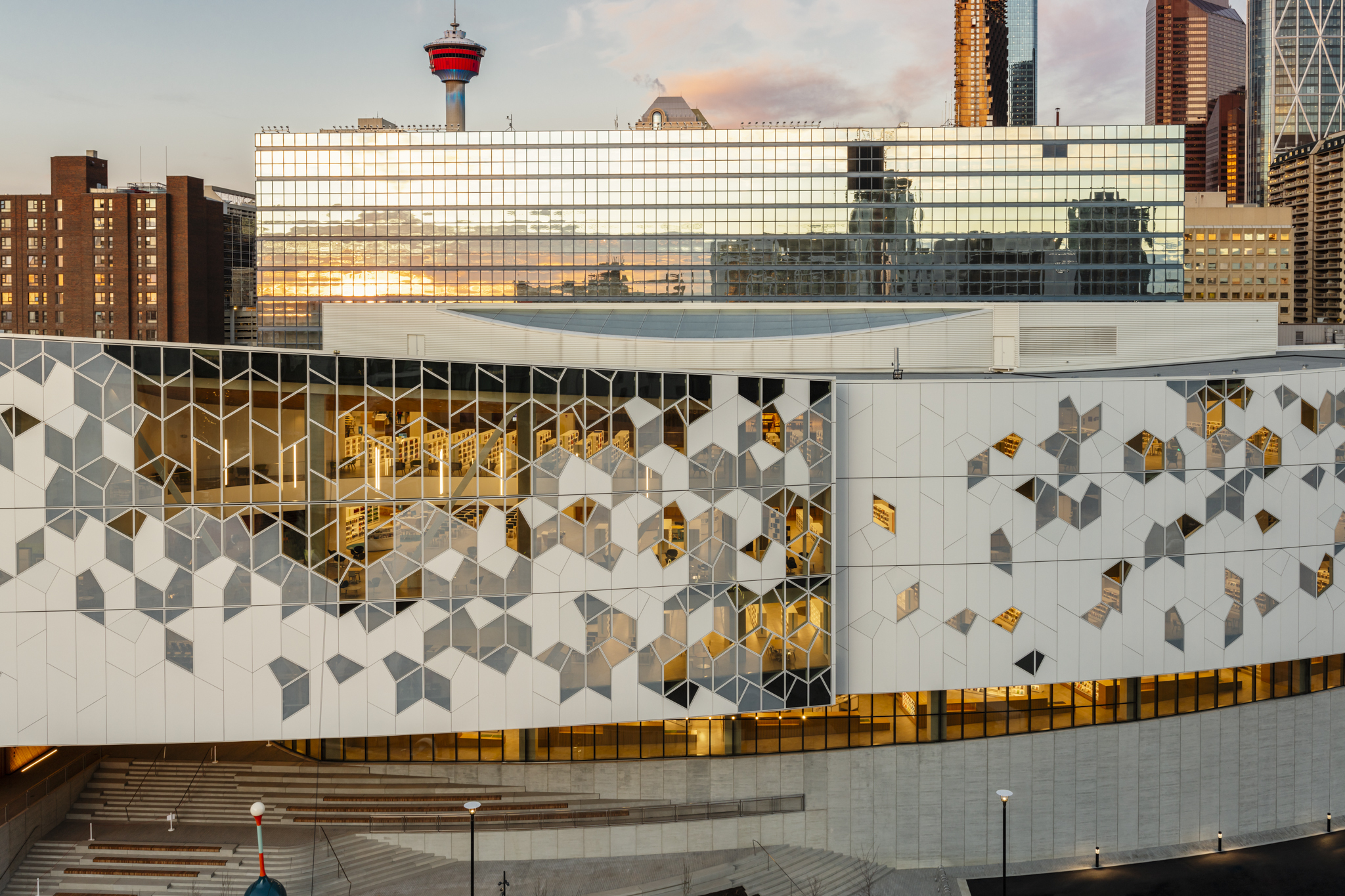
Photo courtesy of Michael Grimm Photography
Hylar 5000 PVDF resin, a direct competitor with Kynar 500 PVDF resin, was introduced in 1965. In 1982, a new fluoropolymer resin technology based on fluoroethylene vinyl ether (FEVE) was introduced. This product enabled the development of the high-end powder coatings we see growing in dominance in the contemporary aluminum coatings market.
While PVDF and FEVE resins are hardly recent technologies, they continue to serve as the basis for innovation for color and style in the painted aluminum extrusion industry. Beyond the continuing quest to make buildings more attractive, the industry also is being shaped by several other trends, which are addressed below:
Environmental Concerns and Coatings Performance
Multi-layer coatings systems with chrome-based pretreatment continue to provide the best protection against corrosion and coatings failure. Unfortunately, chrome—which also is used as a pigment in paint primers to resist corrosion—has been identified as a carcinogen and added to the Living Building Challenge’s Red List as a hazardous chemical. While chrome-based products are predominant in the United States, Europe banned their use beginning this year. Chemical and paint companies around the world are working to create alternative solutions to chrome-based paint additives, yet there currently are no commercially viable solutions that deliver the same consistent level of corrosion protection.
The Power of Powder
Powder coatings are becoming more popular for aluminum extrusions due to their low volatile organic compound (VOC) levels and ability to be recycled at efficiency levels of up to 90% during the paint operation. Popular for residential structures in the past, they have become an increasingly viable solution for monumental buildings. In recent years, at least four New York skyscrapers have been constructed with powder coatings, signaling their growing popularity as environmental codes become more stringent and investments in powder paint lines increase.
The Rise of One-Coat
With the technical advancements in powder coatings and recent innovations in liquid technologies, one-coat systems are becoming more prevalent. While one-coat systems perform well in most applications, the ultimate solution for maximum corrosion resistance and optimum adhesion to (and protection of) the metal substrate remains a two-coat system with primer. There still is no substitute for this proven technology in seacoast environments or other areas where road salt, fertilizers and other corrosive substances are common.
Globalization
Over the past decade, extrusion production has moved overseas to take advantage of lower labor costs. Aluminum is increasingly extruded, painted and fabricated into window units and shipped to the United States for monumental projects. While quality from some countries was suspect initially, it has improved over the years. This is particularly true in South Korea and China; nevertheless, fabricators moving into new lower cost geographies to assemble their products can still encounter problems.
Revised Building Code
There have been several high-profile incidents in recent years in which composite core panels on high-rise exteriors have caught fire, most notably the deadly Grenfell Tower disaster in London in 2017. While today’s fire-resistant composite panels are designed to prevent such tragedies, New York and Canada have proposed or ratified legislation that does not permit composite panels above a certain height on buildings within their jurisdictions. As a result of these emerging restrictions, fabricators are specifying spray-coated panels instead of coil coatings on some of these applications, which has led to an increase in business for extrusion applicators with horizontal paint lines.
Conclusion
In terms of basic technology, the painted aluminum extrusion industry is very similar to what it was back in the late 1960s. During the last five decades, however, resin companies have made significant progress in developing more environmentally advanced formulations, while coatings manufacturers have continued to expand the range of aesthetic options available to architects and building designers. The industry will remain driven by change as globalization and sustainable building design become more entrenched and as designers seek to create buildings that reflect their own distinct signatures.
Scott Moffatt is architectural market manager, industrial coatings at PPG Industries Inc., Pittsburgh. To learn more, visit www.ppgmetalcoatings.com.