In the U.S., the aluminum industry supports $174 billion in economic activity and nearly 700,000 jobs, according to the Aluminum Association. Approximately one-third the weight of steel and more than 40 times stronger than wood, aluminum also offers design flexibility, fabrication versatility, corrosion resistance, durability and infinitely recyclable sustainability. These attributes also contribute to aluminum’s economical value by saving costs associated with transportation, installation and maintenance.
Cost-effective customization for daylighting and façade systems

Different processing methods and alloys are used to form aluminum into the necessary shape, strength and density. Casting is used for high-volume parts that require minimal machining, such as vehicle components. Forging is preferred for precision metal parts. Sheet rolling produces long flat pieces for applications including packaging and beverage cans. For the architectural building products industry, aluminum extrusion is the material of choice.
A Desired Architectural Profile
The extrusion process transforms solid aluminum billet into the desired architectural profile by using compression to force the metal through a smaller die opening. Sometimes, this process is likened to pushing toothpaste through a tube or Play-Doh through a plastic template. Far from childhood toys, for high-strength, commercial building applications, a hydraulic press typically compresses the preheated aluminum through a steel die. The resulting, shaped extrusion then can be cut, machined, bent, welded, finished and assembled into specified architectural products.
According to the Aluminum Extrusion Council, more than 90% of commercial buildings have daylighting systems manufactured with extruded aluminum framing. These manufacturers appreciate aluminum’s high strength-to-weight ratio and easy fabrication for windows, curtainwall, skylights, canopies and specialty façades. Narrow, extruded aluminum framing members deliver structural integrity and rigidity, while maximizing the natural light. Because aluminum also is highly conductive, daylighting system manufacturers thermally improve the extruded aluminum framing members by adding a barrier between the exterior and interior surfaces. This reduces the heat transfer and helps keep occupants comfortable and energy costs lower.
Ideally, building owners consider the full cost of their property’s daylighting systems—from design through installation, as well as life-long operation and maintenance. It is understandable to assume that a system with standard aluminum extrusions may be the better value, but this is not always true. Comparing tooling costs and lead times, the Aluminum Extrusion Council reported that typically, aluminum extrusion tooling costs start at $800 with a lead time of about two weeks. More complex dies will reflect a higher price and a longer lead time.
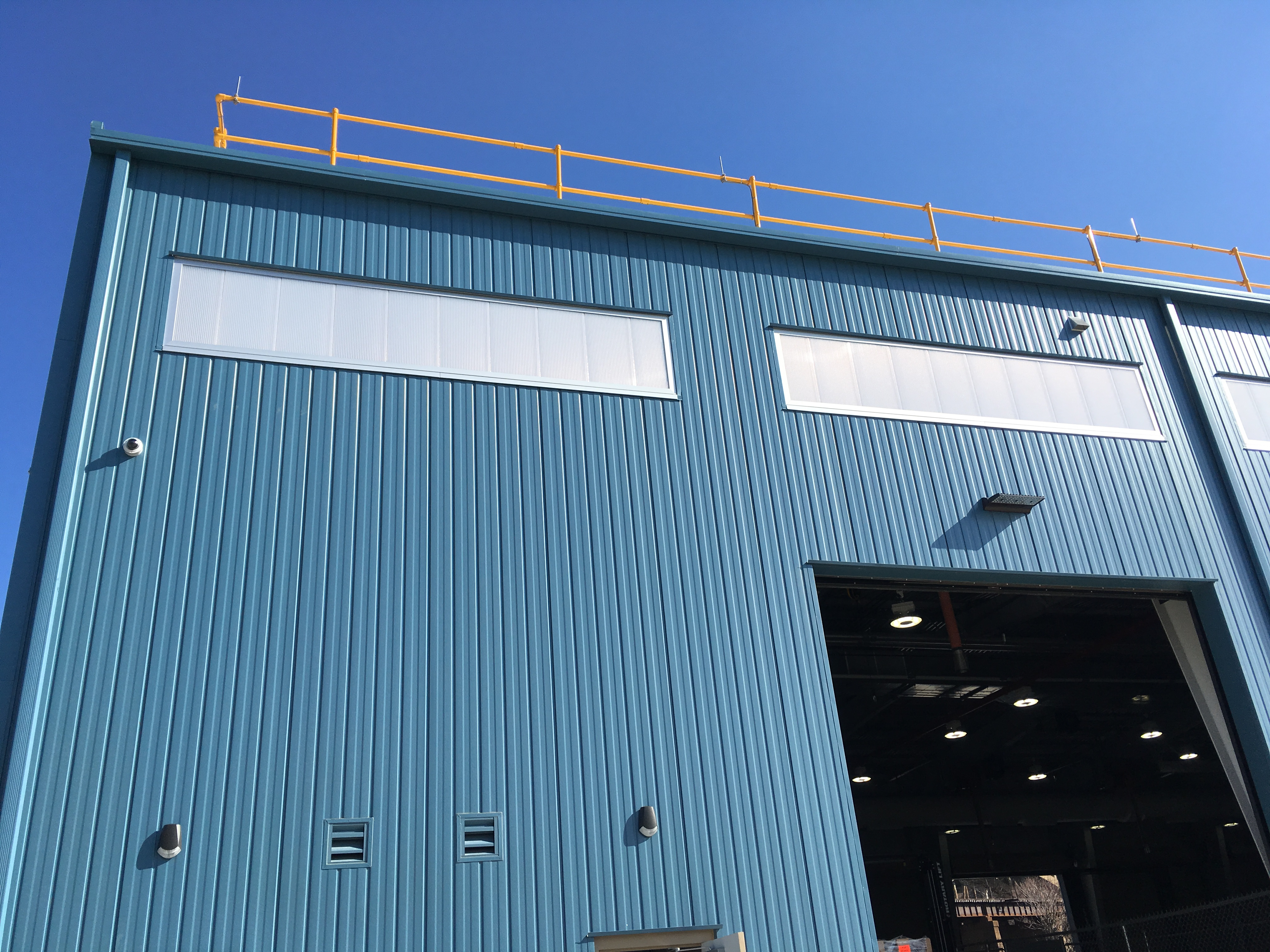
Engineering customized aluminum extrusions and framing systems can be a cost-effective solution to simplify installations, and reduce time and labor in the field. For example, customized mounting brackets, anchorage clips and perimeter frames can be extruded for the daylighting system framing to present a flush alignment with metal panel façade cladding. Without this modification, the framed opening may have a set-back, recessed appearance.
To avoid this less desirable look, installers will need to budget for extra time and materials to add blocking, and to achieve a uniform appearance. Rather than spending hours in the field trying to properly tie-back and install an off-the-shelf system with standard clips and brackets, a minimal investment in a customization can support faster, smoother and safer installation.
Custom Aluminum Extrusions
Custom aluminum extrusions also allow design professionals and their clients to realize complex architectural structures without compromising code compliance or their creative vision. In areas prone to hurricanes, tornados and earthquakes, custom extruded aluminum components can be engineered and fabricated to accommodate movement, while ensuring structural integrity. Today’s building envelope designs incorporate slim, thermally improved, extruded aluminum framing members and large daylight opening areas. High-performance glass or structural cellular polycarbonate glazing are two of the most popular infill choices. Aluminum framing members and clips fashioned from custom extrusions allow design professionals to achieve expansive daylight openings without visible seams, while supporting the larger size and weight of the glazing infill in continuous runs.
For unique structures that incorporate such imaginative features such as color-changing backlighting or wind-driven flapper panel walls, manufacturers of façade and daylighting systems should be involved as early as possible to help custom engineer and develop the specialty dies needed to accomplish the intended aesthetic.
A few extra steps to engineer and fabricate an extruded aluminum system that exactly matches the project’s requirements can have compound savings. The faster a building envelope can be weathertight and substantially completed, the sooner the interior build-out can be finished, the quicker the tenants can take occupancy and ultimately, the owner can begin seeing a return on investment.
Jim Leslie is the general manager of EXTECH/Exterior Technologies Inc., Pittsburgh, leading the company’s mission to improve lives through innovation in daylighting systems, natural ventilation and other building envelope systems. To learn more, call (800) 500-8083, visit www.extechinc.com or email jleslie@extechinc.com.