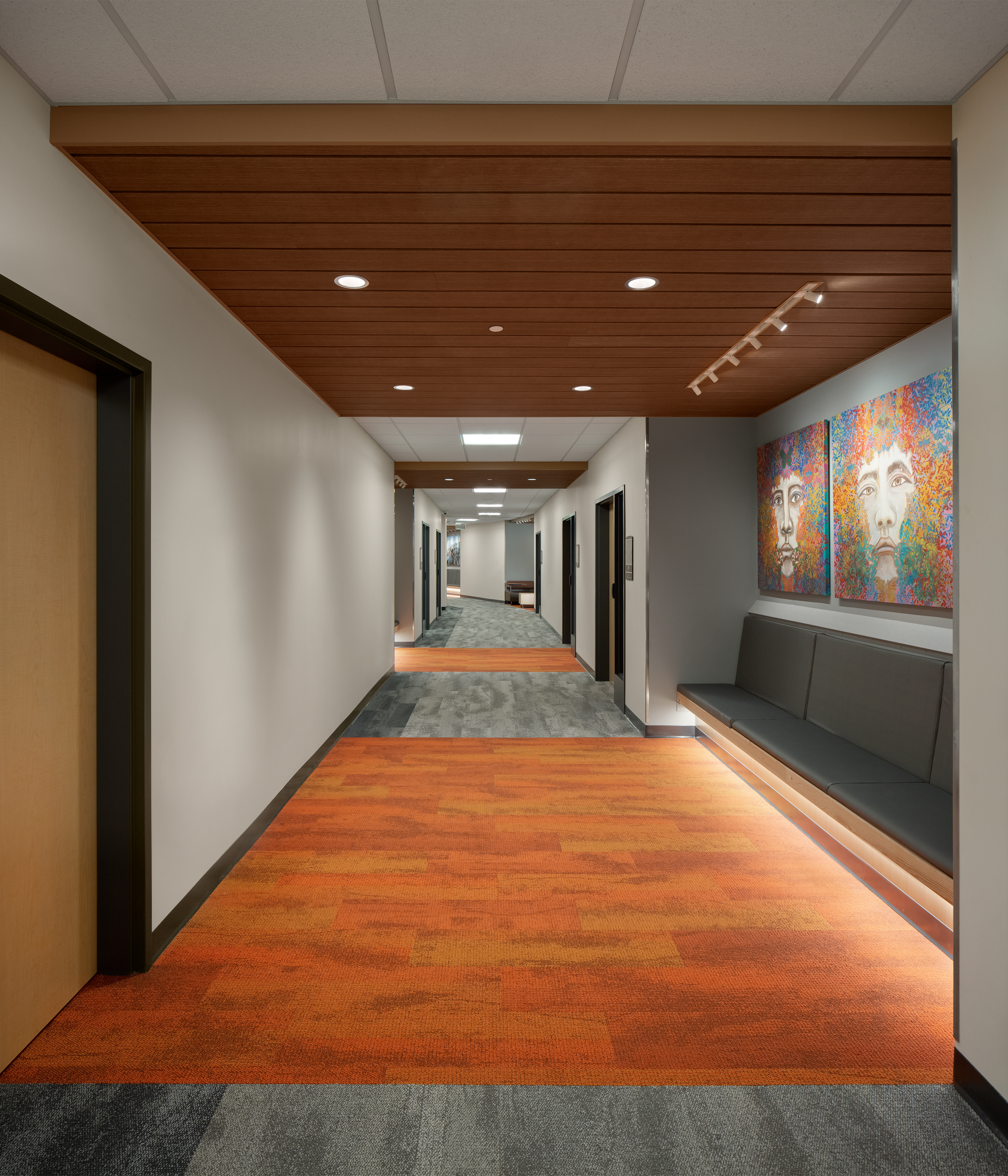
Metal ceilings are being seen more and more in offices, health care facilities, stadiums, retail stores, government buildings, public libraries, schools, colleges and more. They may cover an entire floor, serve as a decorative accent or enhance the acoustics in a single room.
Highly decorative and practical in their performance, functionality, durability and beauty
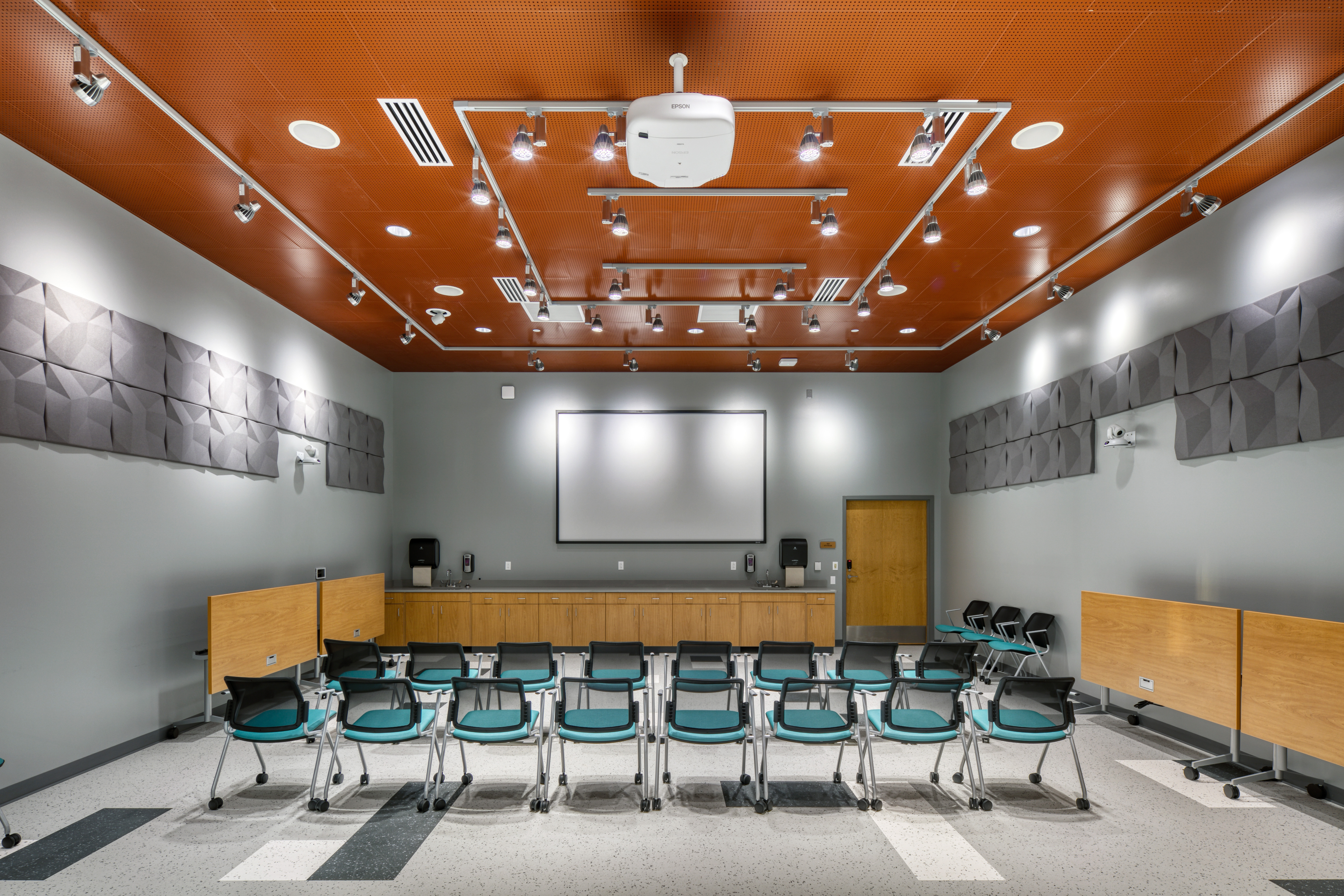
Typically, metal ceilings are made with aluminum and often are manufactured with recycled content. In addition to being durable and recyclable, aluminum does not support organic growth, such as mold and microorganisms.
While metal ceilings can take on almost any shape, they usually are fabricated in planks or panels. These metal panels can be installed in standard grid-based suspension systems, making installation as straightforward as setting common acoustical ceilings. Snap-in, clip-in and lay-in methods are available in traditional panel sizes, and hook-on, hook-in and torsion spring are more flexible, allowing for design creativity.
Similar to other rectangular ceiling panels, the width of suspension system and the edge of the tile can achieve a variety of different looks. Reveal, flush reveal, deep reveal, square and beveled edge types expose the grid and highlight its clean lines. Concealed edges reduce the space between panels, hiding the grid to create a smooth ceiling expanse.
For linear ceiling designs, metal planks are generally manufactured as straight lengths in 4-, 6-, or 8-inch widths with square or rounded edges. The spaces between these planks may be closed with filler strips, or left open for air movement or acoustical enhancements.
Many Benefits
Metal ceiling panels can provide sound-absorbing performance equal or greater to panels manufactured with other materials. For example, a perforated metal panel and combined with an acoustical backer can deliver a noise reduction coefficient (NRC) as high as 0.90.
Along with optimizing interior acoustics, metal ceiling systems can be specified for a Class A fire rating, seismic and wind load performance. When selecting metal ceilings for exterior use, remember to review test results for both positive and negative pressure, and consider corrosion-resistant finishes.
While the performance requirements are likely to be very different from outside to inside, it need not be difficult to design a uniform, continuous appearance that seamlessly transitions both environments.
While metal ceilings certainly can be used in a single space or across an entire building, they also can be designed to define and decorate an area. Metal panels can be custom perforated into personalized patterns or even pixilated images. Geometric ceiling shapes and curves can be fashioned to precise detail. Colors can range from neutral to bold, and the breadth of finishes can range from accentuating the metallic material to mimicking natural wood. Suspended cloud designs, staggered spacing and layered elevations add dimension and character.
Pairing different standard systems, sizes, perforations and finishes is a practical, economical approach that can deliver a unique look on a limited budget. Whether the project requires high-design aesthetics or demands exceptional performance, working closely with the ceiling system manufacturer will provide the most cost-effective, time-sensitive and reliable path forward.
Look for an experienced manufacturer who not only understands how metal panels are made and how ceilings are constructed, but also one who will value and hold the design intent. Its staff should know how the metal panels are installed and integrate with the ceiling suspension. A single-source manufacturer also can share expertise on integrating multiple types of materials, such as wood and acoustic stone wool panels.
Unlocking the Potential
A ceiling manufacturer’s technical services team can help solve complex challenges in the design phase before they become expensive remedies during construction. They can suggest where perimeter trim, clips and other accessories are needed. They can define the best way to accommodate the lighting, air vents, columns, end caps and other components. They can develop project-specific shop drawings and details, review and coordinate approvals, and ensure the ceiling system meets the design intention, budget and schedule.
Once installed, metal does not warp, rot or require much maintenance. When updates or repairs need to be made in the plenum, a grid-based installation makes it easy to remove a single tile or several. Advanced planning with the architect, installer and ceiling manufacturer not only minimizes surprises in the field, it helps save material and labor costs, and produces a quality result for the building owner and occupants.
A fundamental understanding of metal ceilings systems and the early involvement of a manufacturing partner will unlock the potential of versatile, creative possibilities; high-performance exterior and interior applications; and numerous installation methods to achieve the desired appearance and functionality.
Pete Rudd, RA, is the technical services manager, and George Pace is the product manager at Chicago-based Rockfon. The company provides a complete ceiling system offering that combines acoustic stone wool panels and specialty metal ceiling products with suspension grids, wood ceilings and accessories. They can be reached at cs@rockfon.com. For more information, visit www.rockfon.com.