

McConnellsburg, Pa.-based JLG Industries Inc., an Oshkosh Corporation company, announced new and improved features on its JLG E300 series boom lift models. Through improved hydraulic efficiencies, the E300 provides more than 20 percent more duty cycles, which means an operator can drive 6.6 miles (10.6 km) and complete 175 lift cycles on a single charge. The new 305 amp-hour batteries provide a 18 percent improvement in recharging time and deliver a lower replacement cost for equipment owners. “The JLG E300 is built to provide exceptional battery life, a key to delivering performance in multi-shift operations,” said Chris Mellott, JLG Industries vice-president, sales and market development for the Americas. “Improved battery life and other enhancements will deliver increased performance for machine operators and reduce cost of ownership for rental companies.” Other E300 product improvements include: improved break-over clearance, smoother swing function, and a new multi-digital indicator that displays key information including: battery life, machine hours and fault codes. The display will improve troubleshooting and help service technicians diagnose and fix issues more rapidly. These improvements were made effective on units produced after October 29, 2009. For more information on the E300 series, visit www.jlg.com.
JLG upgrades boom lift
This Month’s Features

MCN’s report from the Rockies
As a newbie, there is perhaps no better way to sink my teeth into the metal building industry than by attending the Annual Conference...
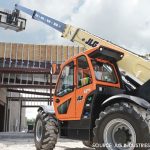
A jobsite crane isn’t always the answer
Expanding the versatility of telehandlers on metal construction jobsites is all about the different types of attachments that can be used on the front...
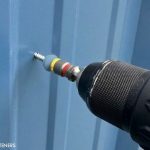
The smallest component, the biggest risk in metal roofing
A metal roof may be sold on longevity, but on many projects, the service life of the system is determined by one of the...

Editor’s Corner: How to choose the right safety gear in 2026
In this episode of Editor’s Corner, Anthony Capkun of Metal Construction News speaks with Cam Mackey, president & CEO of the International Safety Equipment...
Read the latest issue
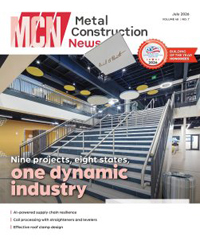
July 2026