Although new planes rarely have problems, pilots still do preflight safety inspections. The older the plane gets, the more important those regular checks and repairs become. However, the plane isn’t the only large, moving metal object that should be checked and maintained at the airfield. Give the hangar door the same once-over before use as well as some long-term TLC to keep it as safe and functional as it can be.
Whether new or old, periodic checks will ensure the hangar door operates safely and efficiently for years to come
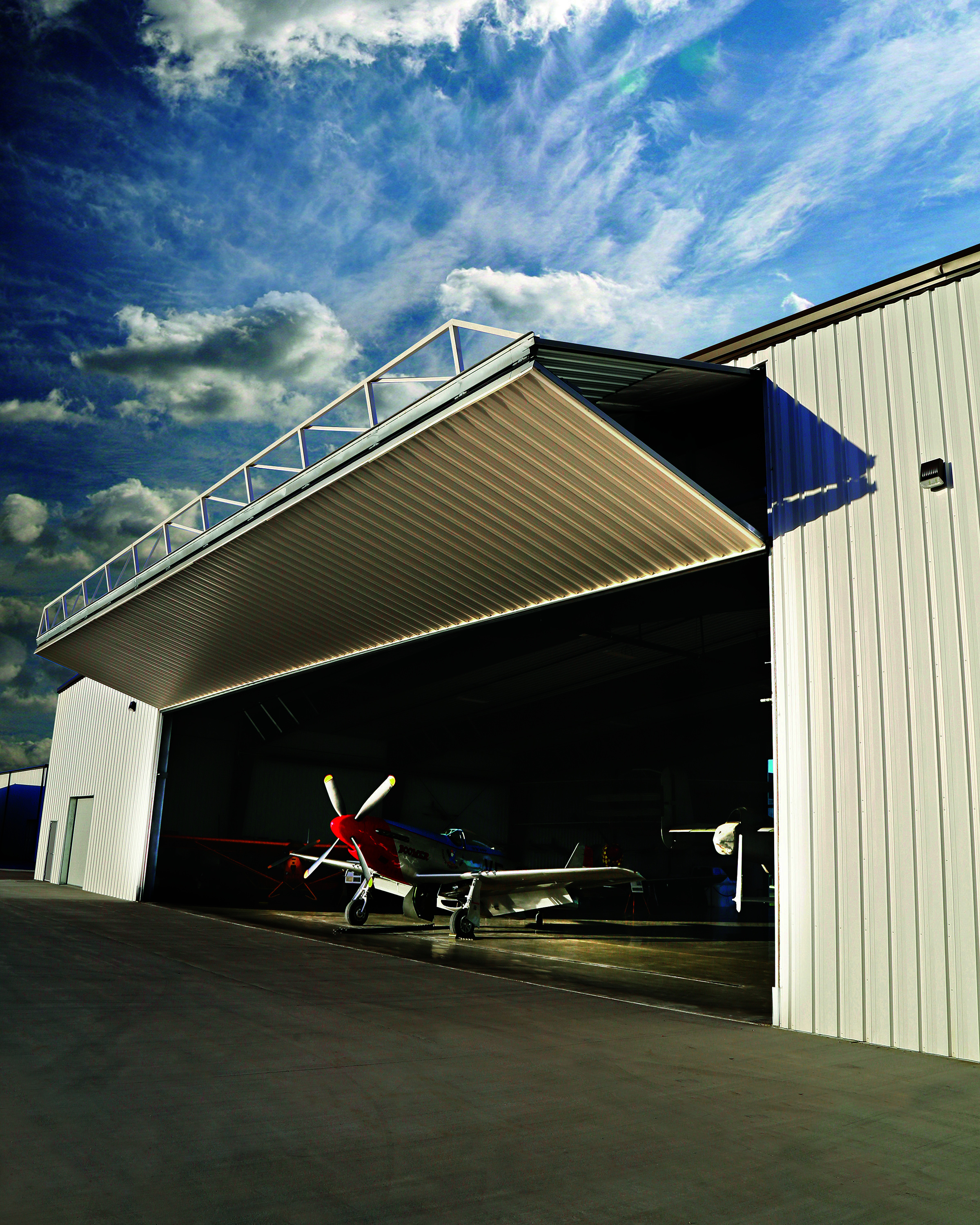
Whether the door is equipped with the newest safety features, from sensors to switches, or has been used for decades, these checks will help keep those using the hangar safe from injuries and accidents.
Take a Wide-Angle View
Before each use, look over the whole door for any damage. Ensure the hinges, rollers and structure all appear serviceable.
Examine the Movement Mechanisms
On bi-fold doors, ensure the cables or straps track correctly over the drum before each use. Cables should wrap on the drum and each wrapped cable should be side-by-side. If the cable is wrapping over itself, an adjustment will need to be made to ensure proper wrap on the drum. Each month, do a closer visual inspection of the cables or straps to look for frays, tears or breaks. Check the cable tension by pulling each away from the door while it’s closed and ensuring the cables are equally taut. Confirm, too, that the cables or straps run in a straight, vertical position when it’s closed.
Grease and Oil
Each year, grease the door’s operating mechanism and lubricate the hinges. Also inspect the gearbox fluid level and drive chains for proper alignment. If the gearbox is low on lube, check that none of the seals are leaking, and then follow the manufacturer’s instructions for viscosity and quantity of gear lube. The drive chains should be lubricated every six months, if needed. On hydraulic doors also check the oil reservoir before operation and, if it’s low, refill with hydraulic fluid.

Latch on to Durability
If the door doesn’t have automatic latches, disengage the manual ones before opening. Some manufacturers simplify this with a single manual latch rather than two. No matter the number or style, ensure the latches hold the door frame tight against the door jamb, which will prevent potential injury or damage in strong winds.
Clear the Way
Before operating the hangar door, make sure the opening area is free of obstructions, and leave it that way until the door comes to a stop. If there’s a walk-in service door in the larger hangar door, close it tightly, and if there’s a cane bolt, remove it from the floor. Photo eyes and sensing edges increase safety by detecting objects in the door’s path; be sure they are kept clean.
Look and Listen
When opening and closing the door, watch the motor and brakes to ensure both aren’t over-working or dragging. Listen for anything that sounds different from the norm. While closing the door, hit stop when it’s 4 or 5 feet from the ground, and observe if it stops right away or coasts a few inches. Over time, the gearbox teeth can wear and cause the door to continue to move.
Keep it Taut and Tight
On bi-fold doors, look over the belts, sprockets, chains and chain links each month for damage, ensuring everything is properly aligned and tensioned. If it’s not, contact a dealer for service. For hydraulic doors, inspect the fittings on the hydraulic lines and hoses every three months to ensure they are tight. Also check the hydraulic pressure during operation. On both door styles, ensure receivers and remotes are undamaged.
Don’t Skimp on the Opening
The limit switch, which controls where the door stops when opened or closed, may need to be reset occasionally if the door stops just shy of closing or doesn’t go up all the way. Manufacturers typically provide adjustment instructions in operator’s manuals, but some manufacturers ensure it’s at the user’s fingertips, placing the instructions under the control box cover. If the limits are off, verify slippage is not occurring. Avoid slippage by ensuring that the control box sprocket screw is tight and the chain tension is correct.
Jason Myrvik is general manager of Midland Door Solutions, West Fargo, N.D., which manufactures and installs bi-fold and hydraulic doors for new and existing buildings. He has more than 17 years of industry experience, and oversees Midland’s manufacturing and installation departments. To learn more, email jason@midlanddoorsolutions.com or visit www.midlanddoorsolutions.com.