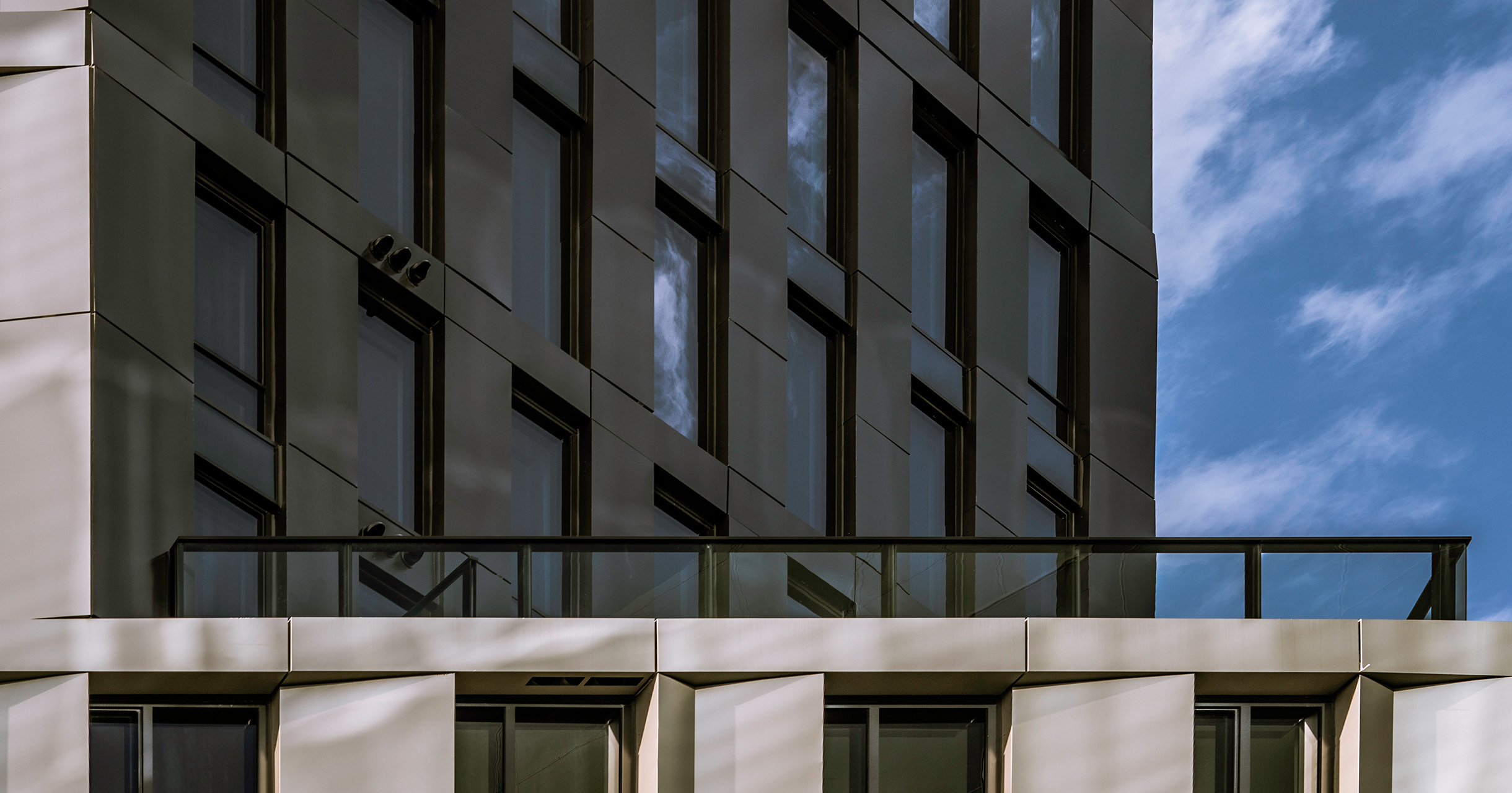
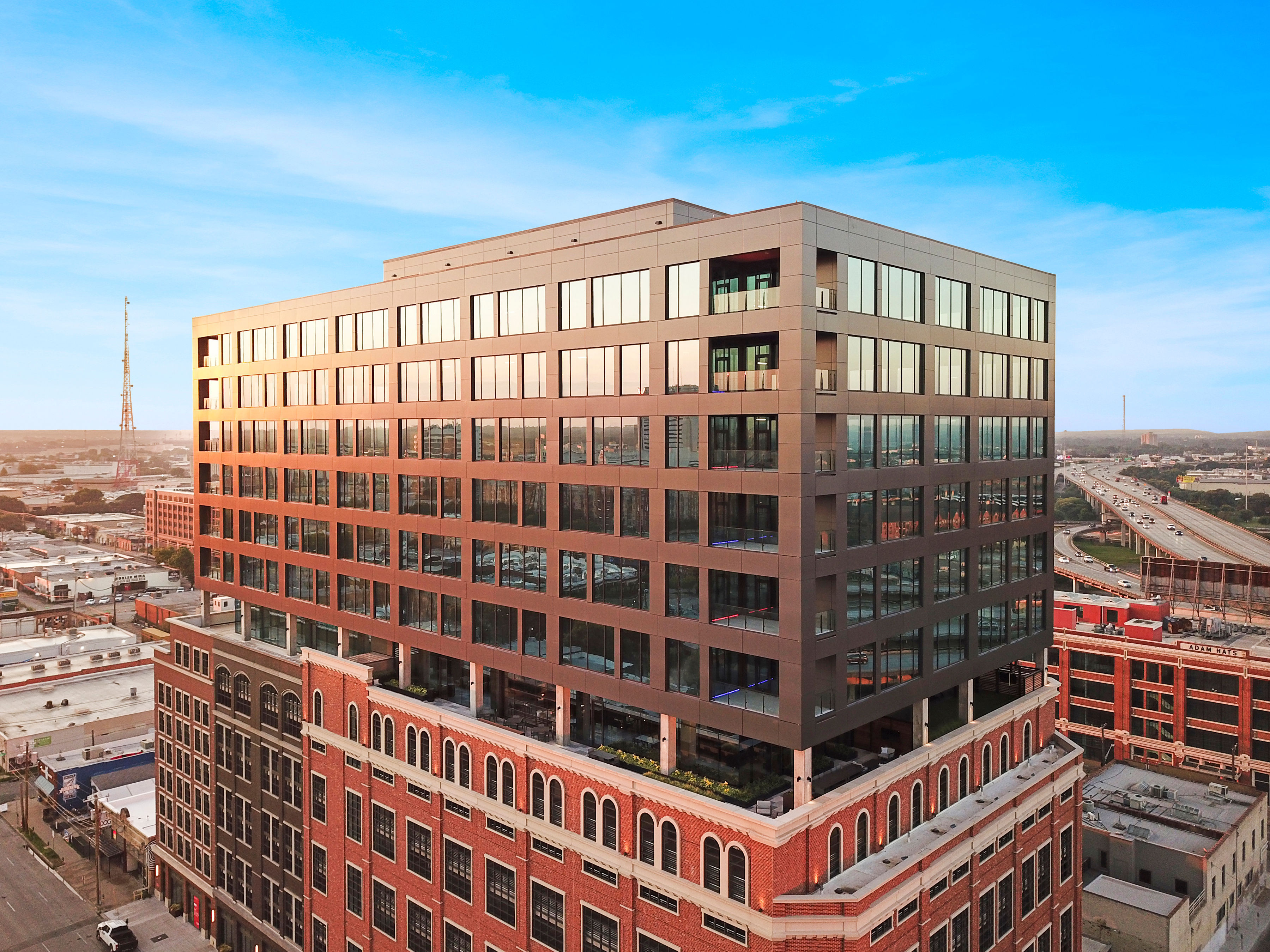
Metal composite material (MCM) has long been the preferred product for the exterior cladding of commercial projects because it is durable,sustainable, highly customizable and requires minimal maintenance. Pre-painted, or coil-coated MCM, is an ideal option that provides design flexibility, ease of fabrication and installation, and ultimately delivers an eye-catching finished aesthetic.
Discover why coil coating is a preferred choice
Manufacturers have used coil coating for more than 75 years. But what is it? The experts at the National Coil Coating Association (NCCA) define it as “the continuous and highly automated process of coating metal before fabrication.” During this process, a coil of metal is unwound and both its top and bottom surfaces are cleaned, treated, primed, oven cured, coated and cured again through a series of passes.
What Are the Advantages of Coil Coating?
Coil coating is the most efficient and economical method of applying a finish to large, flat metal surfaces such as the material used to create MCM panels for commercial construction projects. Today’s automated coil coating lines run at speeds up to 600 linear feet per minute. Slower line speeds are often utilized for high-quality architectural applications to ensure meticulous quality control. During the high-speed process all oils and contaminants are removed from the surface of the metal, which promotes long-term paint adhesion and performance. One of the biggest benefits of coil coating is the uniformity in color, texture and thickness, which result in the premium metal cladding the market has come to expect.
From an environmental perspective, coil-coated materials are preferred because emissions are captured and incinerated during the manufacturing process, eliminating all harmful off-gassing (VOCs) during the production process. Additionally, thermal loading of a building can be reduced if a cool paint finish is utilized to increase the reflective paint properties, complying with local codes and regulations.
Are There Drawbacks to Coil Coating?
While coil coating has many benefits, there are some limitations to the process that are worth mentioning. Coil coating must be factory applied, yet it is not conducive to small production runs due to high waste, which increases costs. For applications of only a few hundred square feet of custom colors, post painting maybe a more cost-effective option. Additionally, fabricated or uniquely shaped parts cannot be processed on a coil coating line.
Why Design with Coil-Coated MCM?
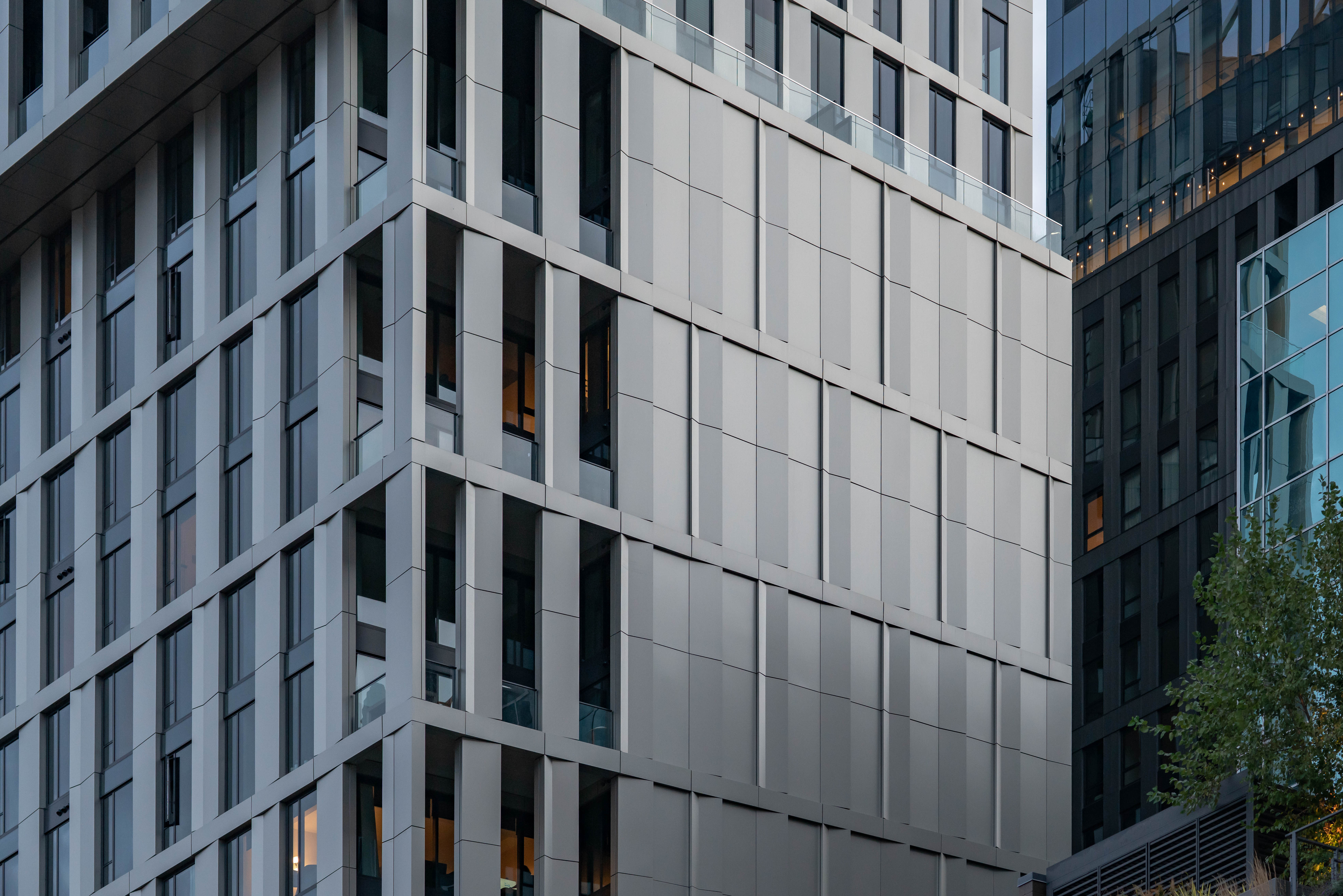
Architects, interior designers and project owners alike can create long-lasting, one-of-a-kind façades that require little to no maintenance and are backed by industry leading warranties. From simple to intricate designs for both exteriors and interiors, coil coating empowers versatility and customization. A wide-range of decorative finishes using color-shifting, solid, mica or metallic paints can be achieved. Innovative design options such as printed woodgrains, stones or abstract patterns also offer visual appeal and the opportunity to blend interior with exterior finishes.
Top Five Tips to Consider When Choosing a Coil-Coated Finish
1. When considering a custom color, allow time in your project schedule for color matching and formulation by the paint manufacturers. Coordination and approval of custom colors may take numerous attempts and several weeks for first sampling.
2. MCM offers superior flatness and finish when installed and engineered according to the fabrication guidelines provided by the manufacturer.
3. Typically, the coil-coated finish is the largest expanse of painted surface on a project. Color shading differences should be expected when comparing products painted using different application methods and on varying materials. It is strongly encouraged to choose your MCM panel colors and finishes first, before selecting the options for extruded products or other non-flat metal materials.
4. Coil-coated mica, metallic and printed finishes are directional, this means panels that are erected perpendicular or opposite to adjacent panels will likely exhibit shading differences. Directional arrows are noted on the masking or backside of the backer so directionality can be observed and maintained when fabricating and erecting the panels.
5. Review and approve actual color samples before placing orders. Color can vary from one supplier to another and name alone does not guarantee an exact match. Avoid determining color from a computer screen—colors appear differently on every screen.
In summary, coil-coated MCM is a wise choice when you’re looking to accomplish your design vision for a building’s interior or exterior. It delivers beauty, sustainability, durability and adaptability while offering longevity. For more information, visit coilcoating.org
Joe Pat Robertson is the applications manager for 3A Composites USA Inc., Davidson, N.C. To learn more, visit www.3acompositesusa.com or www.alucobondusa.com.