 Today’s construction market, both new projects and retrofit, have struggled in the wake of the economic downturn. As a result, some builders have concentrated on securing as many contracts and projects as possible to ensure the stability of their business. An important business strategy, to be sure, but careful consideration must also be paid to maintaining–if not improving–quality. Without quality workmanship, the quantity will drop regardless of the economy.
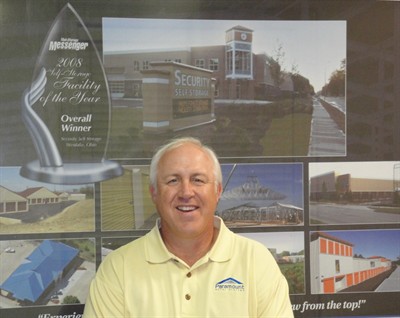
Quality design, engineering, erection and installation are the hallmarks of Paramount Metal Systems, a design-build firm based in Little Rock, Ark., with more than a century of experience in the metal construction industry. Paramount, headed by brothers David Dodge, the president, and Rick Dodge, vice president, has seen opportunity in the current economy, and has taken advantage of potential voids in the market.
“During the past 12 to 18 months, we’ve expanded our system designs and product lines to accommodate the need for energy-efficient roof and building systems,” said David Dodge. “We also expanded our staff to support these designs and installation of the products, not to mention a more aggressive marketing campaign.”
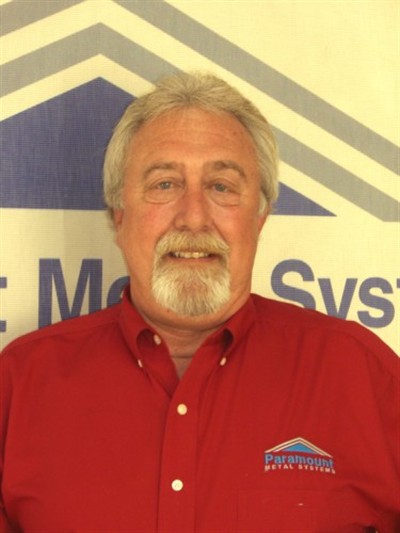 Rick Dodge agreed, adding that the company is making the necessary adjustments to evolve with the market conditions.
“We still value-engineer every project we look at in order to provide proper value,” he said. “We also have aligned ourselves with top suppliers to the industry to create a top level team that can contribute collectively to a project that can keep overhead costs in check. We recently signed on as a Varco Pruden authorized builder for its pre-engineered buildings and roof systems. And we have a great relationship with companies like Roof Hugger and Dow Building Solutions and Dawn Solar in the retrofit market.”
Looking ahead, Paramount has clearly targeted retrofit projects as a market segment with great potential, and the brothers Dodge are eager to explore it further.
“The retrofit market provides a terrific opportunity for growth,” said Rick. “There are millions of square feet of low-pitch/flat roofs, along with 25-year-plus metal roofs. These roof systems can now be updated with better product, better technology for energy efficiencies, promote the green technologies such as solar, and do most of these without tearing off existing roofs and filling landfills.”
Oak Ridge Laboratory
 In what may be Paramount’s most significant retrofit project to date, the company was tapped to work with Oak Ridge National Laboratory (based in Oak Ridge, Tenn.) on an experimental building designed to serve as a demonstrable project used to display the measurable benefits of various COOL technologies.
“At Oak Ridge National Lab, we have a sustainable campus initiative where we try and make our existing buildings more sustainable, and the building we were talking about is a small commercial building — an old metal building built in the 1960s with a slope roof and attached to it was a masonry building with a flat build-up roof,” said Abdi Zaltash, lead member in the R&D Buildings Envelope staff at Oak Ridge National Laboratory.
“The building did not have a good overall thermal performance. Oak Ridge was interested because the building was being used for an active research project, and we wanted to retrofit that building and make it more energy efficient.”
Roughly 18 months ago, Zaltash and his supervisor Andre Desjarlais brought in Bob Scichili, president of Robert Scichili Assoc., to put the project team together, and once the energy-efficiency goals of the project were detailed, Scichili began his search for the right design-build company.
“Abdi was asked by his boss to do a first-class retrofit job on that building and report on the results,” said Scichili. “[Prior to this project] one of the biggest difficulties we had as an industry was that we had no physical, demonstrable projects where we could say, ‘we took this technology off of this test building, applied it to this building, retrofitted it, and here are the ingredients, and here was the result.'”
Scichili was tasked to find a top-notch retrofit contractor that could properly design, manage and build an energy-efficient retrofit of a 50-year-old building that, when completed, could serve as an example of best technologies and best practices for COOL metal building measurement and research.
Paramount Metals was recommended to Scichili as the premier retrofit contractor “east of the Mississippi” by a number of different industry sources, both for the quality of work and the fact that it could handle the design while finding the right suppliers.
Once involved in the project, Paramount brought in the best business associates it could find. Mark James, vice president of Roof Hugger, played a leading role in the planning and profiling of the structure that involved the use of its retrofit purlin system; Custom-Bilt Metals was selected for the COOL metal roofing and wall panels; and Dow Building Solutions was brought in to handle the insulation and thermal efficiency. Rounding out the team was Paramount’s lead erector, Mike Cook. All were selected because of their reputations as the best in the industry, according to David Dodge.
Challenges
 The challenges this particular project offered were not insignificant and required a combination of creative design, engineering and teamwork between the members of the project team.
“The biggest challenge we had was taking today’s technology and trying to apply it to a building that was 50 years old,” said David Dodge. “This building was built with angle-iron trusses, angle-iron purlins and true corrugated sheeting. A lot of [our success] was because of the due diligence on the front end. We had to do a lot of pinpoint design on this thing because we were trying to marry 2010 technology with something that was 50 years old.”
Bryan Mallon, field marketing manager for Dow Building Solutions, agreed that the team had a tough road ahead of it from the outset.
“We had two different structures–a block masonry building attached to a metal building,” he said. “We had multiple conditions there; lots of penetrations and transitions.”
The penetrations in the old building proved to be a significant hurdle for the insulation, as most of them were required for the various pieces of measuring equipment utilized within and outside the structure. That’s where Dow’s expertise was invaluable, as the thermal performance and insulation was such a major part of this project.
 “Originally there were more than 50 penetrations,” said David Dodge. “Quite a few were eliminated, but still an excessive amount had to remain. We brought Dow into this project because of the products that they provided.”
Zaltash told Paramount what R-values ORNL had hoped to achieve, and the Dodge brothers quickly decided that Dow products and people were the right fit.
 Again, all of the potential stumbling blocks were taken care of by Paramount.
“Having a design-build firm like Paramount, they were able to redesign the project (right there on the spot in a meeting) to ensure we met all the thermal requirements,” said Mallon. “There was no third-party, this was all done in-house. It was amazing to work with these guys.”
Though more labor-intensive, David Dodge said this unique project was more or less a typical retrofit where an old building was brought up to or even beyond current codes. Going above and beyond was always the goal of this project.
“We had to meet everything we could possibly be challenged with in codes, whether it be products, whether it be sustainability, you name it. We tried not to leave any loose ends on this experimental building–it needed to be a good, demonstrable building,” said Scichili.
“It’s a combination of the finest thermal insulation, as well as an air barrier, if you will, working in unison. You can turn on the monitoring equipment and see that you’re almost at zero energy.”
 Dow’s THERMAX insulating boards, FROTH-PAK foam insulation and GREAT STUFF PRO insulating foam sealant and adhesive were instrumental in achieving the project’s unique energy efficiency goals.
In fact, thanks in large part to the R-50 insulation on the roof and R-30 insulation on the walls, the preliminary data shows a remarkable reduction in heat loss and heat flow.
“We look at the temperatures inside, outside and in the sandwich layers, analyze the temperature differences, and the influence of the retrofit on those measurements,” said Zaltash. “The preliminary data shows an approximate 75 percent reduction in the heat flow.”
Added David Dodge: “It’s remarkable to see where it was when we started to where it was when we finished. All the materials that we applied to this project were the best in the industry: COOL metal roof and wall panels by Custom-Bilt Metals; Roof Hugger purlins; Dow’s insulation products. We basically took a Chevy and turned it into a Cadillac.”
But what will this experimental building, with all its technology and thermal efficiency, mean to the metal construction industry? Will it be a standard bearer of things to come?
“I think that it’s going to be provable to be [the standard bearer],” said Scichili. “I don’t think you can make the statement that it unequivocally is, but can this be a standard-bearer? I would say yes.”
Custom-Bilt Metals
www.custombiltmetals.com
Dow Building Solutions
www.building.dow.com
Oak Ridge National Laboratory
www.ornl.gov
Paramount Metal Systems
www.paramountmetalsystems.com
Roof Hugger
www.roofhugger.com