Not every metal roofer has the luxury of an in-house stock room where they can find the fastener they need for a common detail. Roofers that buy fasteners by the project will order just in time, typically over the phone, via email, through their sales rep or at the showroom counter. That is the moment where the challenge begins for the fastener supplier.
Learn more about fastener design elements

It is critical that a supplier is provided several key descriptive terms to supply the proper part for a detail. Often, the person doing the ordering is not familiar with what the terms mean.
Industry Description
Let’s start with a basic industry description for popular items:
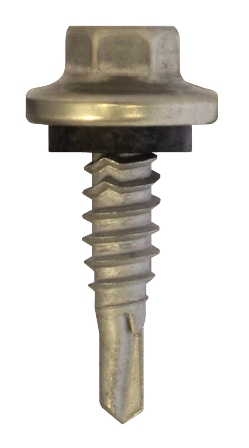
1/4-14 x 7/8-inch BLAZER-1 VRT lap screw HWH: commonly used by metal roofers for lap fastening and thin metal connections.
1/4 inch: The major diameter of the screw’s thread.
14: The number of threads per inch (TPI).
7/8 inches: The length of the thread form. For hex washer head style, the distance below the head. For flat heads
(tile) and bugle head style (decking) the overall length.
HWH hex washer head: The popular Hexagonal drive type; typically 1/4-inch, 5/16-inch, and 3/8- inch for the fasteners popular in the industry. That measurement is taken across the flats of the hex.
BLAZER-1/lap: This refers to the size of the drill point and its drilling and tapping capability. The points range from 1 (light gauge-lap) to 5 (1/2-inch structural steel).
Key Design Elements
With the variety of attachment situations a roofer faces every day, a supplier should know several key design elements before making a recommendation. The “drill down” in the decision-making process should follow the below pattern.
Attached material and substrate. What is being attached and to what substrate? An accurate solution will not occur without this information. When the supplier knows the gauge of the metal, the thickness of the insulation, as well as the type of substrate, the chances of success increase.
Head style. Does the profile or height of the fastener head impact the design detail? A supplier should default to the easiest style to install unless the design needs low profile for performance and/ or aesthetics, etc.
Exposure. Is the fastener exposed to the elements? A carbon steel fastener plated with an electro zinc finish is fine for an interior application, or an exterior use concealed by flashing or a roof panel. Contractors should seek a fastener protected by an additional finish our thicker plating designed for exposed applications. These coatings are many times applied over zinc for additional corrosion protection. For example, using the same controlled test (ASTM B1117) environment to accelerate surface rust, an electro zinc 0.0003-inch plating shows rust at 48 hours, a high-quality barrier coating will exhibit similar results at 1,000 hours.
Tooling. Some fastener applications for roofers require power tools that place a design emphasis on torque and proper speeds, especially with self-drilling fasteners. Sometimes a perceived problem with a self-drilling fastener can be traced to a roofer using the wrong tool for the application. For example, using a 4,000-RPM low-torque drywall screw gun where a 2,500-RPM gun with higher torque is required. Excessive speed will only burn up a drill point, not allow it to drill faster. The thicker the steel is, the slower the drilling speed.
Cordless impact drivers have become very popular due to their lightweight, compact design and power. It is important to note these tools were originally designed for the wood construction industry to drive large diameter lag screws. The excessive torque they generate can be a problem with fastener heads that are painted. The industry, however, is catching up; some new offerings have a drill-only speed to avoid this problem.
The best fastener decisions are made when your supplier is armed with accurate information. When a project requires a large volume of product, keep at least a few original containers on-site. The box or bucket should have part descriptions that will speed up the reorder process and keep errors to a minimum.
Alan Belcher is branch manager of Triangle Fastener Corp., Cleveland. To learn more, visit www.trianglefasteneer.com.