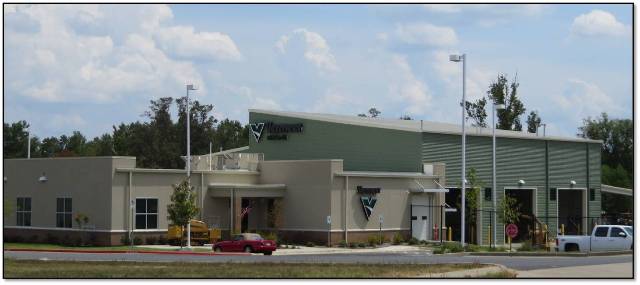
Versatile, high quality, precisely engineered and designed to serve nearly all segments
 Metal building systems have a uniquely American heritage going back to the early 1900s. Metal building systems today are versatile, high quality, precisely engineered and designed to serve nearly all segments of the low-rise nonresidential construction market. They are a totally customized package for all dimensional properties of primary and secondary framing as well as wall and roof panels. Every single frame and bracing member is designed and detailed for the needs of a particular building in a particular geographic location. Other than items such as nuts and bolts, nothing is off the shelf or pre-engineered.
Metal building systems can be erected in onethird the time of other building methods because the building elements are designed to work together and only require bolting. The faster a building is completed, the faster an owner’s return on investment. Consider that with metal buildings there is only 25 percent wasted time on a job site compared to 57 percent with conventional construction.
Many Applications
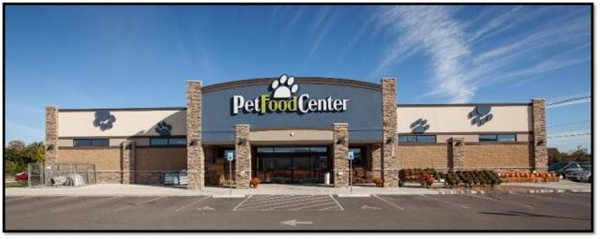
Metal building systems are constructed in many different shapes and sizes for all types of applications, from manufacturing and distribution centers, retail and commercial facilities, offices and schools, recreation centers and self-storage facilities, to health care and correctional institutions. This type of construction has the advanced design, engineering and manufacturing capabilities to be a single-source supplier for a wide range of metal building systems. Industry manufacturers accomplish this by offering a variety of building styles, framing styles, column shapes and girt conditions that can collectively satisfy virtually all building requirements. Designs are limited only by your imagination.
 Metal building manufacturers offer a wide variety of metal wall products as well as industry-leading alternate wall products. Standing seam roof and wall panel systems offer unsurpassed performance, appearance and value. Standing seam roofs are also practically maintenance free and are available with warranty protection against roof leaks.
Critical to the engineering design process is determining the environmental loads which the structure must be able to support-including dead loads, roof live loads, roof snow loads, wind loads, seismic loads and auxiliary loads. Metal building design engineers adhere to building code requirements which reference ASCE 7, “Minimum Design Loads for Buildings and Other Structures.” Many building owners including retail chains, the military and school systems choose metal building systems specifically for the long-lasting standing seam metal roof systems. Metal standing seam roofs provide the longest life cycle of any common roof in use today, lasting up to four times longer than a conventional roof. The costs associated with a roofing system are not limited to installation and material costs. Life cycle costs are determined by comparing energy cost reductions, cost of maintenance and the life expectancy of the roof.
Green and Sustainable
Metal building systems are the poster child for sustainability and green, as steel is the most recycled material on the planet. The typical metal building is manufactured from at least 70 percent recycled steel. To top that, at the end of its useful life, 100 percent of a metal building can be recycled into a variety of steel products, including new cars, appliances, buildings and bridges. Recycled steel reduces mining waste by 97 percent, air pollution by 86 percent and water pollution by 76 percent. During the manufacturing process scrap levels for metal buildings are typically less than 5 percent and what scrap is produced is often used to produce other parts. Scrap during erection at a job site is minimal as all parts are engineered to fit before being shipped.
Metal buildings typically weigh 30 percent less than a similar conventional structure due to a more efficient use of steel resulting in real foundation design savings.
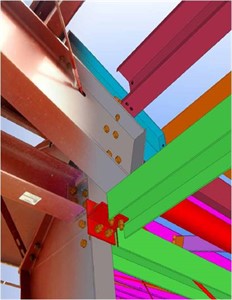
Critical to the engineering design process is determining the environmental loads which the structure must be able to support-including dead loads, roof live loads, roof snow loads, wind loads, seismic loads and auxiliary loads. Metal building design engineers strictly adhere to building code requirements which reference ASCE 7, “Minimum Design Loads for Buildings and Other Structures.” Providing powerful value, building information modeling (BIM) is driving an unparalleled revolution in the construction industry using 3-D digital modeling software to more effectively design, detail, manufacture and erect buildings.
Metal building systems perform well, are built to last and have resiliency over other forms of construction. With the unique ability to control the entire building shell in BIM modeling and energy-efficient design, this is definitely a building system for the future.
Wes Brooker is marketing manager at Nucor Fabricated Products, Charlotte, N.C. To learn more, visit www.nucor.com.