Ask questions before choosing a snow retention system
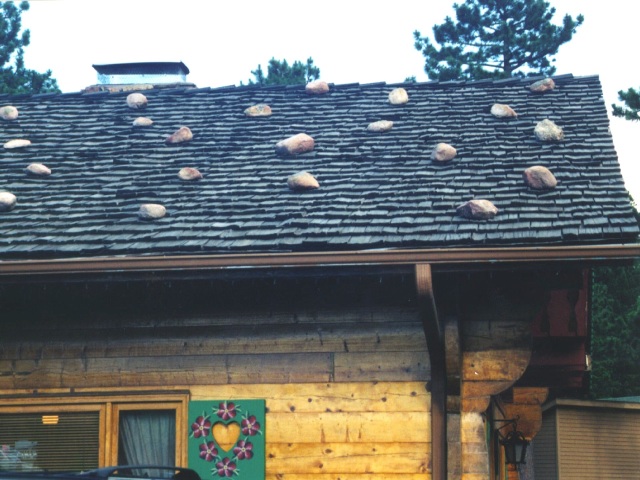
 Every year snow and ice sliding off of roofs damage property and injure people all over the world. This is not a new problem, and for as long as there have been permanent dwellings in snow country, there have been rudimentary snow guards to reduce the risks of these hazards. Early forms were rocks or logs placed and/ or anchored onto the roof, to increase the friction between snowpack and roof surface. Some modern snow retention systems use the latest materials and engineering, but at the end of the day the same principle is the ultimate goal; to keep snow on the roof so that it will melt slowly rather than releasing all at once.
Like all consumer products, there are many options in snow retention, and sifting through the differences in quality and performance can be time consuming and subjective. So in an effort to simplify the process, the following questions become important when choosing a system.
What is the Roof Type?
The roofing material plays a large role in dictating your options and needs when it comes to snow retention. For instance, while there are many available snow retention options for asphalt shingle roofs, in most cases they prove unnecessary. This is due to the granular surface on the shingles themselves, which creates enough friction that it is rare for an asphalt shingle roof to avalanche the same way that that a tile or metal roof does.
It is important to know the details of your roofing system, and to understand how those details play a role in designing a snow retention solution. How Much Snow Does the Area Get? The answer to this question is a little more involved than one might think. In the building design community, the figure used is the roof design snow load. In the United States, this figure is always represented in pounds per square foot (psf). It is important to note that roof design snow load is not the same as ground snow load.
The roof design snow load takes in to account many factors beyond just the 50-year recurrent regional snowfall. Those factors include roof geometry, wind exposure and other building and site specifics. This is the same design load that the project engineer or truss manufacturer would compute to design or specify the roof structure itself. It is the cornerstone of a properly designed snow retention system. Beware of published statements that ground snow should be used in calculation for snow retention. Such advice is errant and can actually be dangerous as in certain situations roof snow load can be two, three or four times ground snow load. There are two basic styles of snow retention that date back to antiquity. They are cleat systems and fence systems.
 Cleats
Often referred to as pad-style, individual or unitized, cleat-style snow guards function like studs on a snow tire. Small, individual obstructions give the roof surface more traction that serves to keep snow in place rather than allow it to slide off unexpectedly. These types rely on a snow bank’s ability to bridge between devices. There are certain locales and roof types where cleat-style snow guards remain popular for practical, aesthetic or historical reasons. Slate roofs in particular are a good fit for a cleat snow guard system as they can be laid out in an appealing pattern and be mechanically attached to the roof deck with nails or screws. Many of the cleat snow guard styles are reproductions of designs found on historical renovation projects.
Fences
Sometimes referred to as pipe- or rail-type snow guards, these systems function much like a continuous wall or fence as the name implies. The rails are held in place by clamps or brackets which are mechanically attached to the roof, creating a system that is generally stronger and preferred by many users. Fence-style snow retention has become very popular on all sorts of roof types, both for aesthetics and improved functionality over cleat-style snow guards. Metal standing seam roofs in particular have seen a surge of popularity toward these type systems to reduce the likelihood of snow sliding off of them uninhibited.
Is the Product Tested?
A reputable snow retention manufacturer should have prudent test data with respect to holding strength to support their claims. Without prudent test data, engineered, job-specific design is impossible, and guesswork has no place in a life-safety application. Testing should be appropriate to the specific part type and application and conducted by a certified third-party laboratory. Request to see evidence of proper testing before purchasing product. Testing for seam-clamping products should be panel material and profile-specific. Testing of adhesively mounted products should be conducted after at least five years of actual rooftop (aged) exposure as the chemical bonds of adhesives weaken with time and actual exposure to the elements.
Is it Appropriately Engineered?
It is a simple matter of math to populate a tested product/system to the specifics of a project. The reason most systems are not engineered is that they are also not appropriately tested. Demand to see the job-specific calculations that prove the product/ system is adequate for the project at hand.
What is the Unit Cost versus the System Cost?
A common sales tactic is to be attracted to a price that seems too good to be true. If it seems like you are getting a great deal, you may want to compare the overall system cost to competitive systems. A low unit price of $2 or $3 may not be so inexpensive if you need a multitude of them to do the job. Especially if a competitive system is able to perform the same task for less when all is said and done. Tested holding strength is the key. A part that costs $10 and provides 1,200 pounds of holding strength costs far less than a part costing $5 and providing 300 pounds of holding strength.
Does it Look Good on your Roof?
Remember that the building owner will be looking at this system a lot. If you don’t like how it looks from the start, it may not be something that grows on you. Plastic parts that yellow with time can be particularly unsightly after a few years.
Chris Stearns is member of the team at S-5!, Colorado Springs, Colo., providing technical support to S-5! customers globally. He has been in the snow retention and roof attachment business for nine years. To learn more, visit www.s-5.com.