Corrosion is a natural process that occurs when a metal surface oxidizes, and if not correctly prevented in commercial facilities, it can have a negative impact on safety, operations and bottom-line costs. Corrosion-resistant rolling doors offer a solution to the growing need for modernizing facilities in a variety of industries where corrosion can threaten vital resources such as water treatment plants and chemical storage facilities. This is particularly important for structures located in marine and coastal settings, where seawater and humidity can accelerate corrosion.
Consider corrosion factors when specifying rolling doors
The Costs of Corrosion
When corrosion impacts the metal curtain of a rolling door, it creates an aesthetically displeasing appearance. But the problems run deeper than looks alone. The degradation of the metal can allow outside elements to damage materials and equipment inside a facility. Additionally, the door will not operate as efficiently as it should and won’t provide its best level of protection from extreme temperatures, wind, precipitation or contamination.
As corrosion begins to deteriorate components like the rolling door’s fasteners or shafts, it impacts the functionality of the door—such as its ability to properly cycle (open and close)—and the efficiency at which it operates. This can lead to costly repairs or replacements.
Withstanding Extremes
Some door manufacturers have met these challenges with new products and materials that inhibit the degradation of metals. Corrosion-resistant rolling doors are comprised of materials and engineered with special coatings to protect against rust and oxidation.
These rolling doors can withstand harsh interior and exterior environments including extreme moisture, intense sunlight and heat. They also provide protection against the chemical properties of seawater, which include highly corrosive compounds such as sodium chloride.
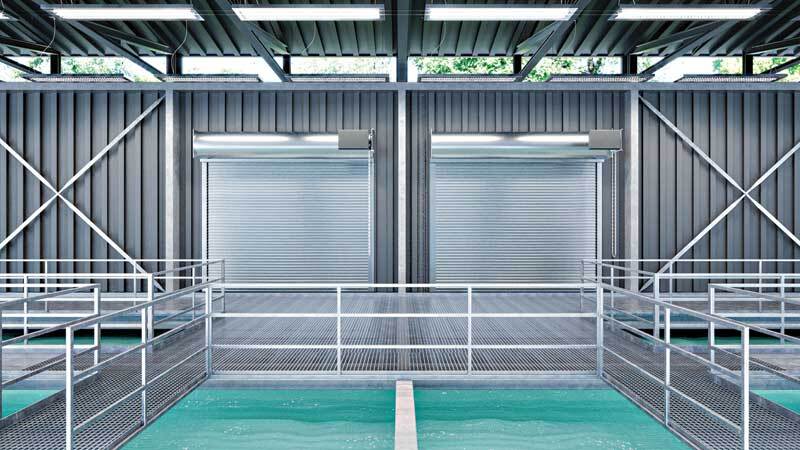
Corrosion-resistant doors are tested under extreme conditions to ensure they hold up to real-world applications. Their unique metals and coatings protect the doors from wet conditions inside facilities such as water treatment plants, as well as moisture that may occur outside including excess humidity in coastal environments.
What to Look for in a Rolling Door
When selecting a corrosion-resistant rolling door, there are a few key factors specifiers should consider. The curtain, components and operating system should boast additional protection against the elements over a standard rolling door. It’s important to consider both the metal used in the construction of the door, as well as the finishings and coatings.
The preferred metals for corrosion-resistant doors are anodized aluminum and stainless steel. Both help to inhibit corrosion, but selecting a stainless steel door provides the added performance of wind load.
Beyond the door itself, ensuring a rolling door’s components are manufactured from a corrosion-resistant substance is also a key consideration. Doors that come standard with corrosion-resistant fasteners, head plates, bearings, shafts, endlocks and windlocks are the best investment because they offer longer-lasting performance.
In addition to the metals used in the rolling door’s construction, it’s also important to consider the coatings. Manufacturers often use oxide-resistant coatings to protect the curtain, as well as the door’s components. Popular choices are adonization, epoxy and zinc coatings or powders.
Investing in a door that features a corrosion-resistant operator should not be overlooked. When selecting an operator, ensure that in addition to being corrosion resistant, it is designed for continuous use and is National Electrical Manufacturers Association (NEMA) certified. This can help prevent costly troubleshooting and replacement. Working with a manufacturer that understands the importance of custom coating all components in applications at risk for corrosion is paramount.
When specifying a corrosion-resistant rolling door, consider both the metals and coatings used in its construction. Making an informed decision on this important investment upfront saves both time and money in the long run.
Nicole Vivalda is senior product manager at Clopay Corp., Mountain Top, Pa. To learn more, visit www.clopaydoor.com or email nvivalda@clopay.com