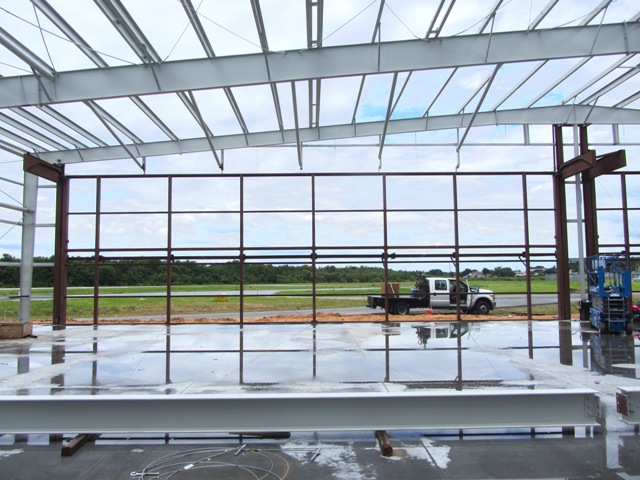
Why this hangar door is different from other door designs
 The choice of hangar doors for sub-80-foot openings was certainly missing something until self-supported hangar doors arrived almost eight years ago. The market’s primary choices had previously been the bi-fold door and the hydraulic swing door, but both of these doors rely heavily on the building for support and this raises the cost of the building. Because of this, hangar doors that impose no vertical or horizontal loads on your structure have been well received.
Self-supported doors are suitable for existing buildings too which is good news for customers looking to retrofit a hangar door. What you will find with an existing building is that the building was designed around the door that it came with, or maybe there was no door to start off with. Either way, it means the building cannot carry the weight of a new hangar door without spending money on structural engineering and reinforcements. Selfsupported doors can often avoid this.
Key Features
Hangar doors with self-supported frames have been on the market for almost 10 years and have revolutionized the hydraulic, single-panel door market. The design is intelligent yet insanely simple. The biggest selling point has to be the impact, or lack thereof, that it has on buildings. The only load it sends into the hangar is wind load, which means spending less money on a building.
Self-supporting hangar door operation is very smooth compared to some other vertical lift hangar doors. That’s due to the pressureless hydraulic circuit and the self-contained pump unit that powers this door. The power unit comes in a black, glossy finish. It can be mounted to the wall or secured to the finished floor. The motor is submerged in the reservoir too, which is another important feature that will prolong the life of one of the most expensive components on the door.
 Door operation has no depressing noises and no hinges to worry about. If you’ve owned a bi-fold door or a hydraulic swing door before, you may have experienced these types of problems. This hingeless door means you not climbing a step ladder every year with a can of lube. During door operation the only sound heard is an audible siren to warn people in close proximity. Some door manufacturers charge you for this feature, but safety shouldn’t have a price on it. Installation is simple and comes with easy-to-follow instructions. The door bolts together without special tools and includes full factorysupport and a five-year warranty.
In Summary
It became apparent a long time ago that there was a need for a hangar door that didn’t add loads to the building frame and after much thought and inspiration, the self-supporting door concept emerged. Where other doors require expensive building reinforcement, this door only requires a common framed opening and structural support to carry the wind load. That’s a big step forward in reducing building costs and being design efficient.
Self-supporting doors are here to stay and have grabbed the attention of architects and engineers who design aircraft hangars. This door is being used on fabric structures, pole barns, wood-frame buildings, pre-engineered metal buildings, Quonsets and many more. With opening sizes up to 188 feet wide and 60 feet tall, and wind loads up to 185 mph, expect to see it used more for hangar doors.
Paul Blake is marketing director at AeroDoor International, Eustis, Fla. To learn more, see photos and watch videos of the door in action, visit www.aero-door.com.