When it comes to commercial construction projects, return on investment (ROI) is king. The rationale is straightforward: commercial structures are typically more practical than their residential counterparts, and they tend to have less variance. Once reserved almost exclusively for industrial, agricultural, and commercial settings, metal roofing is now a contender for residential applications.
However, residential metal roofing projects can have different considerations than commercial projects, like ventilation or continuous insulation (ci), or use of more intricate designs. Installation can be more complex, requiring a craftsman’s touch for unique roofing angles and elements. Homeowners may also harbor certain outdated notions that do not accurately reflect advancements in modern-day metal roofing.
The challenge for installers is to properly educate the consumer on the added benefits of metal roofing—thanks to the latest in coatings technology—and how those innovations translate into desirable total cost of ownership, greater longevity, and added durability. Investing in metal roofing can be a wise and worthy upgrade for a home—often the largest purchase an individual will ever make in their life.
A logical choice
Initially, many homeowners consider metal roofing because of the potential for greater ROI over the life of their home. With proper maintenance, metal roofs can last for more than 50 years. In comparison, although the initial installation costs may be lower, traditional asphalt shingles need to be replaced every 15 to 20 years.
Consider that metal roofing has a far longer lifespan than traditional materials and performs well against the elements. Aesthetically, it offers a more resilient, industrial look, coveted by long-term homeowners who seldom wish to think about roofing in general. Contemporary options also offer even more options than earlier generations. Thermal and energy-saving advantages are numerous, thanks to high technology “cool coatings.” Infused with advanced infrared (IR)-reflective pigments, more heat from sunlight is deflected rather than absorbed.
Specific coatings also have impressive gloss retention and appealing colors that resist fading. In fact, IR-reflective pigments are increasingly coming into play with the shift toward darker colors since they offset the heat absorption that typically comes with deeper hues. The substrate is also more resilient against debris and hail.
Despite these advantages, the average homeowner may not be fully aware of them. Instead, they may assume that, like other metals they encounter in exterior environments, the material becomes extremely hot in the sun. While that may be the case for uncoated metals, special cool coatings for roofing and other metal substrates lower building temperatures and reduce energy demands for cooling thanks to advanced material science and clever engineering.
Though these details may be well known to general contractors and installers, they may not be apparent to clients. Touting these benefits will only strengthen metal roofing’s value proposition.
The misconceptions of durability
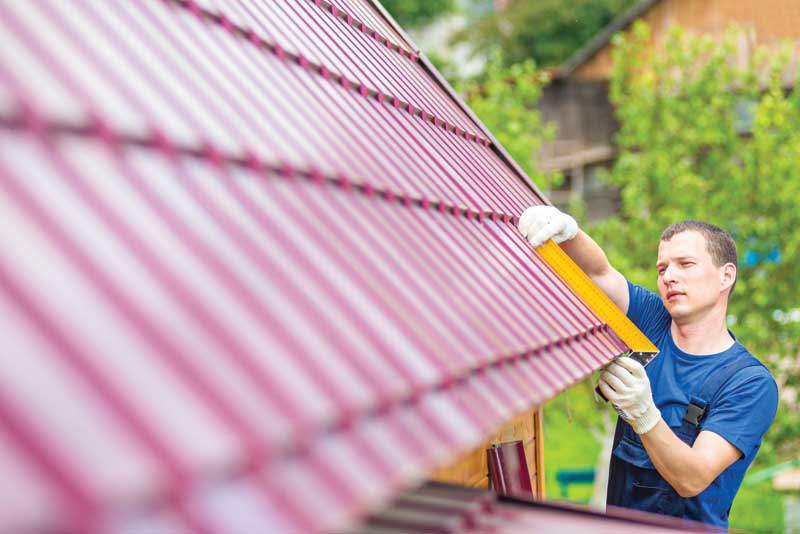
Installers of metal roofing have the valuable opportunity to educate consumers and, ultimately, make the sale. Aesthetics, along with the day-to-day benefits of metal roofing, are a large part of this conversation with clients.
Advances in coatings are challenging long-held beliefs about metal as a material. So, ensure homeowners or other buyers of metal roofing are aware that issues like rust, corrosion, and color fade are problems of the past.
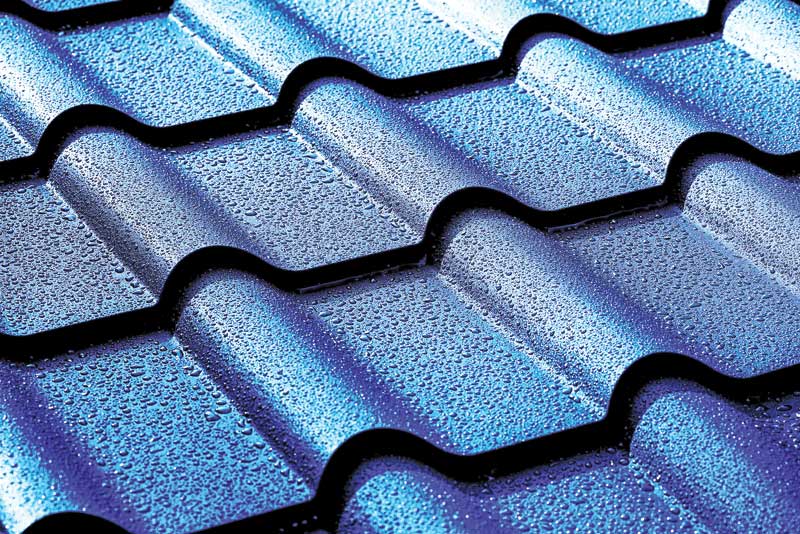
IR-reflective pigments in metal coatings help deflect solar heat, allowing homes to stay cooler and use less energy for air conditioning. These same coatings also offer standout weatherability, durability, and gloss retention.
Metal roofs without exposed fasteners will also pay more dividends from both an aesthetic and performance standpoint. Strategically placed or hidden mounting holes also mean fewer chances for water ingress, which lowers the risks of roof wood rot.
The value propositions for residential metal roofing are abundant. Since the initial investment is higher, installers must appropriately emphasize the long-term payoff.
The emotional factor
Logic, rationale, and reason are what initially interest residential buyers in metal roofing. However, what underlies these more practical thought processes is often less palpable: emotion.
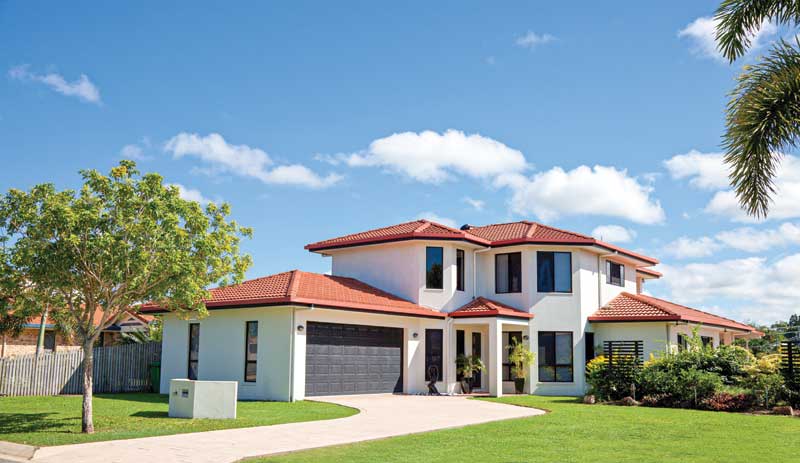
A home is, by its nature, far different than a commercial structure. Homes are filled with soft acoustics, treasured personal items, and all the trappings of comfort. By contrast, commercial buildings are built for work. They are louder and often offer fewer creature comforts. So, when a homeowner, architect, or builder seeks to take a page out of a commercial building’s envelope—in this case roofing—it is worthwhile to consider the rationale for the leap.
Wanting the best protection for a person’s “nest” and its occupants is understandable. Shelter that protects and performs can help homeowners feel more secure, particularly in areas with volatile climates. A metal roof does so flawlessly, and it does so while delivering significant savings on utilities and providing ample protection from severe weather events. In fact, peak cooling demand in air-conditioned residential buildings can be lowered by 11 to 27 percent.1 The same cannot be said for traditional asphalt shingles.
The customer approach
Installers would do well to take a different tack in the residential roofing approach. Embrace the emotional aspects that come with a residential project, understanding that beneath the surface, it is a more personal purchase than it may initially appear.
Ample time should be spent with a customer to explain the considerations that come with a metal roofing investment. Approach the project side by side with the client and ensure the investment in the upgrade will satisfy their needs for both durability and aesthetics. Nurturing client relationships in such ways can foster genuine trust and start the project off on the right foot.
Genuinely focusing on a customer’s needs, addressing misconceptions, and talking metal substrate technology in simple terms will benefit all parties. If possible, invite the customer outside during the installation and walk them through the process.
By approaching each residential project with tact, metal roof installers will be reminded of what is important in this field: providing lasting protection for clients, beautifying properties, and greatly lengthening the structure’s service life.
Gary Edgar is the architectural specification manager for PPG’s Building Products. Edgar has been with PPG for more than 25 years, with 17 devoted exclusively to PPG’s air-dry fluoropolymer and Build Restore Protect (BRP) coating systems. His responsibilities include product recommendations, product training, and warranty approval. He is a NACE certified coating inspector.
Notes
1 See “Estimating the effect of using cool coatings on energy loads and thermal comfort in residential buildings in various climatic conditions,” www.sciencedirect.com/science/article/abs/pii/S0378778807000126?via%3Dihub.