Driven by advancements in technology and design innovation, metal railing fabrication has evolved tremendously in recent years. Fabricators integrate state-of-the-art methods and materials to create railing systems that are highly functional, durable, and aesthetically pleasing works of art. Using modern manufacturing approaches—such as 3D laser scanning, automated tube bending, and highly customized laser etching and cutting—reflects the industry’s commitment to achieving architects’ increasingly complex visions and meeting the ever-changing demands of commercial spaces.
Today, the application of these advanced methods allows for the creation of intricate railing systems and unique structural enhancements bringing new life to venues both visually and practically. Here are five projects demonstrating how cutting-edge fabrication capabilities are improving safety, accessibility, and the overall guest experience.
Las Vegas Convention Center: Precision-engineered railings upping the ante
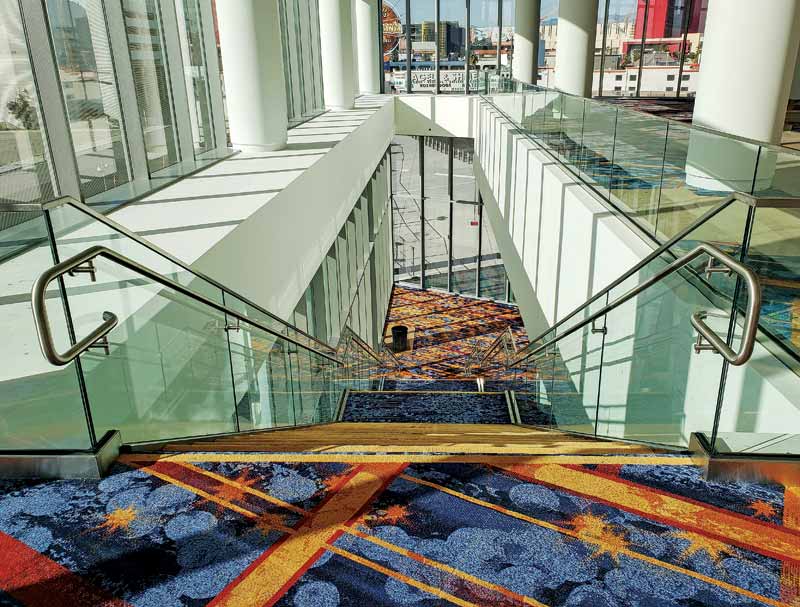
One of the busiest and largest meeting facilities in the world, the Las Vegas Convention Center boasts a contemporary design, an abundance of natural light, and more than 1,250 m (4,100 linear feet) of custom-engineered railing. Using 3D site scanning to create realistic renderings of the space, the team designed railing systems for use on two levels of the grand lobby overlook, the venue’s monumental stairs and adjacent overlooks, multiple sets of switchback stairs, and along the skyway bridge.
The scans were essential for filling in missing gaps of information and allowed the team to quickly capture precise measurements for difficult, hard-to-reach areas that would otherwise have taken several days and brought other on-site work to a halt. The data gathered helped team members visualize and understand the convention center’s spatial layout and highlight the exact locations and dimensions of the railing being installed.
Thanks to this innovative technology, the result offers abounding views and allows natural light to fill the space. Due to the construction of the stairs, an alternate “false” stringer was used to securely accommodate the shoe attachment for the glass guardrail. Guardrail is also featured along the third-level outdoor terrace, which can accommodate 20,000 attendees and offers impressive views of the Las Vegas Strip.
Dickies Arena: Ornate railings “steel” the show
The crown jewel and go-to destination for sports, concerts, rodeos, and other major events in Fort Worth, Texas, Dickies Arena is a 69,677-m2 (750,000-square-foot) multipurpose venue featuring 4,200 m (14,000 linear feet) of custom architectural railing. Crafted to provide seamless navigation, facilitate movement, and pay homage to the Lone Star State both inside and outside the arena, the railings were bent and shaped with a CNC machine and engraved with prairie designs using an in-house automated laser cutter. This advanced modeling tool enabled designers to mix elegance with a signature Southwestern flair complementing the building’s stunning Art Deco architecture and harmonizing with the Texas grass motifs in the floor coverings.
Another highlight of this project is the octagonal and helical spiral staircases, where 3D laser scanning was used to design and fabricate the unique dimensions of the guardrail system.
Abaca Apartments: Corrugated panels with a pop of color
An industrial area formerly dedicated to shipbuilding, the Dogpatch neighborhood is now a destination for San Franciscans to shop, dine, and live. Inspired by the area’s recent rejuvenation, the architects of the Abaca Apartments chose to stand out from the neighboring warehouses with a bold design–and colorful railings to complete the look.
To ensure the building would stand out amidst its industrial surroundings, a series of corrugated aluminum panels were specified to give the Abaca Apartments a sleek, contemporary, and eye-catching appearance. Made from high-quality aluminum sheets passed through a corrugating machine to create unique perforations, the corrugated panels at the Abaca Apartments feature a distinctive wave-like pattern with ridges and grooves, adding visual interest and texture to the building’s façade. Along with mesh railing, the team custom painted the panels in colors, including Zinc, Gray, Blue, Green, Red, and Clay, to add brightness and whimsy to the exterior. The thoughtful design and vibrant hues create a welcoming atmosphere to truly make the Abaca Apartments pop with color in the community.
Mercedes-Benz Stadium: “Loft-y” views with VIP flair
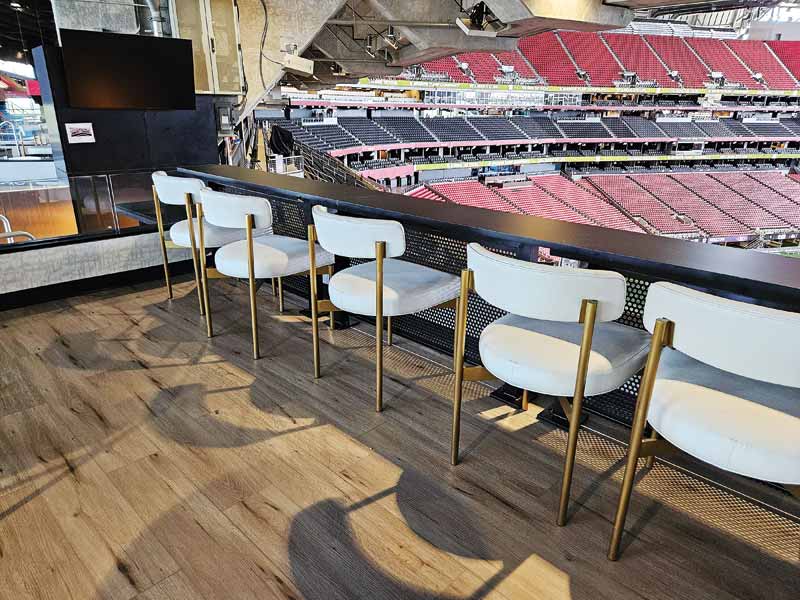
Consisting of five private or shared areas equipped with flexible lounge seating, high-top tables and chairs, and unobstructed views of the field, the AT&T Lofts at Mercedes-Benz Stadium offer VIP treatment for Atlanta Falcons and Atlanta United FC fans seeking a premium experience. This elevated experience includes 236 m (775 linear ft) of glass guardrail topped with stylish anodized aluminum handrail. Additionally, sections of black powder-coated rail with perforated panels were custom-fabricated to enhance the safety, convenience, and luxury of the Lofts.
Made with high-quality, lightweight aluminum that is not only sturdy and durable but also resistant to corrosion, the rail features drink top surfaces and leg supports, which blend with the natural surroundings to optimize sightlines. Additionally, tube bending and sheet metal capabilities achieve custom shapes and sizes, along with clean, precise cuts for company logos, seat numbers, names, or virtually any unique design in-house and without adding a lot of cost to a project.
Buffalo Niagara International Airport: Symbolic railings fit for a “Queen City”
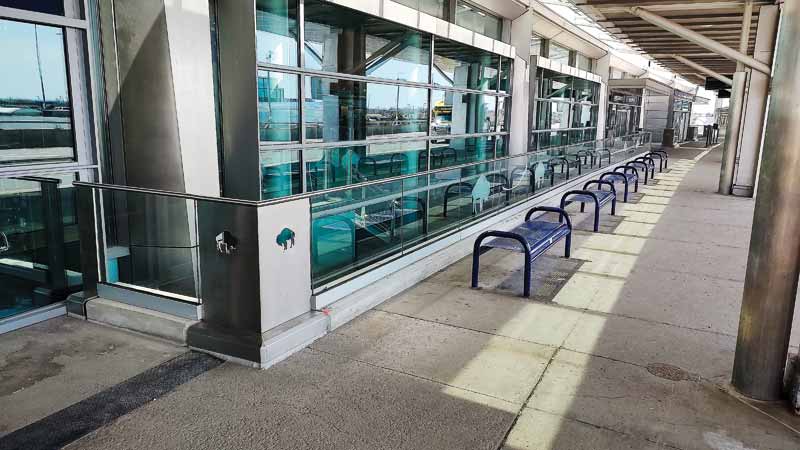
As part of the Buffalo Niagara International Airport baggage claim expansion, the architectural vision called for the integration of an iconic buffalo symbol—a nod to the region’s rich heritage—into the new railing system.
Using advanced laser cutting technology, buffalo shapes were cut into stainless steel railing post-end panels, creating a distinctive visual feature capturing the spirit of the area. To add another layer of visual interest, fritted buffalo designs were custom etched into the glass railing panels, resulting in a dynamic interplay between the sleek stainless steel and the transparency of the glass. The combination of materials adorned with buffalo motifs brings distinctive character to the airport and provides a meaningful connection to the local culture, offering travelers a memorable first impression as they arrive in the “Queen City.”
As these examples illustrate, advancements in metal railing fabrication have effectively elevated the design and functionality of modern venues and set new standards for safety, accessibility, and aesthetic appeal. Innovative technologies and design methods, such as 3D scanning, CNC machining, and automated laser cutting, have opened up endless possibilities for creating intricate, durable, and visually stunning railing systems to enhance the overall experience for guests, whether they are attending a world-class sporting event, enjoying a concert or theater performance, or just catching a flight.
Looking ahead, the future of metal railing fabrication is poised to be even more exciting, with continued advancements in technology and materials, seamlessly blending artistic vision with precise engineering. Emerging trends like the integration of smart technologies into railings and the application of 3D printing and laser cutting are transforming the landscape of commercial spaces and allowing for greater customization, intricate detailing, and a broader range of design possibilities.
As the demands of commercial spaces continue to evolve—driven by the need for safety, accessibility, and an enhanced user experience—the industry’s ongoing commitment to innovation will ensure railing systems do more than just delineate space; they will contribute to the overall ambiance and identity of the environment. Whether in airports, hotels, sports arenas, or office buildings, these next-generation railings will help make venues more inviting, memorable, and aligned with an architectural vision that leaves a memorable and lasting impression on all who visit.
Brian Elliott is the national projects director with Minneapolis-based Sightline Commercial Solutions. Formerly Trex Commercial and Staging Concepts, Sightline is a fabricator of architectural railing, metal, glazing, and portable platform solutions with more than 30 years of expertise in designing custom solutions for all types of venues, from sports arenas and stadiums to performing arts spaces, educational facilities, hospitality settings, and worship spaces. To learn more, visit sightlinecommercial.com.