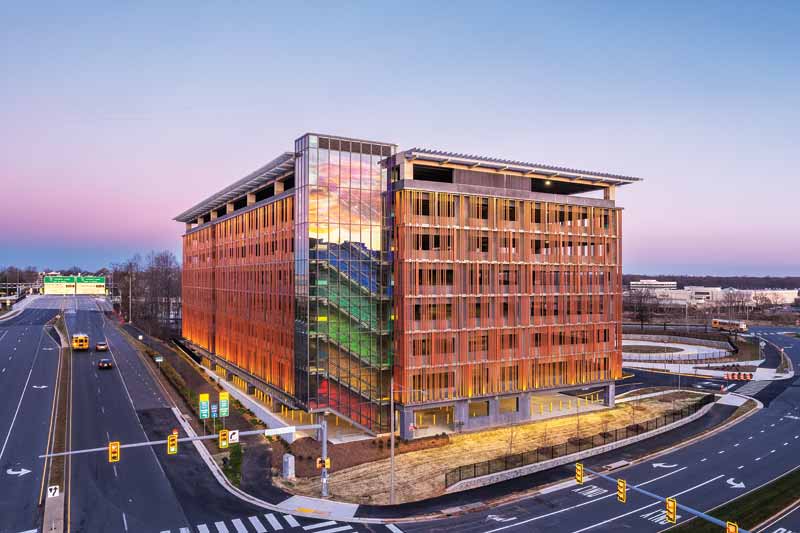
In today’s fast-evolving architectural landscape, facades are more than just exterior finishes—they are an essential part of a building’s identity, performance, and sustainability. Metal materials are leading the way in future trends for the design and construction of building facades.
Flexibility in design
One of the main advantages of metal facades is their flexibility. Designers can choose from a wide range of metals—including aluminum, steel, copper, and zinc—to achieve the desired aesthetic or texture. Whether it is a sleek, polished look or a bold, industrial feel, metal facades can suit a variety of design goals. With modern coating technologies, metal panels provide limitless color options or mimic other materials like stone or wood.
The flexibility of metal facades allows them to become a blank canvas for design and artistic expression. On a recent project collaboration, a global tech company was looking for a design solution and custom facade to wrap a multi-level parking structure on their campus in Mountain View, Calif. The goal was to create an impression while expressing the digital art form and the company’s tech background. The owner selected an artist to create paintings, each representing a different season in Mountain View. This artwork was then digitized and reorganized as a pixelated image transferred onto custom, kinetic aluminum pieces—mounted on a steel framework—that are wind-activated. The resulting 7,199 m2 (77,500 sf) exterior metal facade and “mural” included 203 mm x 203 mm (8 in. x 8 in.) individual panels with a palette of 35 unique colors.
Durability
Durability is another benefit metal facades provide. Traditional materials like stone, brick masonry, or wood have limitations when it comes to endurance in harsh climates and fluctuating temperatures. In strenuous physical conditions, the strength and resilience of metal facades can be an important asset. Unlike stone or mortar, which can erode and crack over time, metal retains its structural integrity. Additionally, wood materials are associated with high maintenance costs. The strength of metal facades, coupled with many corrosion-resistant coatings available on the market, helps it to stand out as an option that is maintenance-friendly and provides significant longevity.
Technological advancements
The integration of cutting-edge technology with metal facades is expanding the purpose of building exteriors, allowing them to often become multi-functional. Today’s metal panels are not just static elements—they can interact with their environment in dynamic ways. For example, metal exteriors can be integrated with solar panels to help generate renewable energy or with LED lighting to create responsive, illuminated facades. Smart technologies can also be integrated into the facade to adjust to changing light or weather patterns, enhancing both energy efficiency and aesthetics.
Sustainability

Sustainability is at the forefront of modern construction, and metal facades are no exception. Unlike many traditional building materials, metals like aluminum and steel are highly recyclable, reducing the environmental impact of construction. In addition, metal facades require minimal maintenance over their lifespan, reducing the need for repairs, repainting, or replacement.
Thermal performance
Metal facades also contribute to a building’s energy efficiency. Advances in thermal technology allow metal panels to be designed with heat-reflective coatings, reducing the amount of heat absorbed by the building. By reflecting both light and heat away from the structure, metal facades can help reduce cooling loads, resulting in more energy-efficient buildings.
Light and ventilation
Metal facades are not just about enveloping a building—they can also enhance interior spaces by providing controlled daylighting and natural ventilation or can be used to shade a space. In parking structures or industrial buildings, metal facades can allow for natural airflow, improving the necessary ventilation while maintaining security and aesthetics. In addition, the option to backlight metal facades can create striking visual effects, turning buildings into night-time landmarks. One such project is California’s Morongo Casino Resort in Cabazon just 20 minutes west of Palm Springs. A trademark of the recent renovation and expansion at the resort features a new, dramatic entry element combining color, light, sound, and motion. Each metal facade wall of the entryway spans approximately 18 m (60 ft), ranges up to 4.6 m (15 ft) high, and curves in two directions. They were accentuated with solid metal caps outlining the walls’ rolling shape, and the supported ribbons of colorful metal, which ascend and intertwine above the walls like sculptures in flight.
Customization and innovation
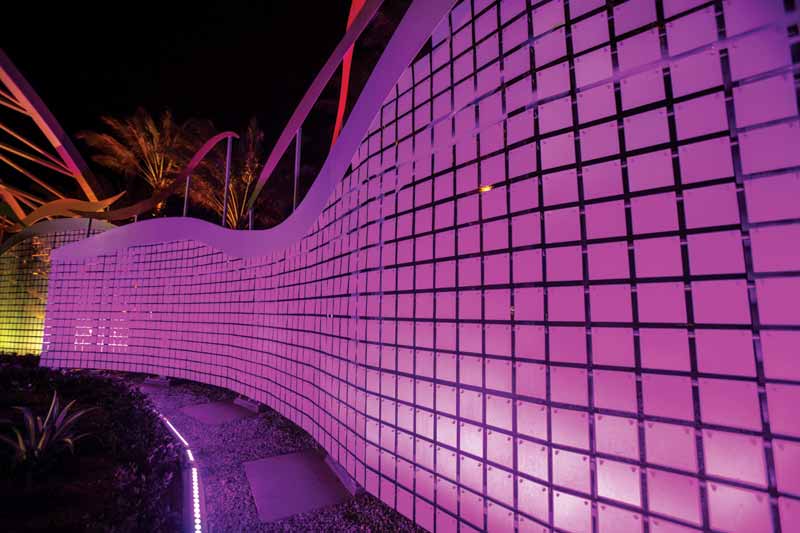
Customization is a key advantage of using metals in facade design. Lightweight metals, such as aluminum, can be easily transformed into a wide range of shapes and sizes. These facades push creative boundaries—whether through color and texture coatings, perforations, embossing, or intricate panel arrangements. This level of customization allows for unique, one-of-a-kind designs that reflect the individuality of each building, making metal facades an exciting choice for designers and architects to achieve their vision.
Modern appeal
Lastly, metal facades possess an undeniable modern appeal. They can seamlessly blend into urban environments, enhancing the contemporary feel of a building while maintaining a timeless quality. They allow buildings to stand out in cityscapes or blend into the environment with subtle elegance.
With their versatility, strength, and sustainability, metal facades are a platform for innovation and can be an ideal choice to create high-performing, beautiful buildings that will endure for generations. The future of facades is here, and it is shining brighter than ever—with metal at the forefront. How will metal enhance your next project?
Victoria Scanlon is the marketing manager at EXTECH/Exterior Technologies, Inc., leading the company’s communications. She began her career at EXTECH in May 2021. Headquartered in Pittsburgh, Pa., EXTECH manufactures and designs wall, window, skylight, canopy, and custom façade systems. Her background includes 10-plus years in the manufacturing industry, holding various creative and marketing positions. She graduated from Pennsylvania Western University with a bachelor’s degree in journalism and business. She can be reached at vscanlon@extechinc.com.